
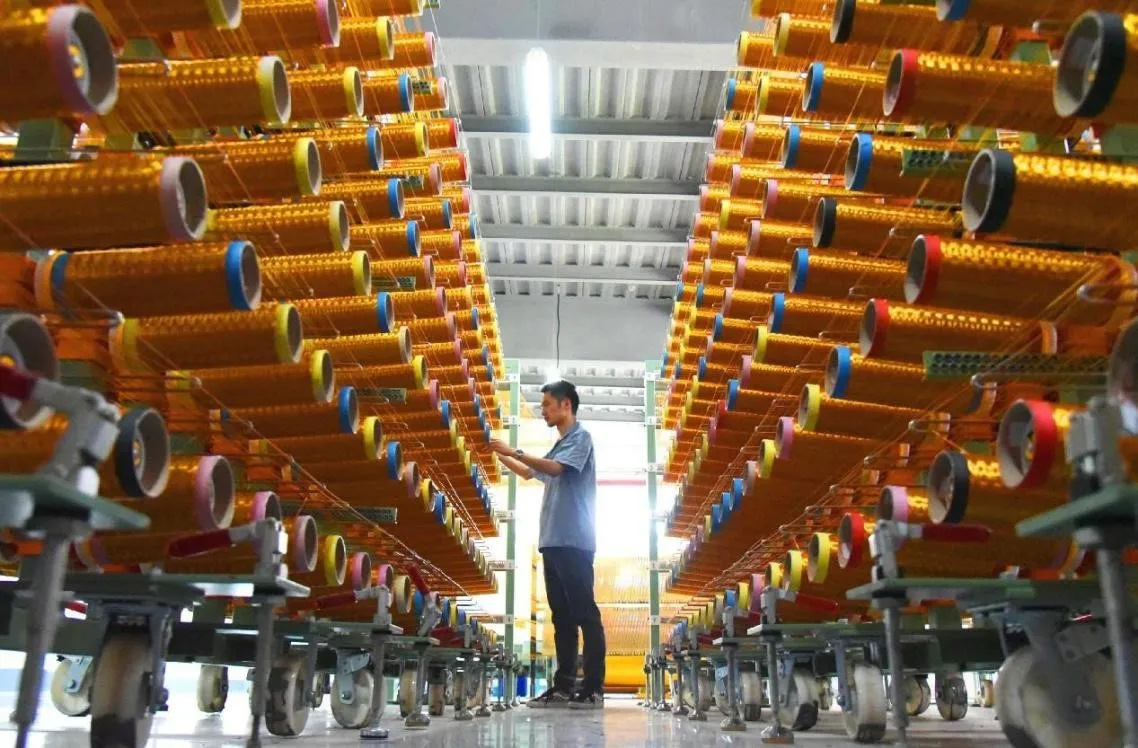
Carbon fiber is becoming a critical enabler for China's advanced manufacturing sector, underpinning high-performance materials across aerospace and automotive industries.
Strategic Importance of Carbon Fiber in Chinese Industry
The increasing integration of carbon fiber reinforced polymers (CFRPs) into core industrial supply chains signals a significant upward trajectory in China's technological sophistication. These lightweight yet incredibly strong composite materials are central to the drive toward higher efficiency and reduced operational footprints within modern manufacturing.
Chinese manufacturers are rapidly adopting these advanced composites to meet stringent international quality benchmarks, particularly those demanded by aerospace and electric vehicle production lines. The material’s superior strength-to-weight ratio allows for design innovations that were previously impractical or prohibitively heavy in traditional metallic structures.
This technological shift is not merely about material substitution; it represents a deeper structural realignment toward knowledge-intensive, high-value production methods. Government initiatives supporting advanced materials research have created an environment where domestic producers are scaling up capacity for complex carbon fiber production.
For the automotive sector, lightweighting achieved through CFRP integration directly correlates to improved energy efficiency in electric vehicles (EVs). As China solidifies its global leadership in EV production, securing a stable and domestically sourced supply of high-grade carbon fiber becomes a paramount strategic objective for industrial resilience.
Furthermore, the aerospace industry continues to push the boundaries of material science. Aircraft components utilizing carbon fiber offer substantial fuel savings over their operational lifespan, aligning perfectly with both corporate sustainability goals and national environmental mandates.
Manufacturing Advancements and Future Outlook
The production process itself is undergoing considerable modernization within China's industrial base. Companies are investing heavily in optimizing the precursor materials and resin systems required for high-quality carbon fiber weaving and molding. This focus on the entire value chain, from raw input to finished composite part, ensures greater control over material properties.
Analysts observe that domestic technical expertise is maturing rapidly, moving beyond simple assembly into proprietary material development. This capability is crucial for reducing reliance on established international suppliers, a key element of China's broader industrial self-sufficiency strategy.
The demand pipeline remains robust, driven by aggressive national targets in green manufacturing and high-speed rail construction, which also benefit significantly from the structural integrity offered by carbon fiber. These diverse applications demonstrate the material’s versatility across heavy industry segments.
Looking ahead, the convergence of advanced additive manufacturing techniques with CFRP fabrication promises further disruption. Combining 3D printing capabilities with composite reinforcement allows engineers to create complex geometries impossible through traditional molding methods, opening new frontiers in design optimization for both automotive chassis and aircraft fuselage sections.
The continued refinement of carbon fiber technology positions China not merely as a large-scale consumer of advanced materials but increasingly as a sophisticated global producer capable of setting technical standards within the high-performance composites market.