🎙 Listen to a summary of this story
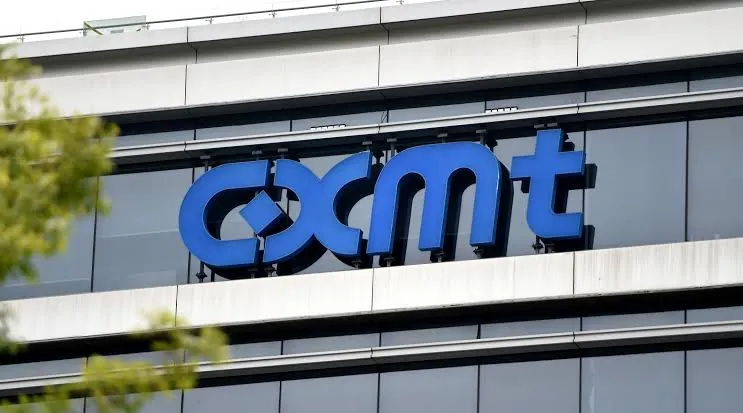
Chinese memory-chip maker CXMT expects its revenue to increase more than eightfold in the first nine months of 2026, offering some of the strongest evidence yet that the artificial intelligence boom is transforming China’s semiconductor industry.
The company forecast revenue of between 265 billion yuan and 270 billion yuan ($39.6 billion to $40.4 billion) for the period through September. That compares with 32.08 billion yuan during the same period in 2025.
Net profit attributable to shareholders is expected to reach between 131 billion yuan and 132.5 billion yuan, reversing a loss of 5.28 billion yuan a year earlier, according to CXMT’s preliminary earnings announcement.
CXMT attributed the improvement to rapidly growing demand for AI computing, shortages in the global dynamic random-access memory market, higher prices and better use of its expanding production capacity. The company also said technical improvements had increased the number of chips it could produce from each wafer.
The scale of the forecast marks a significant change for a company that spent years absorbing heavy investment costs while trying to narrow China’s technological gap with established memory producers.
The estimates remain preliminary and have not been audited. CXMT said final figures would be included in its forthcoming third-quarter report.
AI demand transforms the memory market
Artificial intelligence systems depend on large quantities of memory to move and store the data used by advanced processors. The rapid construction of AI data centres has increased demand for conventional DRAM and high-bandwidth memory, contributing to shortages and substantial price increases.
That environment has produced large gains for established suppliers including Samsung Electronics, SK Hynix and Micron Technology. It has also created an opening for CXMT, which has developed into the world’s fourth-largest DRAM manufacturer.
The company said its products were in short supply as customers competed to secure memory for servers, consumer electronics and other systems. Higher prices appear to be a major part of its financial improvement, although CXMT also cited production expansion, stronger wafer output and high capacity utilisation.
The Wall Street Journal reported that the figures show how quickly the worldwide memory shortage has become a windfall for chipmakers. The results could give CXMT greater resources to finance new factories, improve manufacturing yields and develop more advanced products.
Revenue growth alone does not establish that CXMT has achieved technological parity with its leading international competitors. The company still faces constraints in advanced manufacturing equipment, while producing competitive high-bandwidth memory at scale presents greater technical challenges than supplying more conventional DRAM.
Its financial gains nevertheless demonstrate that Chinese semiconductor policy is producing more than laboratory prototypes. CXMT is now generating the cash potentially needed to fund its next phase of expansion.
A Chinese challenger enters the global market
Founded in 2016, CXMT has received backing from Chinese state investment funds and local authorities. Beijing views memory chips as strategic infrastructure because they are essential to computers, smartphones, data centres and military equipment.
A Reuters investigation earlier this year found that CXMT’s growth was beginning to alter the balance of the global memory industry while attracting increased scrutiny in Washington. US policymakers have considered additional restrictions intended to limit Chinese access to advanced semiconductor equipment and markets.
CXMT’s rise could also put downward pressure on global memory prices if it continues adding capacity. The memory industry has historically moved through dramatic cycles in which shortages encourage investment, only for new factories to create oversupply and falling prices.
That risk helps explain why CXMT’s shares fell despite its striking forecast. Investors have become increasingly cautious about high valuations across the AI supply chain and whether current spending on data centres can continue producing sufficient returns.
The company’s chairman, Zhu Yiming, has separately proposed spending between 1 billion yuan and 2 billion yuan on a share buyback. The plan, which still requires board approval, would use company funds for employee incentives or a reduction in registered capital.
The most important questions now concern the composition and durability of CXMT’s gains. The preliminary announcement does not disclose product-level sales volumes, customer concentration, manufacturing yields or how much of the revenue increase came from higher prices rather than increased shipments.
For Beijing, however, the forecast represents an important milestone. China’s effort to develop an independent memory-chip industry has progressed from state-supported experimentation to a profitable manufacturer with the scale to challenge established global suppliers.