🎙 Listen to a summary of this story
China's Spallation Neutron Source (CSNS) has commenced user operation at 200 kW, effectively doubling the power output of its initial Phase-One design. This significant operational milestone marks a critical acceleration in China's national scientific infrastructure development, positioning the facility as a major player in international neutron scattering research.
The upgrade to 200 kW capability enhances the source's fundamental utility, allowing researchers access to higher flux and more intense irradiation conditions previously unattainable. This increased power directly translates into improved data collection efficiency for materials science, nuclear physics, and life science investigations conducted at the facility.
Technical Advancements and Operational Scope
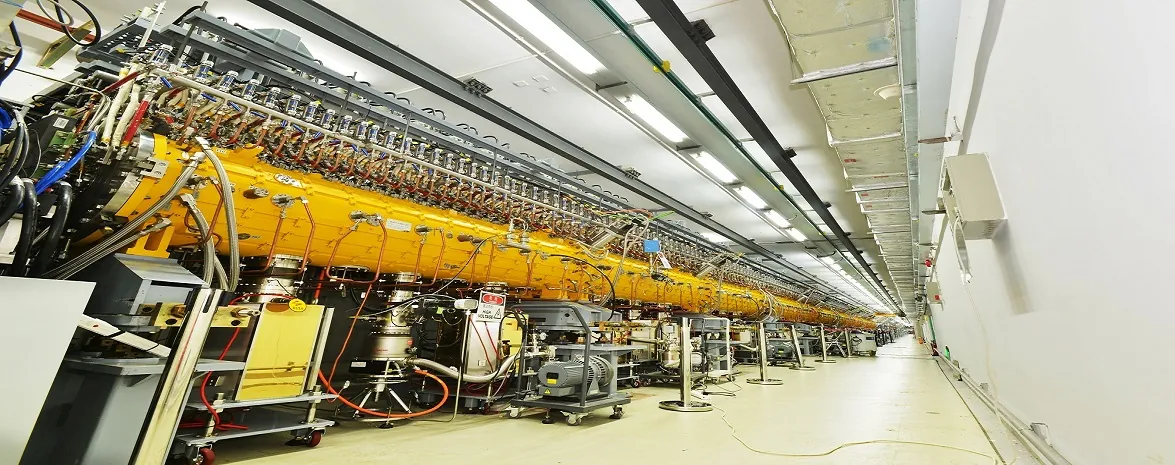
The transition to 200 kW involved substantial engineering achievements within the CSNS complex. The source utilizes a high-power proton accelerator driving the spallation target, which generates the intense beam of neutrons necessary for advanced experimental studies. This increased operational capacity demands sophisticated control systems to manage thermal loads and beam stability at higher energy inputs.
CSNS is designed not merely as a research tool but as a strategic national asset supporting fundamental scientific inquiry. Its capabilities span various neutron scattering techniques, enabling detailed structural analysis of novel materials, probing reaction mechanisms in complex chemical systems, and providing insights into biological macromolecular structures through diffraction experiments.
The successful commissioning at this elevated power level validates the design integrity of the accelerator and target systems. Furthermore, the facility is integrated with a comprehensive suite of beamlines, ensuring that the increased neutron flux can be effectively utilized across diverse scientific applications requiring high signal-to-noise ratios.
Geopolitical and Scientific Ramifications
The operational success of CSNS at 200 kW underscores China's sustained commitment to building world-class, cutting-edge scientific facilities. This capability places the nation within an elite group of countries possessing high-power neutron sources, directly challenging established global leaders in this domain.
From a geopolitical standpoint, advanced scientific infrastructure like CSNS serves as a powerful soft power projection tool. It facilitates international collaborations, attracts top-tier global researchers, and solidifies China's role as a major contributor to the global knowledge economy, particularly in advanced materials research critical for next-generation technologies.
The increased performance of CSNS will drive innovation across domestic industries. Applications range from developing lighter, stronger alloys for aerospace to creating novel catalysts for sustainable energy production. The facility acts as a crucial bridge between fundamental physics discoveries and tangible industrial breakthroughs within the Chinese technological ecosystem.