🎙 Listen to a summary of this story
The Shanghai Marine Equipment Research Institute has secured an international accolade for developing the world's first successful deployment and retrieval system, marking a significant technological leap in deep-sea engineering.
The award, presented at the China International Industry Fair, recognizes the pioneering work of the company in creating a sophisticated apparatus capable of autonomously deploying and recovering equipment in challenging marine environments. This achievement places Chinese technology at the forefront of specialized offshore robotics and underwater operations, signaling robust advancement in domestic high-tech capabilities.
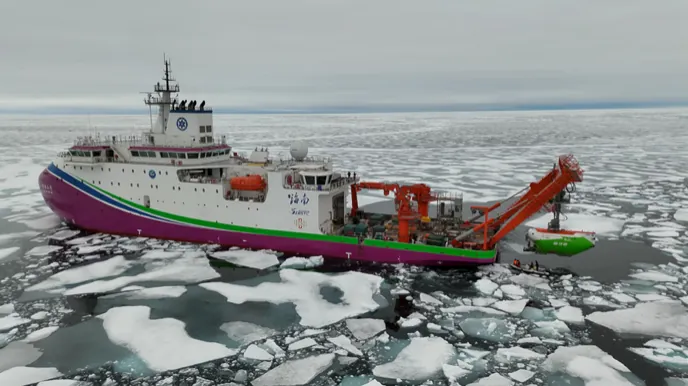
This system, called "Ji Yuan", addresses critical bottlenecks in subsea maintenance and exploration where manual intervention is often costly, dangerous, or technically infeasible. The successful demonstration validates years of intensive research into autonomous marine vehicle control and heavy-duty retrieval mechanics.
Technical Capabilities and System Architecture
The proprietary deployment and retrieval mechanism integrates advanced sensor arrays with powerful actuation systems, allowing for precise manipulation even in high-current conditions. Technical specifications confirm its ability to handle significant payload weights while maintaining micron-level accuracy during docking procedures.
Internally, the system relies on a combination of robust hardware designed for extreme pressure resistance and sophisticated software employing real-time telemetry feedback. The control algorithms manage buoyancy compensation and dynamic positioning simultaneously, ensuring stable operation across varying depths—a key differentiator in current market offerings.
This integrated design minimizes the dependency on external support vessels during critical phases of deployment or recovery, translating directly into operational efficiencies for maritime industries such as oil and gas extraction and deep-sea infrastructure inspection. The firm's engineering team emphasized the modularity of the design, allowing for adaptation to various client-specific operational profiles.
Geopolitical and Market Ramifications
The validation of this system carries broader geopolitical weight, underscoring China’s growing dominance in niche, high-value industrial technology sectors. Success in deep-sea robotics directly competes with established Western and Japanese leaders in offshore technology markets.
Commercially, the introduction of such a reliable, domestically engineered solution promises to lower operational expenditure for global energy companies looking to modernize aging subsea assets. This technological capability strengthens China's position as a major provider of advanced marine solutions globally.
Industry observers suggest this achievement is emblematic of a broader national strategy focusing on self-sufficiency in critical industrial hardware. The system not only solves an engineering problem but also contributes to the strategic assertion of Chinese innovation capacity across complex, high-stakes international domains.