🎙 Listen to a summary of this story
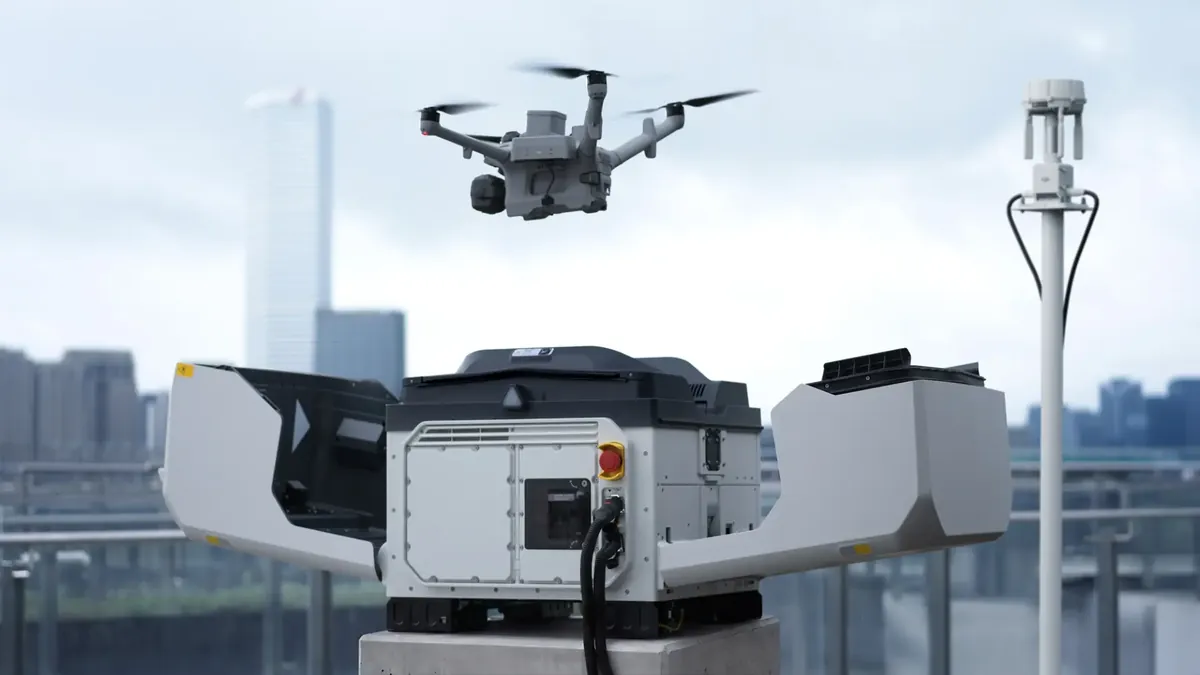
DJI has unveiled a sophisticated drone docking station capable of swapping batteries in mere seconds, representing a major leap toward continuous aerial operation.
This new platform, detailed in the launch specifications for what appears to be an advanced system compatible with the Matrice 5T series, fundamentally addresses one of the primary operational bottlenecks in commercial and industrial drone use: battery changeover time. The capability promises significantly extended flight endurance without requiring human intervention on-site.
However, this rapid technological advancement comes at a substantial financial cost, positioning the dock as a high-end solution primarily targeted at large enterprises and professional surveying firms rather than general consumers.
Technical Architecture and Operational Metrics
The system employs an automated battery swap mechanism designed for efficiency and precision. While specific proprietary engineering details remain under wraps, the core functionality centers on rapid engagement and disengagement of power cells within the drone frame. This automation transforms a manual task—which can take minutes—into a near-instantaneous process.
The integration with high-end platforms like the Matrice 5T suggests robust compatibility requirements regarding power draw, communication protocols, and physical mounting integrity. The dock itself functions as an intelligent hub, managing the state of charge, initiating the swap sequence, and ensuring seamless transition back to flight mode.
Commercial pricing structures indicate this is not a low-cost accessory; early reports suggest the unit commands a premium price tag reflective of its advanced electromechanical components and the significant operational time it saves. Prospective buyers must weigh this high initial capital expenditure against measurable gains in mission uptime.
Market Implications and Strategic Positioning
The introduction of this rapid battery-swap dock signals DJI’s aggressive push into fully autonomous, long-duration aerial missions. This technology moves the industry closer to true "persistent surveillance" capabilities, where drones can remain airborne for extended periods executing complex monitoring or mapping tasks.
Geopolitically and commercially, this places DJI at the forefront of integrating hardware automation with sophisticated flight management software. For industries reliant on aerial data—such as infrastructure inspection, agriculture, and energy exploration—the ability to deploy drones continuously offers a distinct competitive advantage over competitors relying on manual battery cycling.
This development underscores a broader trend in industrial robotics where the limiting factor shifts from onboard processing power to logistical efficiency. DJI is effectively selling not just a docking station, but an operational uptime guarantee, fundamentally altering the economic calculus for high-stakes drone deployment across global markets.