🎙 Listen to a summary of this story
Chinese automakers found a way around Europe’s tariffs on battery-powered cars by sending more hybrids. Now the European Union is preparing to close that route, forcing companies including BYD, SAIC and Chery to reconsider how they compete in one of the world’s largest car markets.
Under a preliminary understanding reached with Beijing, the EU would limit imports of Chinese-built hybrid and plug-in hybrid vehicles to about 350,000 a year. The quota could take effect in December and increase by 6% annually over four years, according to Reuters.
The measure could more than halve the number of Chinese hybrids that European officials estimate would otherwise enter the bloc. Imports were projected to reach as many as 800,000 vehicles in 2026.
The agreement is not final. It still requires support from EU member states, and important details about its implementation have yet to be published. China’s Commerce Ministry has said the arrangement should permit stable export growth and avoid discriminatory treatment of Chinese manufacturers.
Even so, the understanding represents a potentially decisive turn in Europe’s attempt to respond to China’s expanding automotive industry without provoking a wider trade confrontation.
Hybrids became the tariff workaround
The EU imposed additional duties on Chinese-made battery-electric vehicles in 2024 after concluding that state subsidies gave manufacturers an unfair advantage. The duties varied by company and came on top of the bloc’s standard import tariff.
Plug-in hybrids were not included in those additional measures. Chinese automakers responded by rapidly increasing shipments of vehicles combining batteries with petrol engines, appealing to European drivers who wanted lower fuel consumption but remained concerned about charging availability.
The value of Chinese hybrid exports to the EU tripled to $7.5 billion in the first half of 2026, up from $2.5 billion a year earlier, according to Chinese customs figures reported by Reuters. That was almost nine times the value recorded for all of 2021.
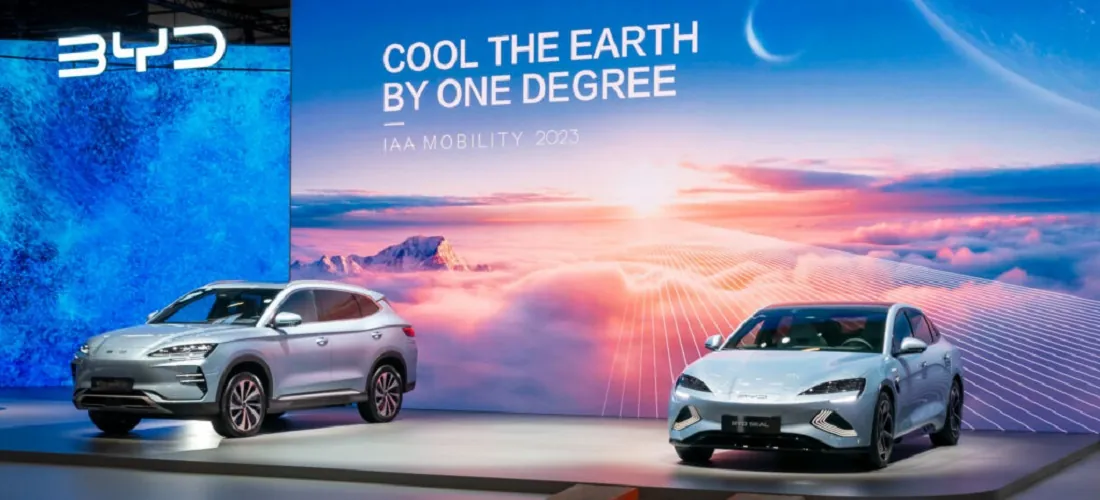
BYD, state-owned SAIC and Chery accounted for more than 90% of Chinese hybrid sales in the EU, according to Jefferies data cited by Reuters. Hybrids represented more than half of those companies’ European sales, making the proposed quota particularly significant for their expansion strategies.
The shift also demonstrated the difficulty of regulating a fast-moving industry one powertrain at a time. Measures intended to restrict battery-electric imports encouraged manufacturers to redirect production toward a category outside the tariff regime.
European officials face competing pressures. They want to protect an automotive industry that supports millions of jobs while preserving access to affordable lower-emission cars. Chinese competition may help reduce prices and speed electrification, but European manufacturers argue they cannot compete fairly against companies supported by China’s industrial policies and enormous domestic supply chains.
Eurostat data show that China supplied 55% of the EU’s imported battery-electric cars in 2024. A subsequent European Commission research paper found that Chinese vehicles’ European presence was rising across electric, hybrid and conventional powertrains, driven largely by lower costs and strong digital features.
From exporting cars to building them in Europe
The quota could accelerate a change already underway: Chinese automakers moving from exporting vehicles to manufacturing them inside Europe.
Locally produced cars would not be counted in the same way as imports from China. Plants and assembly partnerships could therefore provide manufacturers with greater access to European consumers while reducing exposure to tariffs, quotas and shipping costs.
BYD has been developing production in Hungary, while other Chinese manufacturers have explored factories, contract assembly and partnerships across the region. The new restrictions may encourage more companies to follow, although building locally would expose them to Europe’s higher labour, energy and regulatory costs.
Manufacturers could also respond by concentrating their limited quota allowances on more expensive vehicles. Sending premium hybrids rather than lower-priced models would allow companies to generate more revenue from each available import slot, but it could weaken their ability to compete for price-sensitive buyers.
The broader agreement followed talks between EU Trade Commissioner Maroš Šefčovič and Chinese Commerce Minister Wang Wentao. An Associated Press account said the preliminary package also covered lower Chinese tariffs on some European goods and efforts to stabilise supplies of rare earths and permanent magnets.
For Brussels, the arrangement offers a way to slow imports without immediately opening another anti-subsidy investigation. For Beijing, accepting a predictable quota may be preferable to facing new tariffs or a broader trade conflict.
Neither side has resolved the central tension. China’s automakers need overseas markets as competition and excess capacity pressure profits at home. Europe wants affordable clean vehicles but fears losing industrial production and technological capacity to Chinese rivals.
The final effect will depend on how the quota is administered and whether all 27 EU governments approve it. But its direction is clear: Chinese automakers can no longer assume that switching from fully electric cars to hybrids will preserve unrestricted access to Europe.
The next phase of their European expansion is likely to be fought less through shipments from China and more through investment, local production and decisions about which vehicles are valuable enough to place inside a limited quota.