🎙 Listen to a summary of this story
China's Hefei Fusion Project Campus delivered its main machine into the Four-Ring Assembly ahead of schedule, signaling a significant acceleration in domestic fusion energy development.
This early delivery marks a critical milestone for China’s commitment to achieving self-sufficiency and leadership in high-performance plasma physics. The successful integration of the core components positions the project favorably against international benchmarks in tokamak construction timelines, injecting new momentum into national strategic energy goals.
The assembly process itself represents complex engineering integration across multiple specialized subsystems, underscoring the maturity of Chinese industrial capacity to handle large-scale, cutting-edge scientific infrastructure required for fusion research.
Technical Execution and Project Scope
The central machine being integrated is a key piece of hardware designed to sustain high-temperature plasma necessary for fusion reactions. The Four-Ring Assembly houses the intricate magnet systems and vacuum chambers that define the tokamak's operational envelope.
Sources indicate that the project adheres to stringent international standards while incorporating specific national advancements in superconducting materials and magnetic confinement technology. The timely delivery minimizes potential schedule slippage that often plagues mega-science projects globally, allowing researchers to move swiftly into calibration phases.
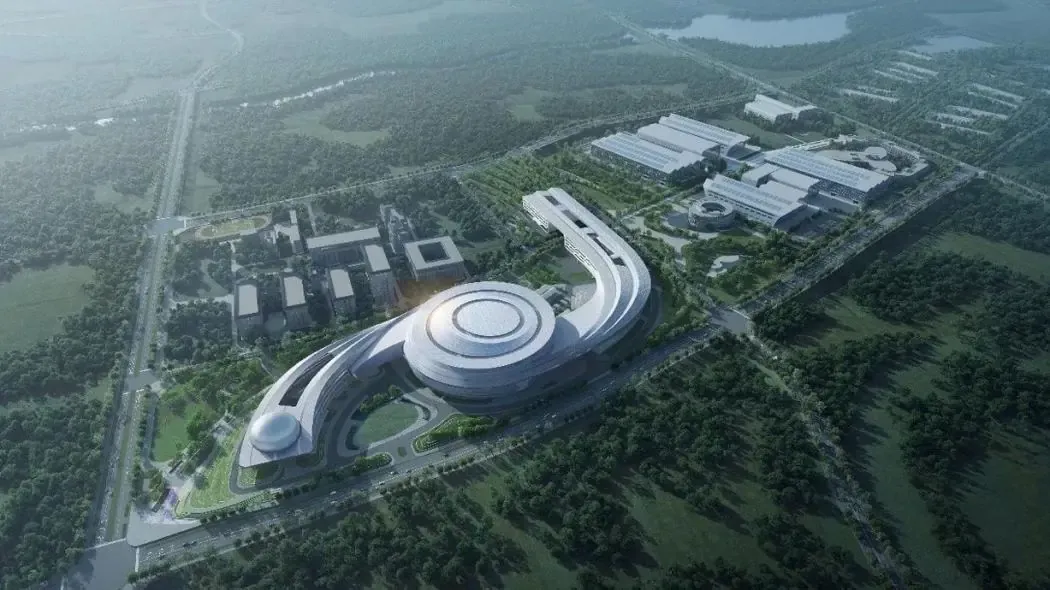
The overall campus is being developed as a comprehensive hub for fusion research, encompassing not just the main reactor but also ancillary facilities for diagnostics, control systems, and material science testing crucial for long-term plasma stability studies.
Geopolitical Implications and Energy Strategy
This accelerated progress in Hefei carries substantial geopolitical weight, positioning China as a primary contender in the global race toward clean fusion power. Achieving functional demonstration of a high-performance tokamak domesticates critical technological know-how previously reliant on foreign collaboration or acquisition.
From an energy security perspective, mastering controlled nuclear fusion offers a pathway to near-limitless, carbon-free baseline power generation—a strategic imperative for China's long-term industrial and environmental planning. The successful deployment validates years of focused state investment into fundamental physics research.
The development trajectory suggests a pivot from purely academic exploration toward engineering demonstration readiness, which will inevitably influence international partnerships and technological export capabilities in the energy sector. Further detailed reports on the operational parameters of this specific tokamak are expected to reveal its comparative advantages against ITER and other global efforts, providing clearer insight into China's ultimate fusion goals.