China expands quantum push with silicon-28 production
China says it has begun mass producing ultra-pure silicon-28, a specialized material seen as important to the development of silicon-based quantum computers, marking a step in Beijing’s effort to reduce dependence on foreign technology as competition with the United States intensifies.
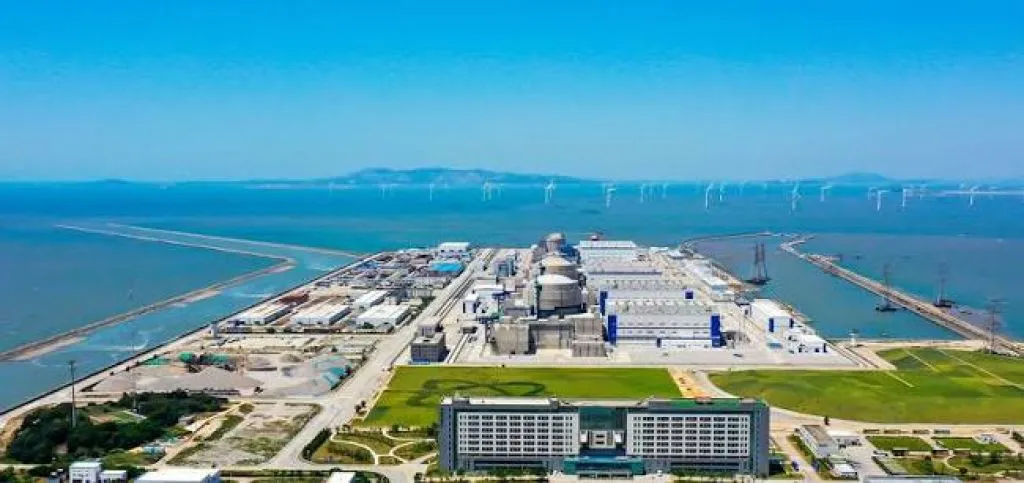
The state-owned China National Nuclear Corporation said researchers at its Tianjin-based Research Institute of Physical and Chemical Engineering of Nuclear Industry had produced silicon-28 with isotopic abundance above 99.99%, according to Chinese state media and a report by Digitimes. The company said key technical indicators had reached what it described as advanced international levels.
Silicon-28 is prized in quantum research because, unlike silicon-29, it has no nuclear spin. In silicon quantum devices, nuclear spin can create magnetic noise that disrupts fragile quantum states. Reducing that noise can help qubits — the basic units of quantum information — retain coherence longer, a key challenge in building larger, more reliable quantum computers.
The announcement does not mean China has built a commercially useful quantum computer. Quantum systems remain experimental, costly and difficult to scale. But materials specialists say access to high-purity silicon-28 could strengthen the supply chain for silicon spin qubits, an approach that seeks to use manufacturing techniques similar to those already used in the semiconductor industry.
China’s claim comes as governments and companies are racing to secure control over technologies viewed as strategically important, including advanced chips, artificial intelligence and quantum computing. Beijing has placed quantum technology among its priority industries and has directed funding toward research centers, universities and state-backed companies.
A new materials front in the U.S.-China technology race
The United States and allies have tightened export controls on advanced semiconductors and chipmaking equipment, citing national security concerns. China has responded by accelerating efforts to localize critical technology supply chains, from AI processors to specialized materials. Silicon-28 fits into that broader campaign because quantum hardware depends not only on theory and algorithms but also on access to exceptionally pure components.
Quantum computers could eventually transform chemistry, materials research, logistics and cryptography, though practical benefits remain years away. Different platforms are competing, including superconducting circuits, trapped ions, photonics and silicon spin qubits. Silicon is attractive because the global chip industry already has decades of experience processing it at scale.
Researchers outside China have also worked on enriched silicon for quantum applications. A 2024 study in Communications Materials described methods for reducing silicon-29 concentrations in localized regions of chips, underscoring the importance of isotope engineering for longer-lasting qubits.
Chinese state media said the new production capability ends the country’s reliance on imports for the material. That claim could not be independently verified from the public announcements. The reports also did not provide details on production volume, yield, cost or whether the material has already been integrated into working quantum processors.
Those details matter. Producing a rare, ultra-pure material in a laboratory is different from supplying it consistently for industrial-scale chip fabrication. Quantum devices also require cryogenic systems, precision control electronics, error correction and sophisticated packaging before they can outperform classical systems on useful tasks.
Still, the silicon-28 announcement points to a widening contest over the foundations of next-generation computing. For China, the material is both a scientific input and a symbol of technological self-reliance. For its competitors, it is a reminder that the quantum race may be decided as much by supply chains as by breakthroughs in the lab.