🎙 Listen to a summary of this story
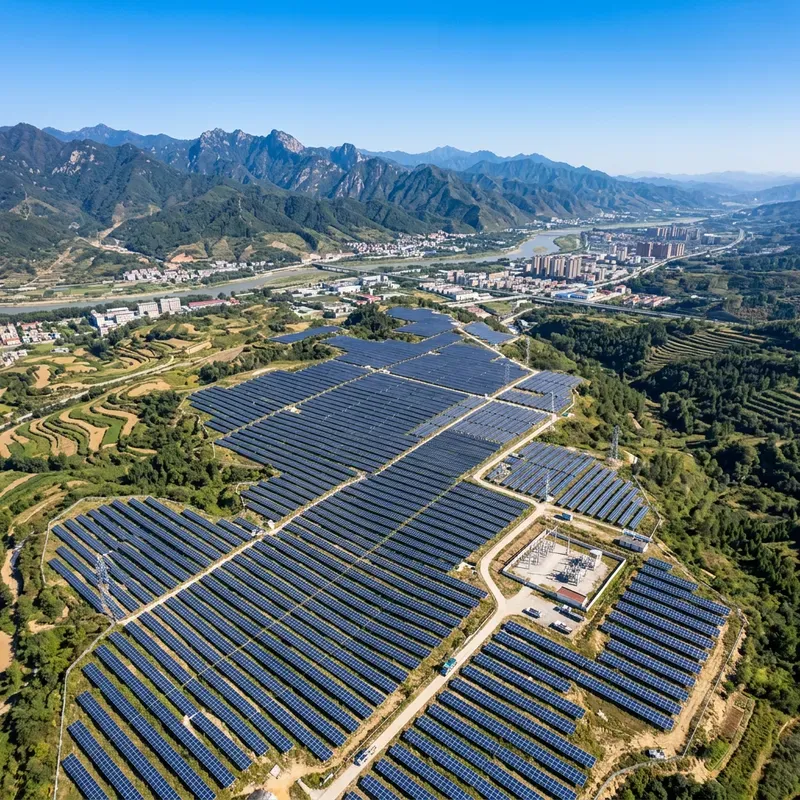
China's solar power installation has officially eclipsed coal's capacity for the first time, signaling a monumental acceleration in the nation's energy transition strategy.
Data compiled for September 2026 confirms that the cumulative installed capacity of photovoltaic solar generation now exceeds that of thermal coal power, marking a critical inflection point in China's decades-long reliance on fossil fuels. This development is not merely a statistical anomaly but represents a profound, structural shift in how the world's second-largest economy powers its industrial and residential sectors.
The surpassing of coal capacity underscores the efficacy of China's aggressive renewable energy mandates. Solar capacity has seen exponential growth, driven by massive state-backed investment and technological advancements that have dramatically lowered the levelized cost of electricity for solar installations. While coal remains the backbone of China’s baseline power supply due to its dispatchability, the sheer scale and speed of solar deployment have fundamentally altered the energy landscape.
Analysts view this crossover as validation of China's dual commitment to meeting soaring domestic energy demands while simultaneously meeting international decarbonization pledges. The transition is occurring at a pace that far outstrips previous projections, placing immediate pressure on grid infrastructure to handle the intermittent nature of solar power.
The Mechanics of China's Energy Pivot
The growth trajectory of solar power has been meticulously engineered by central planning, moving beyond localized incentives to become a national strategic imperative. Government policies have prioritized renewable integration, effectively creating a competitive environment where solar projects can secure massive deployment targets. This has necessitated significant overhauls in transmission infrastructure, allowing power generated in sun-rich western provinces to flow efficiently to industrial centers in the east.
Coal, while facing mounting environmental scrutiny and regulatory pressure, benefits from established, robust infrastructure and the ability to provide reliable, on-demand power—a characteristic solar cannot inherently match without extensive battery storage solutions. However, the declining cost curve of solar technology is steadily eroding the economic advantage coal once held, forcing utilities to reassess the long-term viability of maintaining coal dominance.
The implications for global energy markets are substantial. As the world's largest energy consumer rapidly pivots toward renewables, it dictates the trajectory for manufacturing supply chains, particularly for solar panel components and related battery storage systems. This domestic surge in solar manufacturing capability positions China as the central hub not only for energy generation but also for the global production of clean energy hardware.
Furthermore, the report detailing this milestone, available through The China Technology Review, suggests that while solar now leads in installed capacity, the ongoing challenge lies in balancing this growth with grid stability and managing the environmental footprint of the necessary mineral extraction required for batteries and inverters.
This energy shift represents a complex negotiation between economic imperatives, environmental necessity, and technological capability. The installed capacity data confirms that China is not simply adding green energy; it is fundamentally re-engineering its industrial metabolism to accommodate a solar-dominant power profile over the coming decades.
Policy experts suggest that future regulatory focus must shift from simply adding capacity to ensuring grid flexibility and optimizing energy storage deployment. The successful management of this transition will determine whether China achieves its stated climate goals or merely manages a complex, high-stakes energy migration.