🎙 Listen to a summary of this story
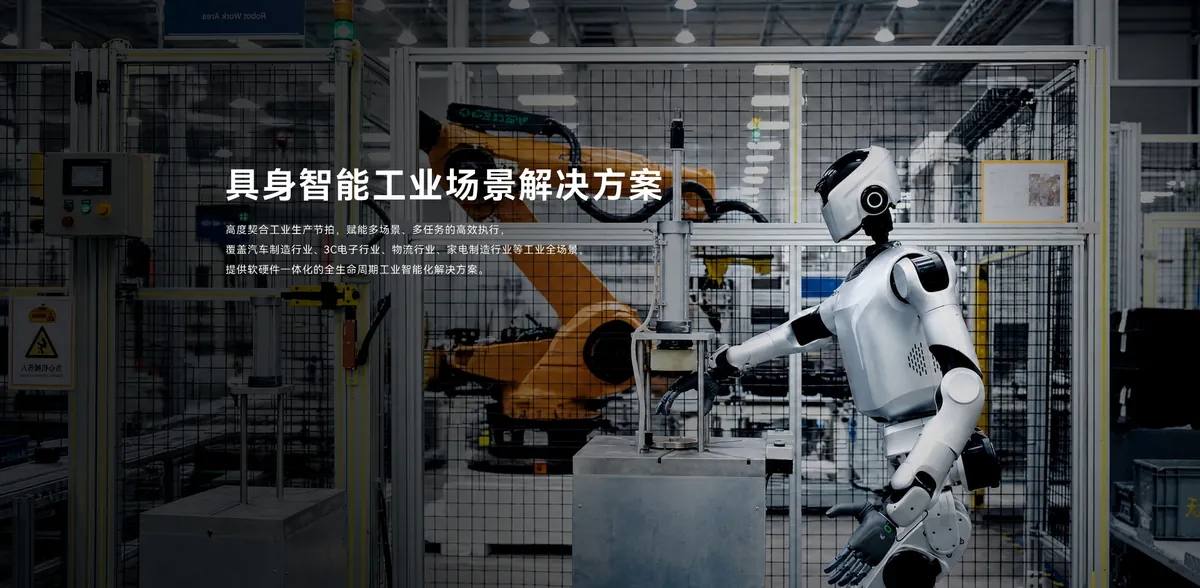
Leju Robotics successfully deployed 15 humanoid robots onto an automotive parts loading line, achieving a reported operational success rate of 98% over 1000 hours of continuous operation. This deployment signals a significant maturation point for humanoid robotics in complex, real-world industrial settings, moving beyond controlled lab environments into demanding manufacturing workflows.
The successful integration addresses persistent industry challenges related to repetitive strain injury and labor shortages within the automotive supply chain. By demonstrating high uptime and precision handling of diverse parts—a core function of advanced automation—Leju positions its technology as a viable competitor against traditional, specialized industrial manipulators in assembly environments.
This performance metric validates the robust nature of Leju's hardware and control systems under sustained commercial load. The 98% success rate over thousands of hours provides critical data for investors and enterprise clients evaluating the total cost of ownership (TCO) versus traditional automation solutions.
Technical Capabilities and Deployment Details
The humanoid robots utilized in this trial are engineered for high dexterity, allowing them to perform tasks that typically require fine motor skills comparable to human workers. Their operational envelope encompasses complex grasping, placement accuracy, and the endurance required for a modern production line tempo.
From a technical specification standpoint, these units integrate advanced sensor suites and sophisticated AI control algorithms. The software stack manages dynamic path planning and error correction in real-time, enabling seamless interaction with existing factory infrastructure without extensive retrofitting of legacy equipment. This interoperability is key to rapid industrial adoption.
The project itself serves as a crucial proof point for the scalability of humanoid form factors in logistics and assembly. Unlike fixed robotic arms optimized for single tasks, these general-purpose robots offer adaptability, allowing manufacturers to reprogram them to handle different SKUs or production variations with relative ease, a significant advantage in fluctuating market demands.
Broader Market Implications and Trajectory
This industrial validation by Leju Robotics underscores a pivotal shift in the automation landscape: from specialized fixed-function robotics toward general-purpose, anthropomorphic agents. The successful deployment suggests that humanoid robots are moving from theoretical showcases to pragmatic capital investments for large manufacturing enterprises.
Geopolitically, this advancement is critical within China's broader push for advanced manufacturing dominance and technological self-sufficiency. By mastering complex robotic integration domestically, Chinese tech firms like Leju reduce reliance on established international automation leaders in high-level deployment scenarios.
The market implication is clear: the viability threshold for humanoid robots has been demonstrably crossed in heavy industry. Future adoption will likely accelerate as these units prove their economic benefit across various sectors—from warehousing and logistics to complex assembly lines—driving a necessary re-evaluation of global industrial labor models over the next decade.