🎙 Listen to a summary of this story
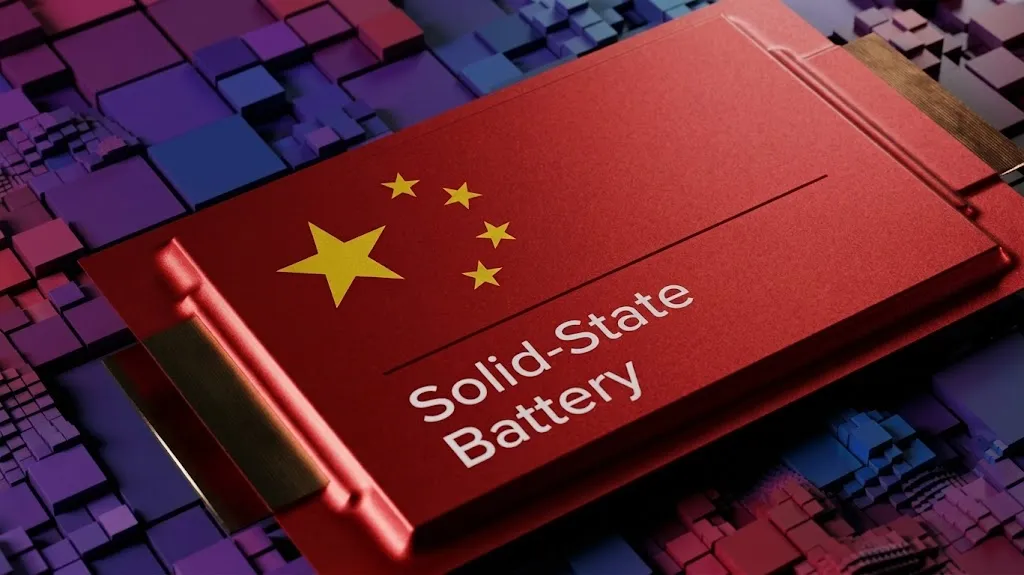
China targets initial large-scale deployment of all-solid-state batteries by 2030, signaling a major push to dominate next-generation energy storage technology.
National Ambitions Drive Battery Innovation
The Chinese government has set an ambitious timeline for the widespread adoption of solid-state battery technology across various sectors. This strategic focus reflects China's broader national drive to secure technological supremacy in critical future industries, particularly electric vehicles and grid energy storage.
Solid-state batteries represent a significant departure from conventional lithium-ion designs, promising higher energy density, improved safety profiles due to the absence of flammable liquid electrolytes, and potentially faster charging capabilities. Achieving mass production at scale remains a complex engineering hurdle that Chinese researchers are actively addressing.
Industry analysis indicates that this directive is not merely academic; it translates into substantial investment across the supply chain, from raw material sourcing to final cell manufacturing. State-backed enterprises are leading the charge, leveraging significant governmental support to accelerate research commercialization.
The development timeline suggests a phased rollout. While laboratory breakthroughs have been frequent, moving these innovations into gigafactory production lines capable of meeting automotive demand requires overcoming significant challenges related to electrode-electrolyte interface stability and manufacturing scalability.
According to reports tracking this sector, the convergence of government policy with private capital is creating an intense competitive environment. Companies are racing not just to improve performance metrics but also to reduce the cost per kilowatt-hour to achieve true market viability against established lithium-ion incumbents.
Technological Hurdles and Market Implications
The transition to all-solid-state chemistry necessitates overcoming several fundamental material science obstacles. Key among these is maintaining stable electrochemical contact between the solid electrolyte and the electrodes over thousands of charge cycles without dendrite formation, a notorious failure mode in high-energy systems.
Chinese institutions are focusing on novel ceramic and polymer electrolyte compositions to enhance ionic conductivity while ensuring mechanical robustness during operation. Success in this area will unlock the full potential of these batteries for demanding applications such as long-range electric vehicles where weight and energy density are paramount concerns.
Market implications extend beyond vehicle electrification. The enhanced safety and longevity inherent in solid-state designs make them highly attractive candidates for stationary grid storage, which is crucial for stabilizing renewable energy integration—solar and wind power.
This national push positions China to potentially redefine global battery standards. If the 2030 goal materializes successfully, Chinese manufacturers could dictate the next wave of global EV and energy infrastructure development, shifting manufacturing dominance away from established Western markets.