
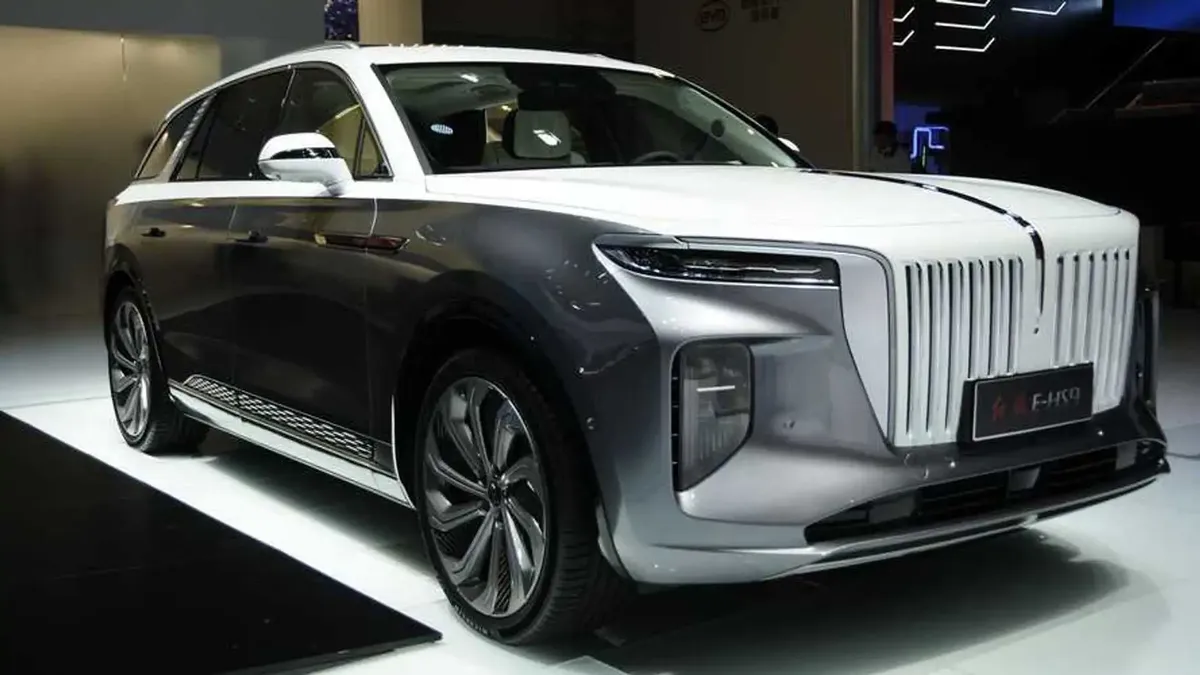
Foreign carmakers are losing their grip on China’s luxury-vehicle market as affluent consumers increasingly turn to domestic brands offering advanced software, intelligent driving systems and electric powertrains designed specifically for Chinese conditions. What was once a dependable stronghold for German, European and Japanese manufacturers has become one of the automotive industry’s most difficult competitive battlegrounds.
The change is not simply the result of discounting or temporary weakness in consumer spending. It reflects a deeper redefinition of luxury. Chinese buyers, particularly younger customers, are placing less emphasis on engine refinement, imported heritage and a prestigious badge. Instead, they increasingly expect sophisticated digital cockpits, voice-controlled services, rapid charging, assisted-driving functions and continuous over-the-air software updates.
According to the South China Morning Post, the decline of foreign brands has now spread into the premium categories that had previously remained relatively resistant to the rise of Chinese electric-vehicle manufacturers. Domestic companies are no longer competing primarily at the affordable end of the market. They are increasingly challenging established luxury marques on technology, comfort and brand desirability.
Chinese Brands Redefine Automotive Luxury
Companies including Nio, Li Auto, Aito, Zeekr, Denza and Xiaomi have developed products around the expectations of digitally connected Chinese households. Large touchscreen displays, integrated entertainment platforms, advanced voice assistants and rear-seat technology are often treated as essential features rather than optional extras. Several brands also offer extended-range electric vehicles, combining battery-powered driving with a petrol generator to reduce concerns about charging on long journeys.
This approach has helped domestic manufacturers establish a strong presence among vehicles priced above 300,000 yuan. Industry figures cited by Gasgoo show the scale of the pressure on foreign competitors. In 2025, Mercedes-Benz sales in China fell by 19 per cent to about 552,000 vehicles, while BMW declined by 12.5 per cent to approximately 626,000. Audi recorded a smaller but still significant fall, while Porsche deliveries dropped by 26 per cent to 41,900 vehicles.
Chinese manufacturers have benefited from development cycles that are generally faster than those of multinational carmakers. Domestic companies can introduce new models, software functions and cabin technologies within months. Foreign groups, by contrast, have traditionally relied on global vehicle platforms and approval structures that can take several years to produce substantial updates.
A McKinsey survey of Chinese consumers found that technological innovation is becoming more important than price reductions. The consultancy reported that steep discounts generated only limited sales growth, whereas buyers responded strongly to new models and advanced technology. Although multinational brands continue to be regarded as premium names, many are struggling to translate their reputation from the internal-combustion era into pricing power in the electric market.
Foreign Carmakers Turn to Chinese Technology
The response from international manufacturers has been to accelerate localisation. Instead of merely manufacturing global models through Chinese joint ventures, companies are increasingly adopting local software, batteries, electronic architectures and assisted-driving systems. The reversal is striking: Chinese firms that once depended on foreign partners for engineering expertise are now supplying technologies that global carmakers need to remain competitive.
Volkswagen has worked with Xpeng on an electronic architecture for China-focused vehicles, while Audi has integrated Huawei’s Qiankun intelligent-driving technology into locally produced models. Mercedes-Benz has expanded its relationship with autonomous-driving specialist Momenta, and other foreign manufacturers, including Toyota and General Motors, have also sought Chinese technology partners.
An AFP analysis described the trend as a “reverse joint venture”. Volkswagen’s China electronic architecture was reportedly completed with Xpeng in 18 months, compared with an estimated three to four years using a conventional German development process. Such partnerships give multinational companies access not only to individual technologies but also to China’s broader ecosystem of software engineers, component suppliers and real-world driving data.
Luxury brands are also reorganising their operations. Porsche has expanded its Shanghai research and development capabilities even as it reduces the size of its Chinese dealership network. BMW is preparing locally developed versions of its Neue Klasse electric vehicles, while Mercedes-Benz and Audi are planning extensive product launches that combine global engineering with Chinese digital systems.
A Structural Challenge for the Global Industry
Foreign manufacturers are unlikely to disappear from China’s premium market. Mercedes-Benz, BMW, Audi and Porsche retain substantial customer bases, manufacturing capacity and global prestige. Their expertise in vehicle dynamics, safety, production quality and traditional luxury remains valuable. However, those advantages no longer guarantee leadership in a market where the definition of a premium vehicle is changing rapidly.
The challenge is structural rather than cyclical. China’s electric-vehicle transition has created an industrial system that links battery manufacturing, electronics, artificial intelligence, software development and consumer technology. Domestic brands can draw on this network to bring vehicles to market quickly and adjust them in response to customer data.
For global carmakers, success will therefore require more than lower prices or redesigned showrooms. They must give Chinese engineering teams greater authority, reduce development times and integrate local technology without undermining their global identities. They will also have to decide which capabilities should remain proprietary and which can be obtained more effectively from Chinese partners.
The outcome will matter far beyond China. Technologies and vehicles developed through these partnerships are increasingly being considered for export to Southeast Asia, South America, the Middle East and other international markets. China is no longer merely a sales destination for foreign carmakers; it has become a testing ground for the future of the industry. Companies that cannot compete at the speed of China’s luxury-EV market may eventually struggle to compete elsewhere.