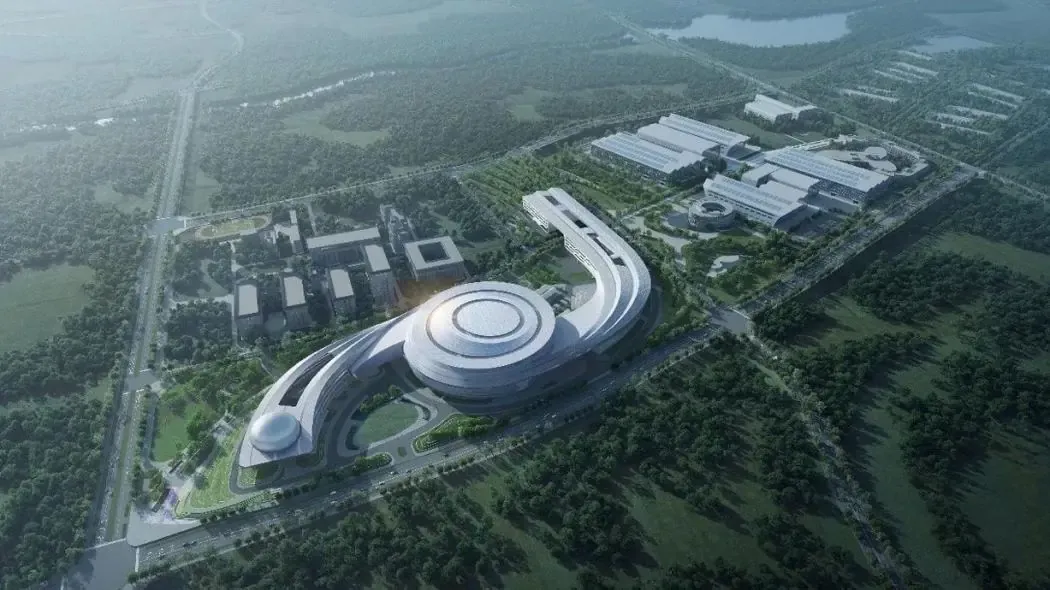

Chongqing has completed its Four-Lab Technology Innovation Framework with the inauguration of the Three Gorges Laboratory, solidifying a major regional push for advanced technological self-sufficiency.
The commencement of the Three Gorges Laboratory signifies a critical milestone in Chongqing's strategy to establish itself as a hub for cutting-edge scientific research and industrial innovation within China. This new facility integrates with three previously established laboratories, creating a comprehensive ecosystem designed to drive high-tech development across multiple sectors.
The laboratory complex represents a significant governmental investment aimed at bridging the gap between fundamental scientific discovery and practical industrial application. By centralizing diverse research capabilities, Chongqing intends to accelerate technological breakthroughs relevant to regional economic modernization and national strategic goals.
Strategic Implications of the Four-Lab Framework
This coordinated framework moves beyond isolated research efforts; it establishes an integrated platform where theoretical knowledge generated in one lab can be immediately tested and scaled within another. The overarching objective is to foster a robust innovation pipeline capable of producing high-value intellectual property and advanced manufacturing solutions.
The Three Gorges Laboratory itself focuses on several key areas, though specific technological specialties are part of the broader mandate for industrial upgrading. Its presence signals Chongqing's commitment to tackling complex engineering challenges that require deep scientific understanding. The completion aligns with national directives emphasizing regional technological clusters as engines of economic growth.
Analysts observe that this strategic consolidation allows local enterprises to access sophisticated research tools and expert talent previously only available in larger, more established metropolitan centers. This accessibility is crucial for SMEs looking to transition into high-tech manufacturing or R&D-intensive operations.
The framework supports the city's broader urban planning goals, positioning advanced technology not merely as an academic pursuit but as a core component of its industrial base. The success of this four-lab model will directly influence the competitiveness of Chongqing in national and international markets.
Operationalizing Technological Advancement
The operational structure mandates cross-disciplinary collaboration between researchers drawn from various institutions affiliated with the city. This synergy is designed to prevent silos, ensuring that breakthroughs are not confined to purely academic journals but translate into tangible commercial viability.
Details regarding the initial focus areas of the Three Gorges Laboratory indicate an emphasis on next-generation materials and intelligent systems—fields critical to China’s ambition in advanced manufacturing. The infrastructure supporting these labs is state-of-the-art, providing high-level computational power and specialized testing environments necessary for modern scientific inquiry.
Furthermore, the establishment of this comprehensive technological framework signals a policy shift toward proactive industrial incubation. Instead of simply attracting established firms, Chongqing is building the foundational research capacity needed to incubate novel technologies internally. This self-reliance in innovation is a hallmark of mature economic development.
The successful launch and subsequent operation of these four integrated laboratories provide a concrete example of how municipal governance can strategically leverage scientific infrastructure to achieve substantial economic transformation, cementing Chongqing’s role as a vital technological node within the nation's evolving industrial landscape. For further documentation on this initiative, readers may consult The China Technology Review brief.