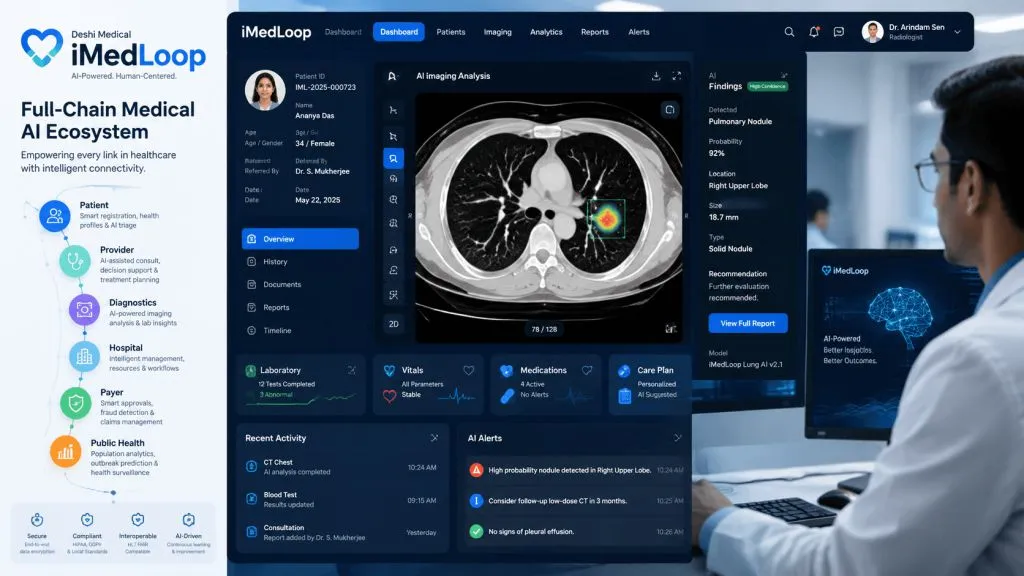
Hangzhou-based Diagens BioTechnology launched iMedLoop, a comprehensive medical AI ecosystem designed to manage the entire healthcare data chain from collection through clinical application.
The platform addresses critical bottlenecks in current medical diagnostics by integrating disparate data sources into a unified, intelligent system. This initiative positions Diagens within China's rapidly expanding digital health sector, aiming for end-to-end operational efficiency in patient care pathways.
iMedLoop: A Full-Chain AI Architecture
iMedLoop is engineered not merely as an analytical tool but as a complete operational framework. The system incorporates multiple layers of artificial intelligence to process complex medical information, spanning initial data capture to final diagnostic support.
A core feature involves the seamless integration of various peripheral devices and hospital management systems (HIS). This connectivity allows iMedLoop to ingest raw patient data—including imaging, vital signs, and laboratory results—in real-time. The system then subjects this heterogeneous data stream to proprietary machine learning algorithms.
Diagens emphasizes that the platform moves beyond simple pattern recognition; it focuses on constructing a traceable, auditable digital thread for each patient encounter. This level of systemic integration is crucial for meeting increasingly stringent regulatory requirements within China’s healthcare modernization push.
The architecture supports several clinical functions. For instance, in radiology, iMedLoop can assist clinicians by prioritizing scans based on AI-flagged anomalies, thereby optimizing radiologist workflow and reducing diagnostic latency. Similarly, in pathology, the system aids in image analysis, providing quantitative metrics that supplement human expert review.
The deployment strategy targets large regional hospitals initially, allowing for controlled validation of its efficacy across varied clinical environments before broader market penetration. This phased approach mitigates integration risks common in complex hospital IT rollouts.
Strategic Significance and Technological Depth
The development of iMedLoop underscores a strategic pivot by Chinese health tech firms toward building deep, integrated vertical solutions rather than relying solely on isolated AI modules. By controlling the data flow from source to outcome, Diagens gains significant control over the value chain.
Technologically, the platform utilizes advanced natural language processing (NLP) capabilities alongside computer vision models. The NLP component is specifically trained on clinical documentation—discharge summaries, physician notes, and consultation reports—to extract structured data points that would otherwise remain locked within unstructured text fields.
Furthermore, the system incorporates a robust security framework compliant with national health data protocols. Given the sensitivity of patient information, the decentralized processing capabilities of certain iMedLoop modules are designed to enhance data privacy while maintaining analytical integrity.
Diagens stated that the ultimate goal is not just predictive accuracy but prescriptive utility—guiding clinical decision-making toward optimal therapeutic pathways. This shift from descriptive analytics to actionable intelligence defines the platform’s strategic value proposition in a competitive market.
The introduction of iMedLoop signals a maturing phase in China's medical AI adoption, moving past pilot projects toward deploying comprehensive, enterprise-level solutions capable of fundamentally reshaping clinical operations across major healthcare institutions. As we covered in our story on AI Uncovering Four New Superconducting Materials, this trend continues to shape the strategic landscape.