🎙 Listen to a summary of this story
At a solar farm, finding a faulty panel can mean checking thousands of modules spread across difficult terrain. At a wind farm, inspecting a blade can require a turbine shutdown and a crew working high above the ground. Chinese technology companies are offering a different routine: send a drone to locate the problem, then dispatch a robot or repair team to address it.
The approach is gaining importance as China’s renewable energy fleet grows. The country ended 2025 with about 1.2 billion kilowatts of installed solar capacity and 640 million kilowatts of grid-connected wind capacity, according to the National Energy Administration. Every new installation adds equipment that must be cleaned, inspected and kept running for decades.
From spotting faults to fixing them
Solar panels can lose output when dust accumulates or electrical faults develop. A drone carrying a thermal camera can survey rows of panels and flag unusual heat patterns for closer examination. Images alone cannot establish the cause of every fault, but they can help maintenance crews decide where to start.
Chinese company Skysys has built a business around connecting aerial inspection with work on the panels themselves. Its drones identify potential defects, while cleaning robots tackle one common cause of reduced output. The company says its systems have been deployed at more than 1,400 renewable energy sites worldwide, covering over 40 gigawatts of installed capacity. Those are company figures reported by TechNode, rather than an independent measure of the electricity recovered through its equipment.
The distinction matters. Detecting a hot spot is useful only if an operator can determine whether it calls for cleaning, an electrical repair or replacement. For companies managing widely scattered sites, the value of automation may lie as much in directing technicians to the right place as in replacing a manual patrol.
Skysys told TechNode its drones inspect floating solar installations in Indonesia and produce diagnostic reports in about 15 to 20 minutes. At mountainous solar farms in Japan, the company said it has worked with Huawei on systems that identify damage, dust and obstructions. Both examples point to places where inspecting every panel by foot or boat presents practical difficulties.
A closer look at wind turbines
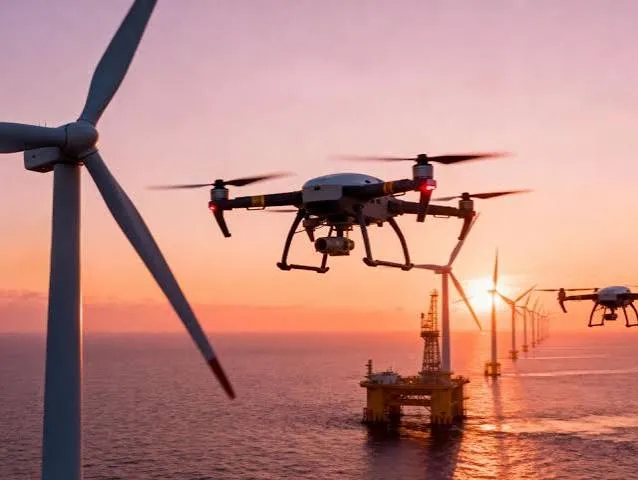
Wind power presents a different challenge. Blade surfaces can suffer erosion, cracking or lightning damage, while their height and movement complicate inspection. Drones can photograph a stopped blade from multiple angles, creating a record that engineers can compare over time. They can reduce the need for some work at height, although a suspected defect may still require a technician to examine or repair it.
Chinese robotics company Wisson says its modular drone system goes beyond photography, carrying equipment for cleaning, lightning protection tests and applying coatings. In demonstrations described by the company, a lightning protection test took about an hour, while cleaning and coating took six to eight hours. Those performance claims have not been independently established across different wind farms and weather conditions.
Making an inspection flight repeatable is itself a technical problem. A drone must judge where a blade has stopped, hold a safe distance and capture images clear enough to reveal damage. In research tested over 120 flights at five operating wind farms, investigators used lidar and automated camera adjustments to improve blade imaging. Heavy fog still caused one inspection attempt to fail, illustrating why autonomy depends on conditions at the site.
For operators, a clearer image is only the beginning. Engineers must decide whether a mark is harmless wear, a developing defect or damage requiring an immediate shutdown. Reliable maintenance records and follow-up inspections are needed before software can make useful predictions about a component’s remaining life.
Robots move into harder-to-reach places
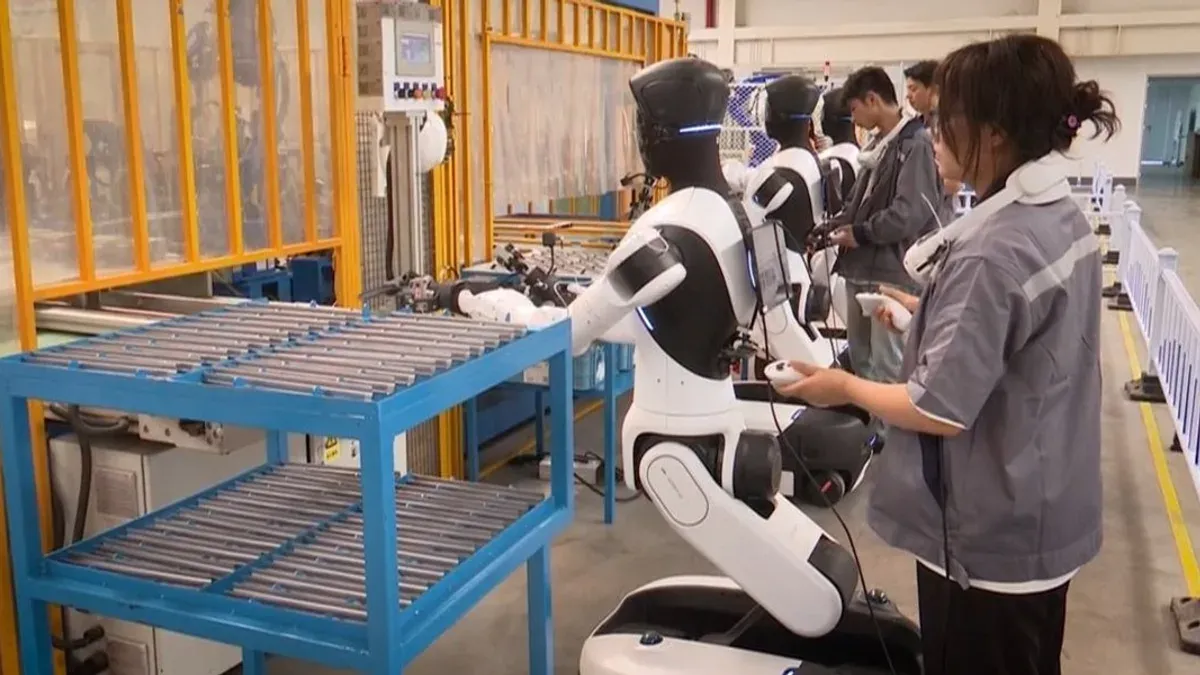
The same idea is spreading beyond wind and solar. At the Three Gorges hydropower plant, the operator says a robot travels inside a large water-intake pipe on magnetic tracks. It cleans the surface, uses an ultrasonic sensor to check welds and sends back camera images. The work previously required scaffolding for human inspectors, according to China Three Gorges Corporation.
Geothermal power offers another, less mature example. In Taiwan, SYNCROBOTIC said a four-legged robot completed a trial route at a geothermal facility, reading meters at five inspection points before returning to charge. The company described it as a validation project, not evidence of broad commercial use.
China’s plans give the maintenance industry room to grow. Its government expects combined wind and solar capacity to exceed 2.8 billion kilowatts by 2030, according to a renewable energy development plan. Drones and robots could help operators care for that expanding fleet, but their economic case will depend on measurable gains: faults found sooner, repairs completed safely and more electricity delivered over the equipment’s life.