🎙 Listen to a summary of this story
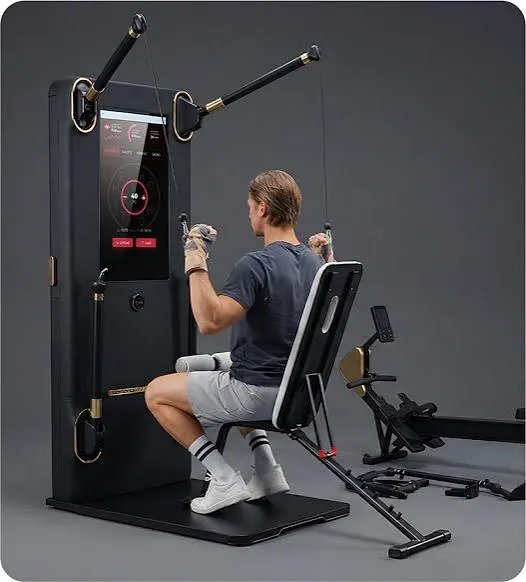
Hohotime has unveiled a revolutionary AI Smart Training Station, integrating four-arm resistance training capabilities directly into consumer home gym environments. This device signals a significant convergence of advanced robotics and personalized fitness technology, promising professional-grade strength training accessibility outside traditional commercial gyms.
The system’s core innovation lies in its ability to deliver comprehensive multi-axis resistance workouts using four independently controlled arms. By embedding AI into the training loop, the station moves beyond simple mechanical resistance; it provides real-time form correction and adaptive program adjustments based on user performance metrics gathered during each session.
This launch directly addresses the growing demand for high-efficacy at-home fitness solutions, positioning Hohotime to capture a substantial segment of the affluent consumer market seeking gym quality without the associated logistical or financial overhead. The initial rollout via Kickstarter suggests strong pre-launch market validation.
Technical Architecture and Operational Dynamics
Technically, the Smart Training Station is engineered around sophisticated motor control systems that allow for precise calibration across all four limbs simultaneously. These actuators manage varied resistance profiles, enabling users to mimic complex compound movements with controlled, predictable loading patterns.
The software backbone integrates proprietary AI algorithms designed not merely for tracking reps but for biomechanical analysis. The system monitors joint angles and movement velocity, providing immediate haptic or visual feedback if a user deviates from optimal form—a function previously exclusive to high-end commercial coaching setups.
Hohotime has specified that the unit is designed for scalable use, accommodating various fitness levels from novice rehabilitation patients to elite strength athletes. The integrated connectivity allows data synchronization with broader health platforms, creating a continuous digital record of physical progression.
Market Implications and Industry Trajectory
The introduction of this four-arm robotic system marks an escalation in the competitive landscape of smart fitness equipment. It pushes the boundary from "connected" exercise machines to truly "intelligent," adaptive training partners capable of dynamic coaching.
From a broader market perspective, this development underscores the trend toward hyper-personalization in wellness technology. Consumers are no longer satisfied with static workout plans; they expect systems that learn and evolve alongside their physiological adaptations.
Geopolitically, Hohotime’s success reflects China's accelerating dominance in integrating advanced manufacturing (robotics) with high-demand consumer applications (AI health). The device serves as a potent demonstration of localized technological capability meeting global fitness imperatives.