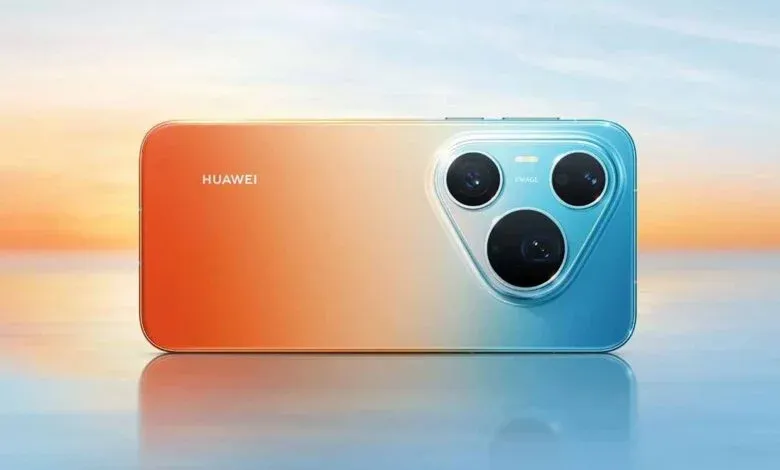
Huawei’s Pura 90s Pro Max introduces AI Composition 3.0, a significant upgrade promising advanced computational photography capabilities that redefine mobile image creation.
This latest software iteration elevates the device's photographic prowess beyond mere enhancement, embedding sophisticated generative and compositional intelligence directly into the imaging pipeline. The core functionality focuses on allowing users unprecedented control over scene construction using artificial intelligence prompts.
AI Composition 3.0 moves past simple object removal or background blurring; it facilitates complex, multi-layered scene manipulation guided by natural language input. Users can direct the AI to alter lighting schemes, reposition elements within a captured frame, or even introduce entirely new, contextually appropriate visual components.
The strategic significance of this update lies in bridging the gap between professional-grade desktop editing and on-device mobile capture. By embedding these complex generative models locally, Huawei minimizes latency, allowing for near real-time compositional adjustments directly from the smartphone interface. This capability fundamentally shifts the user experience from reactive photo correction to proactive scene design.
Technical Depth of AI Composition 3.0
The technical architecture underpinning this new feature relies on a highly optimized local large language model tailored specifically for visual semantics. Unlike cloud-based solutions that require constant data transmission, AI Composition 3.0 executes intensive image synthesis tasks directly on the device's specialized processing unit.
Specific enhancements include improved understanding of spatial relationships and object permanence within an image. For instance, a user can request the AI to "move the subject three feet to the left while maintaining perspective distortion," and the system interprets not only the positional shift but also the necessary recalculations for shadows and environmental occlusion.
Furthermore, the feature incorporates advanced depth mapping integration from the device’s sensors. This allows the AI to perform volumetric editing, enabling modifications that respect the perceived three-dimensional space captured by the phone camera. This level of spatial awareness is critical for achieving photorealistic results when compositing disparate elements.
The developer documentation highlights significant improvements in prompt adherence accuracy compared to previous iterations. Where older models might interpret vague instructions ambiguously, Composition 3.0 demonstrates a higher fidelity to nuanced linguistic directives, making the creative process more predictable and powerful for advanced users.
User Experience and Market Positioning
From a consumer perspective, AI Composition 3.0 democratizes sophisticated visual artistry. Users who possess no deep knowledge of Photoshop or Lightroom can now achieve complex, professionally curated images through intuitive text commands. This lowers the barrier to entry for high-end mobile content creation.
Huawei positions this feature not merely as a software patch but as a defining characteristic of the Pura 90s Pro Max’s premium offering. It directly addresses the market demand for computational power that rivals dedicated hardware, allowing the smartphone to function as a portable, intelligent studio environment.
The integration strategy suggests Huawei is prioritizing on-device AI processing over cloud dependency for core creative functions. This focus enhances privacy by keeping sensitive image data and generative models local, while simultaneously ensuring operational reliability even in areas with poor connectivity. The feature represents a strategic bet on localized, high-performance machine learning.