
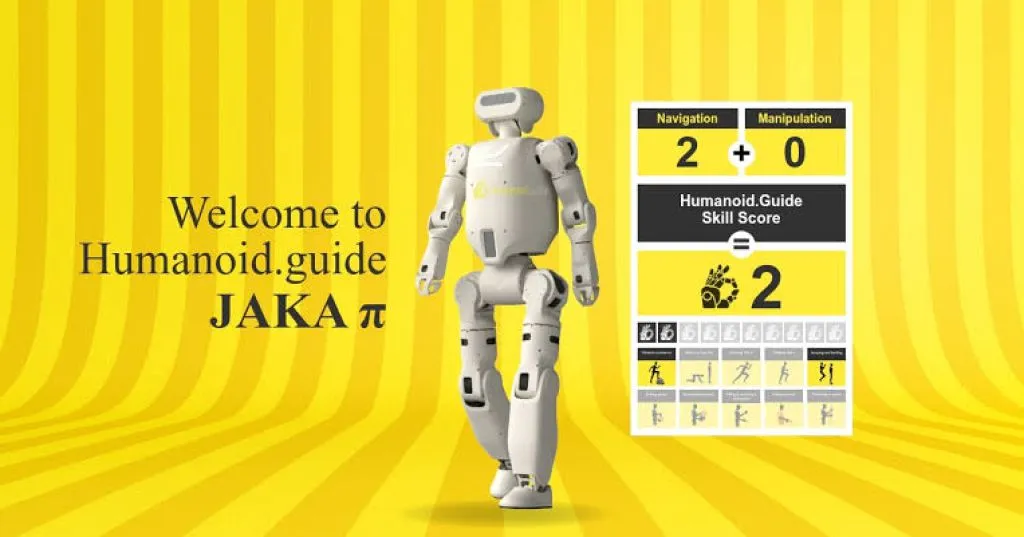
Jaka Robotics unveiled the compact Jaka Pi robot, signaling a significant push toward smaller, more agile industrial automation platforms.
This new robotic unit is designed to address the growing need for versatile automation in increasingly confined workspaces. The platform emphasizes portability and ease of integration, features that position it competitively within the rapidly evolving field of collaborative robotics.
Design and Operational Capabilities
The Jaka Pi boasts a compact form factor while retaining substantial operational capabilities essential for modern manufacturing environments. While detailed specifications are proprietary to the announcement, the robot’s design prioritizes minimizing spatial footprint without sacrificing payload capacity or dexterity.
Jaka Robotics has engineered this model with an eye toward accessibility, suggesting that smaller and medium-sized enterprises (SMEs) can adopt advanced robotics solutions previously reserved for larger industrial players. The architecture appears to support sophisticated task execution, moving beyond simple pick-and-place operations into more complex assembly or inspection roles.
The integration capabilities are another critical aspect of the Pi offering. Companies seeking to deploy these units often require seamless connectivity with existing factory floor infrastructure, and Jaka Robotics appears to have focused development on making this process straightforward for end-users. This focus on rapid deployment reduces the barrier to entry for automation adoption.
Industry analysts suggest that the trend toward miniaturization in robotics is not merely aesthetic but functionally driven. Smaller robots allow for denser production layouts, enabling manufacturers to maximize output within existing physical constraints without necessitating costly facility overhauls. The Jaka Pi directly addresses this spatial efficiency imperative.
Market Positioning
The introduction of the Pi reflects a broader strategic pivot by robotics firms toward hyper-specialization and increased modularity. Instead of offering massive, monolithic robotic arms suitable only for heavy industry, companies are now developing specialized, agile units for detailed, repetitive tasks.
For Jaka Robotics, this launch solidifies its position in the accessible automation market segment. By creating a highly compact yet capable system, they target sectors such as electronics assembly, pharmaceutical handling, and quality control, where precision at a small scale is paramount.
The implications for industrial adoption are substantial. If the Pi meets its performance benchmarks, it could accelerate the 'robotics democratization' trend—the lowering of cost and complexity required to implement automation in non-traditional heavy industry settings. This accessibility drives productivity gains across a wider economic base.