🎙 Listen to a summary of this story
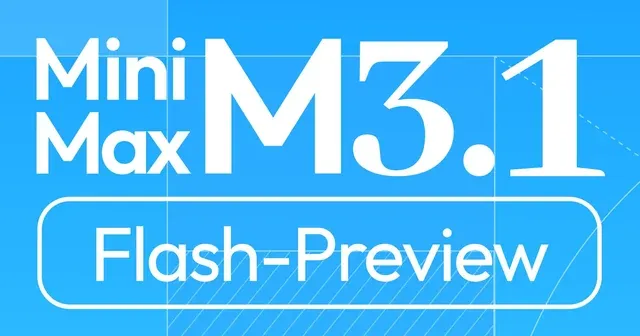
MiniMax has integrated the M3.1-Flash-Preview coding model directly into its MiniMax Code platform, signaling a significant advancement in its AI development capabilities.
Model Integration and Performance Leap
The deployment of the M3.1-Flash-Preview model represents a strategic move to enhance developer productivity within the MiniMax ecosystem. This integration provides users with access to a more capable coding assistant built upon the latest iteration of MiniMax's proprietary large language models.
According to reports, the new model offers substantial improvements in code generation and comprehension tasks when utilized through the MiniMax Code interface. The Flash-Preview designation indicates that this version is being rolled out for early adoption, allowing developers to test cutting-edge features before a full public release.
This development positions MiniMax competitively within the rapidly evolving landscape of AI coding copilots. By embedding advanced models directly into their specialized code environment, MiniMax aims to reduce latency and improve contextual awareness during the programming workflow.
The operational capability of M3.1-Flash-Preview within MiniMax Code suggests a deeper level of integration than simple API calls; rather, it implies a cohesive feature set designed specifically for software engineering needs. This architectural decision prioritizes a seamless user experience where the AI acts as an intrinsic part of the coding environment.
The platform's focus remains on providing high-speed, accurate assistance, which is critical for modern agile development practices. The ability to leverage a "Flash" model implies optimizations toward rapid inference times without sacrificing necessary technical depth.
Strategic Implications for Developer Tools
This move by MiniMax signals an intensified focus on vertical specialization within the AI sector, moving beyond general-purpose chatbots toward highly optimized tools for specific professional domains like software development. The coding model integration is not merely an update; it represents a refinement of their product strategy.
For developers relying on code generation or debugging assistance, the M3.1 upgrade promises tangible operational benefits. Users can expect enhanced suggestions, more accurate completion of complex functions, and potentially better handling of niche programming languages or frameworks.
The availability of a "Preview" model is standard industry practice for gauging real-world performance under diverse load conditions. This allows MiniMax to gather critical feedback from early adopters regarding the M3.1's robustness before committing to a wider deployment cycle. This iterative approach minimizes the risk associated with large-scale AI feature rollouts.
The underlying technology driving this capability is rooted in MiniMax’s ongoing investment in its foundational model architecture. The successful integration demonstrates effective engineering between cutting-edge machine learning research and practical, production-ready software delivery.