Robot electronic-skin startup MoSense has secured approximately RMB 100 million in angel-plus funding, signaling a significant capital injection into China's advanced soft robotics sector.
This substantial investment validates the commercial trajectory of highly sensitive, adaptable electronic skin technology, positioning MoSense as a key domestic player in the burgeoning field of intelligent haptic interfacing. The funding round underscores a growing investor confidence in hardware solutions that bridge the gap between traditional rigid robotics and the demand for flexible, human-like interaction.
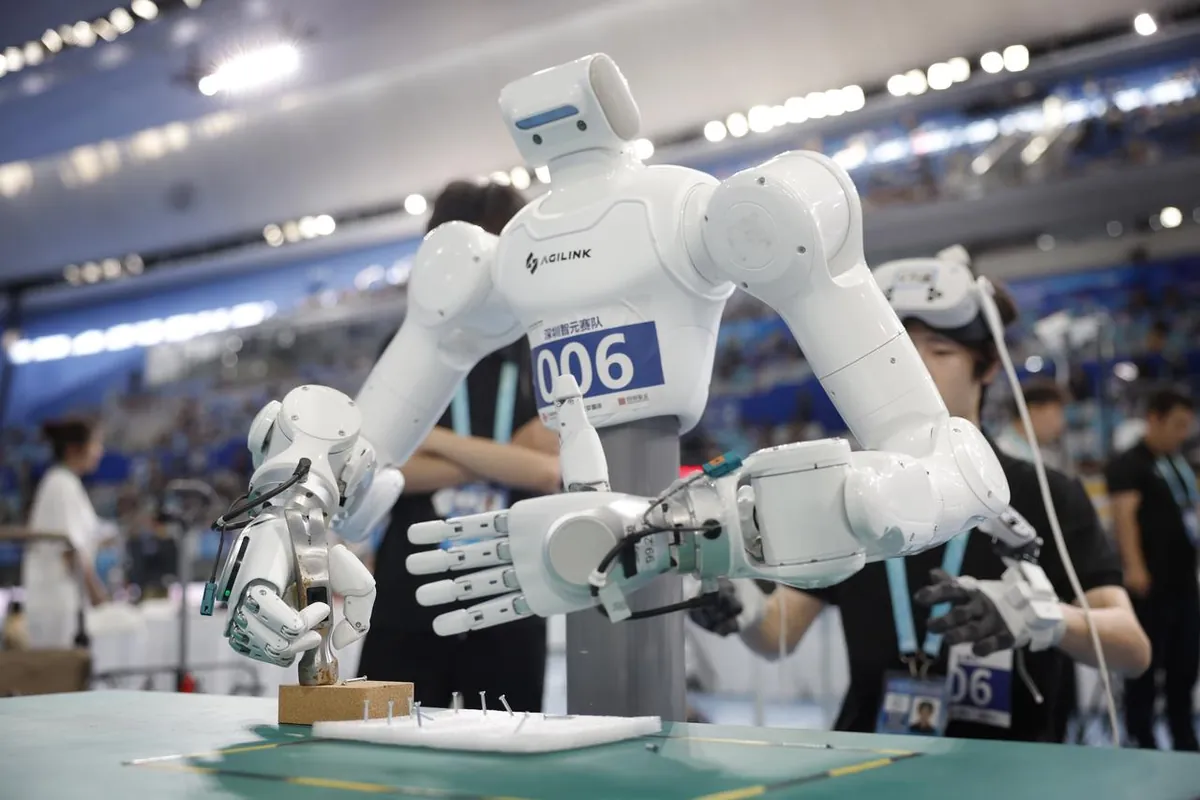
MoSense's technology is designed to imbue robotic platforms with tactile awareness, allowing machines to perceive pressure, temperature, and texture with high fidelity. This capability moves robotics beyond simple programmed movements toward genuine environmental interaction, a critical bottleneck in current industrial and service automation.
Technical Capabilities and Commercial Application
At the core of MoSense’s offering is a sophisticated electronic skin matrix capable of complex signal transduction. Unlike conventional sensors that require discrete points of contact, the MoSense skin provides a distributed sensing layer, mimicking biological skin function. This allows the robot to gather comprehensive data across a surface area simultaneously.
The system integrates advanced material science with embedded microelectronics. The resulting hardware is lightweight and highly durable, making it suitable for harsh industrial environments while maintaining the necessary sensitivity for delicate tasks, such as handling fragile medical samples or operating in complex assembly lines. The software architecture supports real-time data processing, enabling immediate feedback loops necessary for adaptive robotic control.
Commercially, the deployment scope for this technology spans multiple verticals. While initial applications target high-precision manufacturing and logistics, the inherent flexibility of the skin opens pathways into advanced prosthetics, elder-care robotics, and agricultural automation, demonstrating a broad market applicability beyond pure industrial automation.
Market Dynamics and Geopolitical Significance
The successful funding round places MoSense at the forefront of a domestic push toward self-sufficiency in high-end sensing components. In an era defined by global technological competition, mastering foundational hardware like electronic skin offers a strategic competitive advantage, reducing reliance on imported, often proprietary, sensor technologies.
This growth trajectory reflects a broader strategic shift within China's technology ecosystem, where capital is increasingly flowing toward deep-tech hardware innovators rather than purely software-based solutions. MoSense serves as a case study for the maturation of China's domestic deep-tech supply chain.
Ultimately, the advancement of tactile robotics is pivotal for the next generation of artificial general intelligence in physical systems. By giving robots the sense of touch, MoSense and its peers are enabling a transition from automated tools to genuinely perceptive collaborators, fundamentally altering the landscape of human-machine interaction globally.