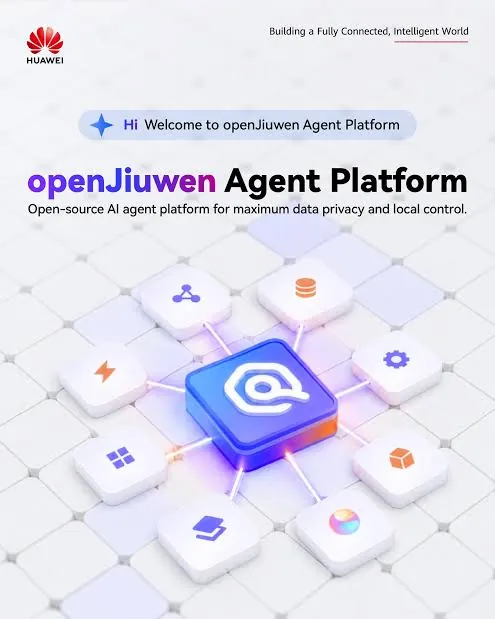
OpenJiuwen's AgentOS allows autonomous agents to build, install, and roll back their own plugins, marking a significant leap in self-governing AI architectures. This capability fundamentally shifts the paradigm from pre-configured AI workflows to truly adaptive, self-modifying intelligent systems capable of managing their own operational dependencies.
The introduction of this native extension package system addresses a critical bottleneck in current multi-agent swarm environments: the rigid dependency management. By granting agents the permission and mechanism to manage their own software stack, AgentOS moves beyond simple execution toward complex, decentralized software engineering at the agent level, enhancing resilience and adaptability in dynamic computing landscapes.
This self-management feature is not merely an incremental update; it represents a foundational architectural shift. It enables complex AI agents to evolve their capabilities in real-time based on environmental demands, effectively turning the agent itself into a miniature, self-managing software entity within a larger computational swarm.
Technical Architecture and Implementation
The RSI-Native AgentOS framework integrates deeply with the underlying swarm system, utilizing a robust mechanism for package management that mirrors modern software repositories. Agents interact with a controlled environment where they can autonomously fetch, verify, and deploy necessary extensions without constant human intervention or reliance on a centralized orchestration layer for every minor update.
Technically, this system supports the full lifecycle of a plugin—from initial discovery and installation through to runtime execution and, crucially, safe rollback. The ability to roll back corrupted or malfunctioning plugins is vital for maintaining system integrity, providing a safety net that is often absent in less mature agent orchestration platforms.
The design emphasizes modularity; plugins are treated as discrete, interchangeable units of functionality. This structure allows developers to create highly specialized agents that can dynamically augment their skill sets as the operational context changes, offering a level of functional plasticity previously confined to highly complex, monolithic AI models.
Broader Market and Geopolitical Implications
The maturation of self-modifying agent systems like AgentOS carries significant implications for the enterprise AI market. It accelerates the timeline for deploying complex, customized AI solutions, moving the industry closer to autonomous digital workers that require minimal hand-holding once deployed into production environments.
From a geopolitical standpoint, the advancements in localized, self-contained agent architectures challenge traditional centralized cloud computing models. Systems that can manage their own dependencies locally enhance operational sovereignty, a critical factor in increasingly scrutinized international technology deployments.
The success of OpenJiuwen in demonstrating this capability positions the framework as a serious contender in the competitive landscape of agent orchestration. Companies seeking to build next-generation intelligent systems will increasingly prioritize platforms that offer this level of autonomous maintenance, making AgentOS a key piece of infrastructure for future AI scalability.