PHANES AI has advanced robotics by introducing TouchWorld, a tactile foundation model enabling robots to perform dexterous manipulation with unprecedented precision.
The new framework represents a significant step toward general-purpose robotic intelligence, allowing machines to interact with the physical world using high-fidelity touch data rather than solely relying on vision. This development addresses a critical bottleneck in current robotics research: bridging the gap between abstract perception and nuanced physical interaction.
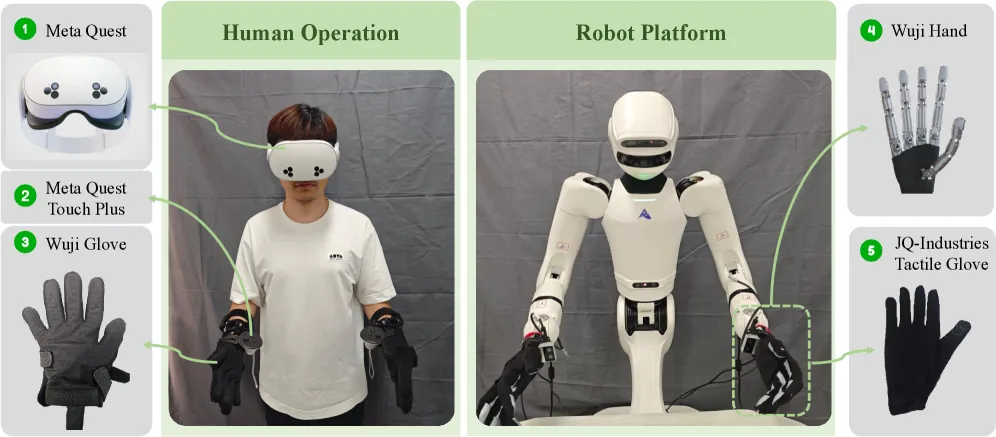
TouchWorld functions as a foundation model trained extensively on tactile sensing data collected from robotic hands. Unlike traditional task-specific models, this architecture is designed to generalize across diverse manipulation tasks, making it applicable to varied industrial or domestic environments. The system learns the complex relationship between applied force, surface texture, and object stability.
Researchers at PHANES AI detailed that the model allows robots to perform delicate operations—such as picking up a raw egg without cracking it or sorting irregularly shaped components—that previously required extensive, task-specific programming for each scenario. The tactile input provides immediate feedback on contact forces, enabling closed-loop control essential for fine motor skills.
Technical Architecture and Capabilities
The core innovation lies in the way TouchWorld processes high-dimensional tactile streams. It moves beyond simple binary contact detection to interpret nuanced physical properties of objects. The model leverages self-supervised learning techniques on massive datasets of simulated and real-world tactile interactions, allowing it to build a rich internal representation of material physics.
Specifically, the architecture incorporates specialized modules designed to handle temporal dependencies in force readings. This allows the robot not only to sense contact but also to understand the *dynamics* of the interaction—how force changes over time as the gripper closes or slides across a surface. The resulting dexterity is directly proportional to the model's ability to predict future tactile states based on current input.
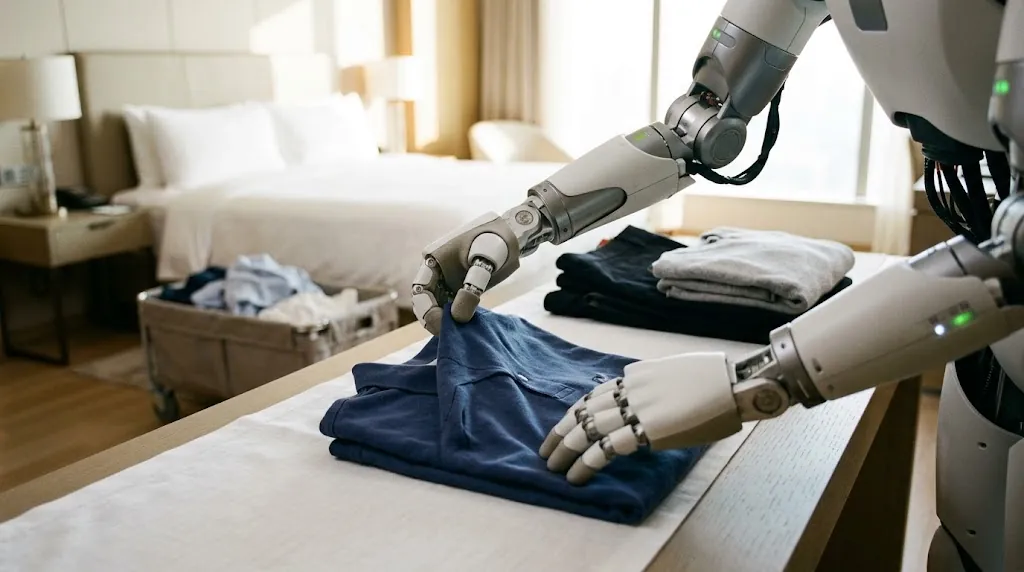
The practical implications for automation are substantial, particularly in fields requiring high variability and sensitivity, such as food processing, micro-assembly, and surgical assistance. Current industrial robots excel at repetitive, predictable movements; TouchWorld provides the capability to handle unpredictability inherent in real-world objects.
Furthermore, PHANES AI emphasizes the modularity of the TouchWorld system. It is designed to be integrated with various robotic hardware platforms, meaning its intelligence layer can potentially be deployed across a wide range of existing and future robotic arms equipped with appropriate tactile sensors.
Significance for Robotic Autonomy
This advancement positions PHANES AI at the forefront of embodied AI research. Foundation models in large language processing (LLMs) have demonstrated powerful generalization capabilities in cognitive tasks; TouchWorld applies this same paradigm to physical interaction, moving AI from the purely digital realm into complex physical embodiment.
The ability of a machine to 'feel' an object is arguably the next major hurdle toward achieving true robotic autonomy. Vision systems are excellent at identifying *what* an object is, but tactile models like TouchWorld dictate *how* that object can be manipulated safely and effectively under variable conditions. This dual perception—visual context combined with haptic feedback—is what enables sophisticated manipulation.
Industry observers suggest this research signals a shift from building specialized robots for single tasks to developing generalized robotic agents capable of adapting to novel environments with minimal retraining. The scalability of foundation models suggests that the training data, while vast, can lead to broad applicability across disparate domains.