🎙 Listen to a summary of this story
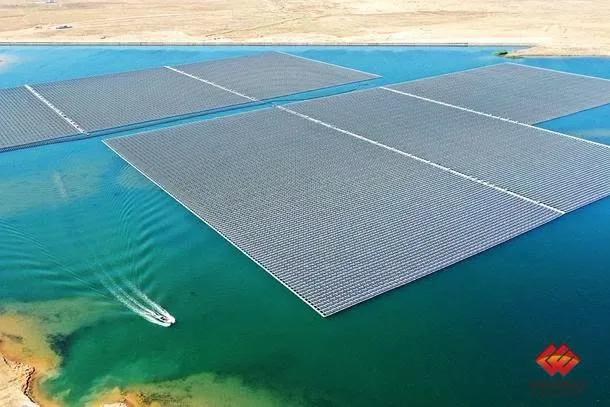
China's renewable energy sector is increasingly turning to unconventional locations for power generation, with former industrial sites providing prime real estate for massive solar installations. According to recent developments in Ningxia Hui Autonomous Region, China has successfully implemented one of its first floating solar photovoltaic plants situated on the water body within a decommissioned mine site. This pioneering project signals a major shift in how China plans to achieve its ambitious carbon neutrality goals, repurposing industrial scars into centers for green development.
The integration of renewable energy sources like solar power with post-mining rehabilitation efforts addresses two critical national priorities: maximizing clean electricity generation and mitigating the environmental impact of historical mining operations. By utilizing former mine waters—which often require careful management or remediation—the floating nature of the photovoltaic array minimizes land use while simultaneously offering potential cooling benefits to the water body, thereby improving local aquatic ecosystems.
The facility represents a significant technological leap for China's energy infrastructure. The project utilizes advanced solar technology mounted on structures that float atop the mine’s residual water. This design choice allows engineers to harvest solar energy without needing vast tracts of arable land or pristine natural habitats, which are becoming increasingly scarce resources in densely populated regions.
A representative from the industry noted that this model proves that industrial waste areas can be transformed into productive assets. The success of the Ningxia project provides a scalable blueprint for other provinces grappling with both energy demands and environmental cleanup challenges, solidifying the concept of circular economy principles within the power sector.
Repurposing Industry for Green Energy
The decision to site the solar plant on former mining waters is highly strategic. Mining activities leave behind substantial physical footprints, including large reservoirs or flooded pits. While these sites require costly and time-consuming remediation, they also present a stable water surface area suitable for flotation systems. By deploying floating photovoltaic (FPV) arrays, developers can stabilize the environment while generating clean power.
The technical complexity involves managing the interaction between the solar equipment, the fluctuating water levels, and the underlying geology of the mine site. Engineers must account for factors such as water chemistry, sediment accumulation, and structural integrity over decades of operation. The deployment process itself requires specialized construction techniques adapted for aquatic environments.
Furthermore, these sites often benefit from existing infrastructure or proximity to grid connections that were initially established for mining operations. This adjacency greatly reduces the overall cost and timeline associated with connecting a new power source to the national transmission grid compared to developing greenfields in remote areas.
Broader Implications for China's Energy Transition
The success of this mine-water floating solar plant is more than just an isolated energy achievement; it signals a fundamental policy shift toward integrated resource management. It demonstrates that environmental remediation and clean power generation can be mutually reinforcing goals, rather than competing priorities.
As China continues its aggressive push toward achieving carbon neutrality by 2060, finding reliable sources of clean electricity is paramount. Utilizing former industrial sites minimizes the political and social resistance often associated with large-scale energy projects that encroach upon agricultural land or sensitive ecosystems. The model offers a path for sustainable economic development in regions previously defined by heavy industry.
Experts suggest this "solar on mine" approach will become a standard practice across China's resource-rich, but environmentally challenged, provinces. It provides a tangible example of how advanced technology can solve complex socio-environmental problems simultaneously, creating both clean power and revitalized landscapes.
The continued expansion of such projects underscores the government’s commitment to fostering innovative solutions that harmonize industrial decline with green growth, positioning China as a global leader in sustainable infrastructure development. Details regarding the Ningxia facility can be found in reports covering its groundbreaking nature.