A robotics startup founded by a former Cainiao CTO secured nearly 5,000 unit orders for its embodied robots during the massive Double 11 e-commerce event.
The validation of embodied AI robotics compnay, Quantum Dynamics, signals a critical maturation point for industrial automation in China, moving advanced robotic solutions from pilot projects to high-volume market adoption. The company, leveraging deep operational knowledge from its founder's tenure at the logistics giant Cainiao, is positioning its hardware directly into the high-throughput demands of modern warehousing.
The successful integration into a major retail sales peak underscores the immediate, practical applicability of sophisticated mobile manipulation systems in supply chain environments, bypassing purely theoretical demonstrations to achieve tangible, large-scale commercial traction.
Technical Capabilities and Commercial Dynamics
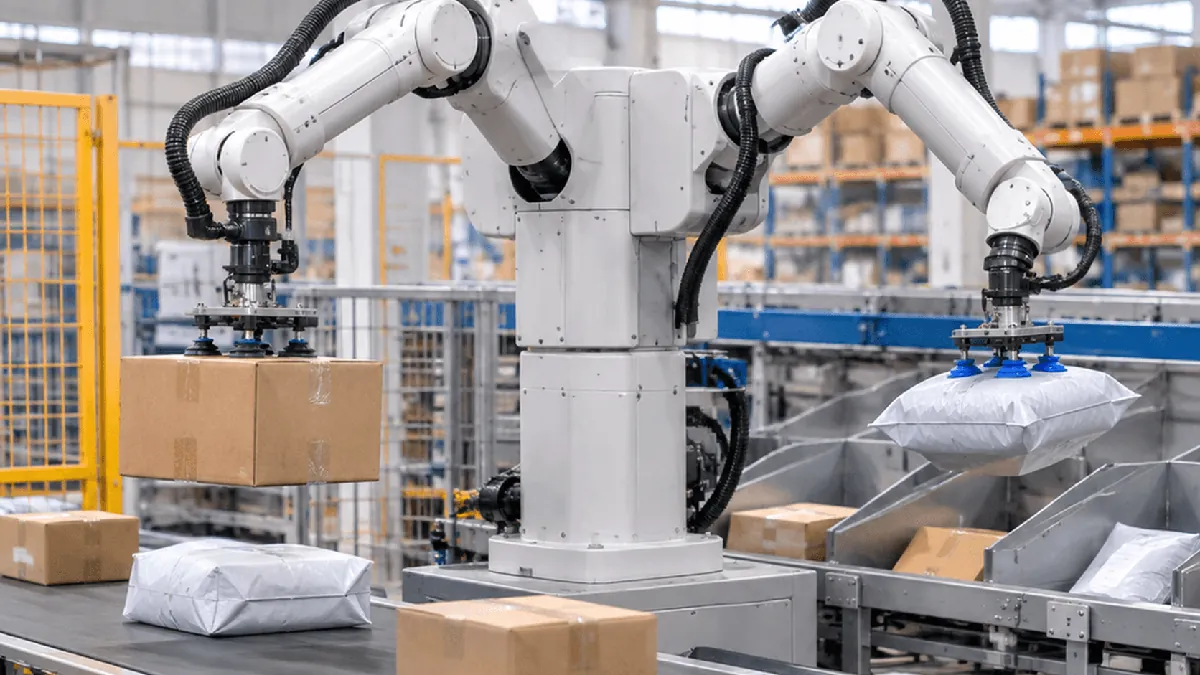
The robots deployed by the startup are designed for complex warehouse operations, moving beyond simple conveyor belt tasks to handle dynamic, unstructured environments. These embodied robots are engineered for high levels of autonomy, utilizing advanced perception and navigation systems necessary for navigating dense, real-world logistics settings.
From a hardware perspective, the systems integrate sophisticated sensor suites and robust locomotion platforms, allowing them to perform tasks ranging from item picking and sorting to inventory management within fulfillment centers. The software stack, informed by large-scale e-commerce data, enables precise decision-making under variable operational loads.
The immediate success during Double 11 demonstrates a clear market appetite not just for automation, but for automation that is specifically tailored to the operational friction points experienced by massive Chinese e-commerce players. This direct industry feedback loop is accelerating the iteration cycle for the technology.
Implications for Automation and Global Supply Chains
This development represents a significant trend: the convergence of top-tier logistics expertise with cutting-edge AI robotics development within China. The pedigree of the founder provides a distinct competitive advantage, as the technology is inherently built with enterprise-scale logistics constraints in mind, rather than being a generalized laboratory product.
The rapid uptake during peak shopping seasons suggests that the bottleneck in Chinese e-commerce fulfillment is rapidly shifting from labor availability to technological integration capacity. Companies are actively seeking solutions that can absorb peak demand spikes without proportional increases in human capital.
Geopolitically, the successful commercialization of highly capable, domestically developed embodied robots places Chinese tech firms in a stronger position against established Western automation incumbents. If this trend scales, it signals a substantial shift in the global manufacturing and warehousing automation landscape, making localized, specialized AI solutions a dominant force.
For investors and industry observers, the performance during Double 11 serves as a powerful proof point that the maturity curve for Chinese industrial robotics is steepening rapidly, marking a transition toward true operational self-sufficiency in complex supply chain environments.