
🎙 Listen to a summary of this story
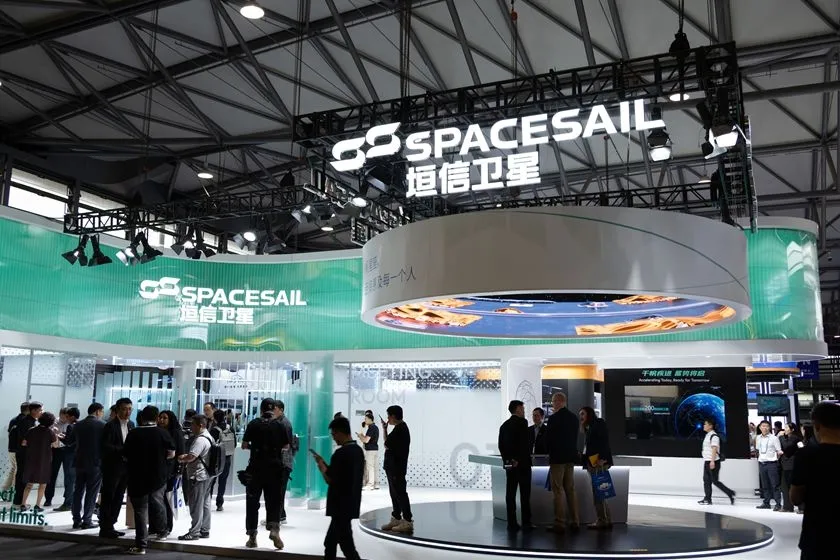
SpaceSail, an emerging player in China's rapidly expanding low-earth orbit satellite sector, is aggressively pursuing massive investment capital as it positions itself as a direct technological challenger to global leaders like SpaceX’s Starlink constellation.
The company has made its intent clear: to build domestic capacity for advanced satellite communication services, aligning with Beijing’s strategic push for self-sufficiency in critical space infrastructure. Reports indicate that SpaceSail is seeking billions of dollars in funding to accelerate development and deployment, aiming to capture significant market share within China's highly regulated yet rapidly growing telecom sector.
Multiple financial reports highlight the scale of interest surrounding the venture. For instance, one report noted that SpaceSail successfully raised $1 billion, suggesting a strong appetite for Chinese domestic capital while simultaneously emphasizing the strategic goal of insulating the project from foreign investment pressures and competition .
Further reporting on the investment climate suggests that major institutional players are betting heavily on domestic rivals, with one source citing an interest of $194 billion in supporting the development of China's indigenous satellite communication systems .
The Strategic Importance of Satellite Connectivity
SpaceSail’s ambition is rooted in the geopolitical and economic reality of modern connectivity. As global reliance on high-bandwidth, low-latency internet grows, the competition among satellite providers intensifies. Starlink has established a formidable presence globally, offering services that challenge traditional terrestrial infrastructure limitations.
However, China's domestic technology policy emphasizes national control over critical infrastructure. This environment favors homegrown champions like SpaceSail, which benefit from strong governmental backing and a mandate to reduce reliance on foreign technological dependencies. The company’s focus is not merely on raising capital but on executing a localized, comprehensive network solution tailored specifically for the unique demands of the Chinese market.
The investment push underscores a broader trend: the global race for space dominance is increasingly viewed through a lens of national security and economic sovereignty. For SpaceSail, this means developing proprietary technology stacks that can withstand international market pressures while meeting stringent domestic performance requirements.
Navigating Competition and Market Entry
The challenge facing SpaceSail is twofold: matching the operational efficiency and global reach of established rivals, while also navigating a complex regulatory landscape. The company must demonstrate not only technical parity but also superior service integration within China’s vast and diverse geographical area.
Analysts covering the sector suggest that successful market penetration will depend on SpaceSail's ability to integrate its satellite services with existing terrestrial fiber networks, offering seamless end-user experiences. Furthermore, the company must manage public expectations regarding deployment timelines and service reliability, especially when competing against a well-funded global incumbent.
The narrative surrounding SpaceSail is thus one of national technological ambition meeting intense commercial competition. The scale of investment signals confidence from local financial institutions in its ability to execute a large-scale space infrastructure project, solidifying the company's role as a key domestic player determined to secure China’s position as a leader in global satellite communication technology .
As the company moves forward, its ability to maintain momentum and secure operational partnerships will be crucial in determining whether it can successfully challenge the global dominance of existing satellite constellations while adhering to China’s unique industrial policy framework.