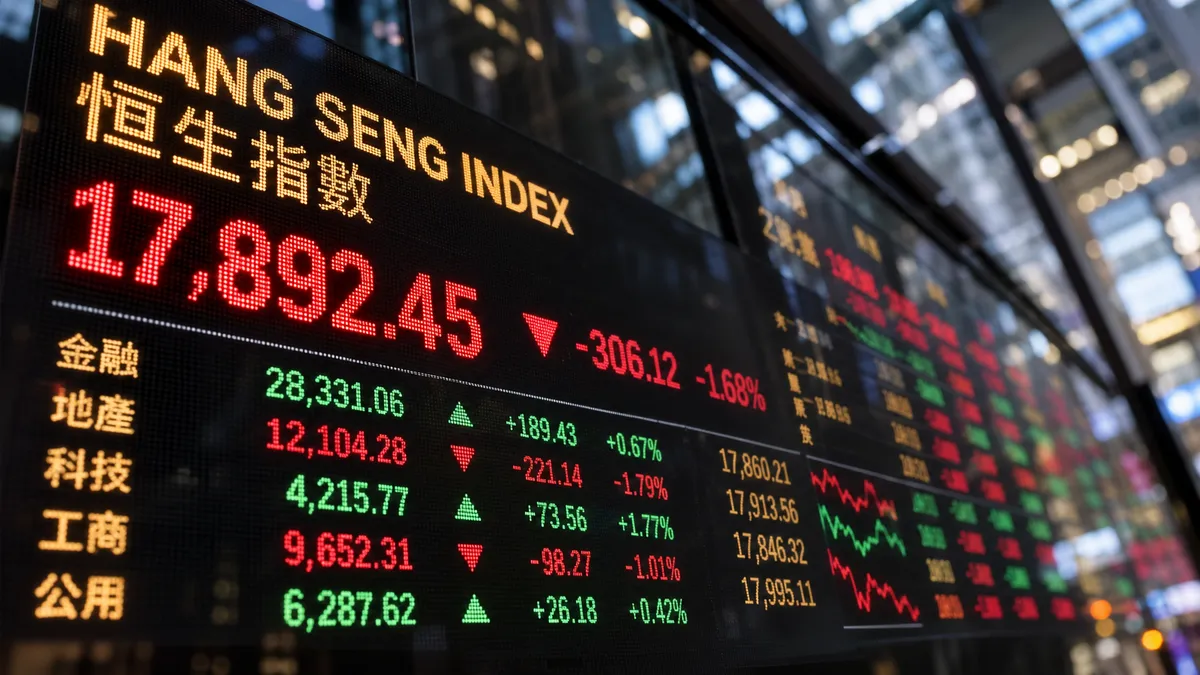
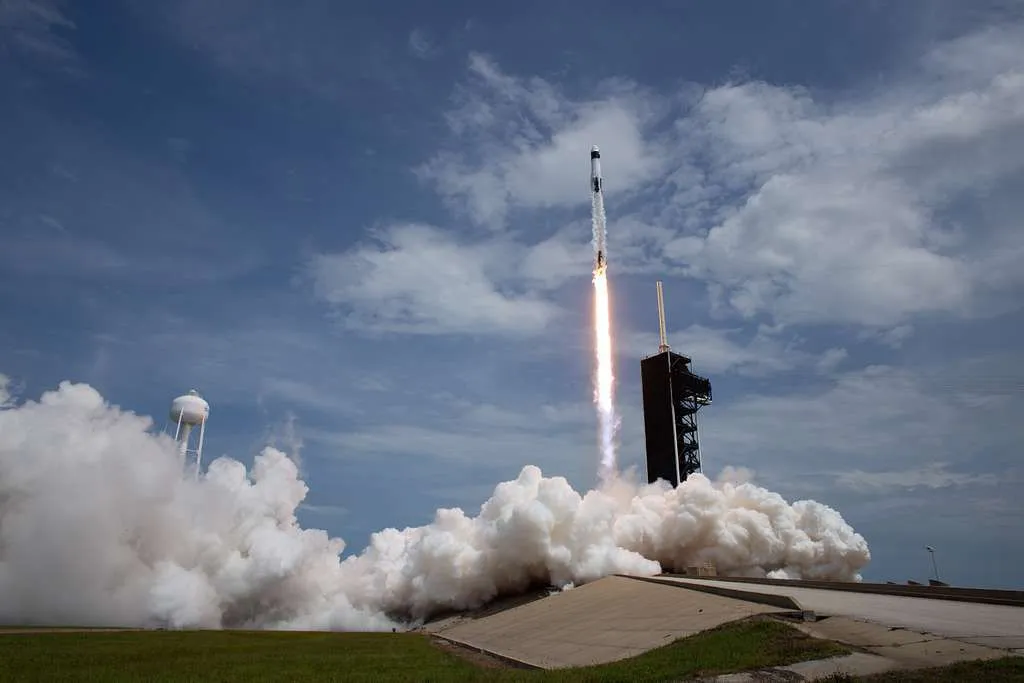
JPMorgan has recently asserted that SpaceX’s widely anticipated mega-listing is unlikely to create significant ripples within Hong Kong’s financial markets, even as the company’s rise reshapes the strategic calculations of China’s space technology sector.
The analysis suggests that while a large-scale listing event invariably draws capital, the specific dynamics of SpaceX’s offering are insufficient to destabilise the broader regional market structure. JPMorgan maintains that investor appetite and existing market depth provide adequate buffers against speculative outflows associated with such high-profile corporate events.
The anticipation surrounding SpaceX’s potential public debut has fuelled speculation regarding its impact on Asian capital flows, particularly given Hong Kong’s deep integration into global technology investment. However, the bank’s assessment pivots on differentiating between temporary market froth and systemic stresses in the system.
Sources within the financial institution indicate that while large institutional players will undoubtedly engage with the offering, the volume required to materially affect Hong Kong’s overall liquidity profile remains overstated by some commentators. The focus, JPMorgan posits, should remain on the structural resilience of local banks, the depth of cross-border capital pools and sustained inflows into other high-growth sectors.
Hong Kong Market Dynamics and Liquidity Risk
The strategic significance of SpaceX’s listing extends beyond valuation; it represents a major injection point for private aerospace technology into public markets. For Hong Kong, a gateway to mainland Chinese capital, such listings often act as both an opportunity and a potential pressure point.
JPMorgan’s report drills down into the mechanisms of capital deployment, arguing that most expected outflows will be self-contained within sophisticated global trading desks rather than manifesting as widespread retail panic or forced selling across local indices. The sheer size of existing capital pools in Hong Kong is deemed robust enough to absorb the intended liquidity shift without triggering cascading sell-offs.
Furthermore, the report examines the nature of SpaceX’s valuation drivers, primarily tied to reusable launch systems, satellite broadband, orbital infrastructure and advanced propulsion technology. These drivers differ markedly from the consumer internet and platform-economy listings that have traditionally shaped Asian exchange sentiment.
This distinction matters for Hong Kong. A SpaceX listing may influence global technology allocations, but it does not directly correlate with the earnings outlook for Hong Kong banks, insurers, property developers or consumer companies. JPMorgan therefore cautions against extrapolating short-term volatility into systemic risk.
The bank also notes that regulatory oversight in the region is calibrated to manage large capital movements proactively. The pathway for capital exit, should it occur, is expected to move through established international channels rather than causing a sudden constriction of local credit markets.
SpaceX as a Catalyst for Chinese Space Technology
Beyond capital markets, SpaceX has become a benchmark against which China’s commercial and state-backed space ambitions are increasingly measured. Its success with Falcon 9 reusability, Starship development and the rapid expansion of Starlink has altered expectations for launch costs, deployment speed and the commercial viability of low-Earth-orbit infrastructure.
For Chinese policymakers and companies, the lesson is not merely that rockets can be cheaper. It is that space infrastructure can become a scalable industrial platform, supporting broadband connectivity, earth observation, defence-adjacent communications, logistics, data services and potentially future orbital manufacturing.
This has sharpened attention on Chinese satellite internet projects such as Guowang and Qianfan, which are widely viewed as strategic counterparts to Starlink. These programmes aim to reduce reliance on foreign-controlled networks, secure orbital slots and spectrum access, and ensure that China has a sovereign position in the next generation of global communications infrastructure.
The competitive pressure from SpaceX is also visible in reusable launch development. Chinese commercial rocket firms have accelerated work on vertical landing, methane-fuelled engines and rapid turnaround launch models. While China retains a powerful state space programme, SpaceX’s model has encouraged a more hybrid ecosystem in which state objectives, local-government financing and private-sector engineering increasingly overlap.
That does not mean Chinese firms are simply copying SpaceX. The mainland market operates under different strategic incentives. National security, industrial policy, supply-chain independence and provincial economic development all shape investment decisions. Even so, SpaceX has changed the timeline. Technologies once treated as long-term aspirations are now being pursued as near-term industrial priorities.
Implications for Regional Investments
The findings carry direct implications for institutional investors managing mandates focused on Greater China exposure. If the liquidity drain remains contained, firms can maintain strategic long-term positioning in high-growth technology sectors without needing to overly hedge against a speculative IPO overhang.
At the same time, the SpaceX listing may redirect attention toward Asian companies linked to satellite manufacturing, advanced materials, launch services, ground-station equipment, communications chips and space-data applications. Rather than weakening regional technology sentiment, the deal could encourage investors to reassess the value of China’s emerging space supply chain.
Conversely, if unexpected geopolitical factors, valuation concerns or demand weakness occur during the listing window, the bank suggests that localised portfolio de-risking becomes prudent. However, based on current modelling, this scenario is assigned a relatively low probability weighting.
Investors tracking the event should monitor not just trading volumes during the initial offering period, but also post-listing capital reallocation patterns among sovereign wealth funds, hedge funds and technology-focused asset managers operating in Asia. These subsequent movements will offer a clearer picture of sustained market confidence versus temporary hype surrounding the launch.
The broader conclusion is that SpaceX’s market debut should be understood on two levels. Financially, JPMorgan expects Hong Kong to absorb the shock without significant disruption. Strategically, however, SpaceX’s rise is already forcing China’s space technology sector to move faster, think bigger and compete across a wider frontier than traditional aerospace alone.