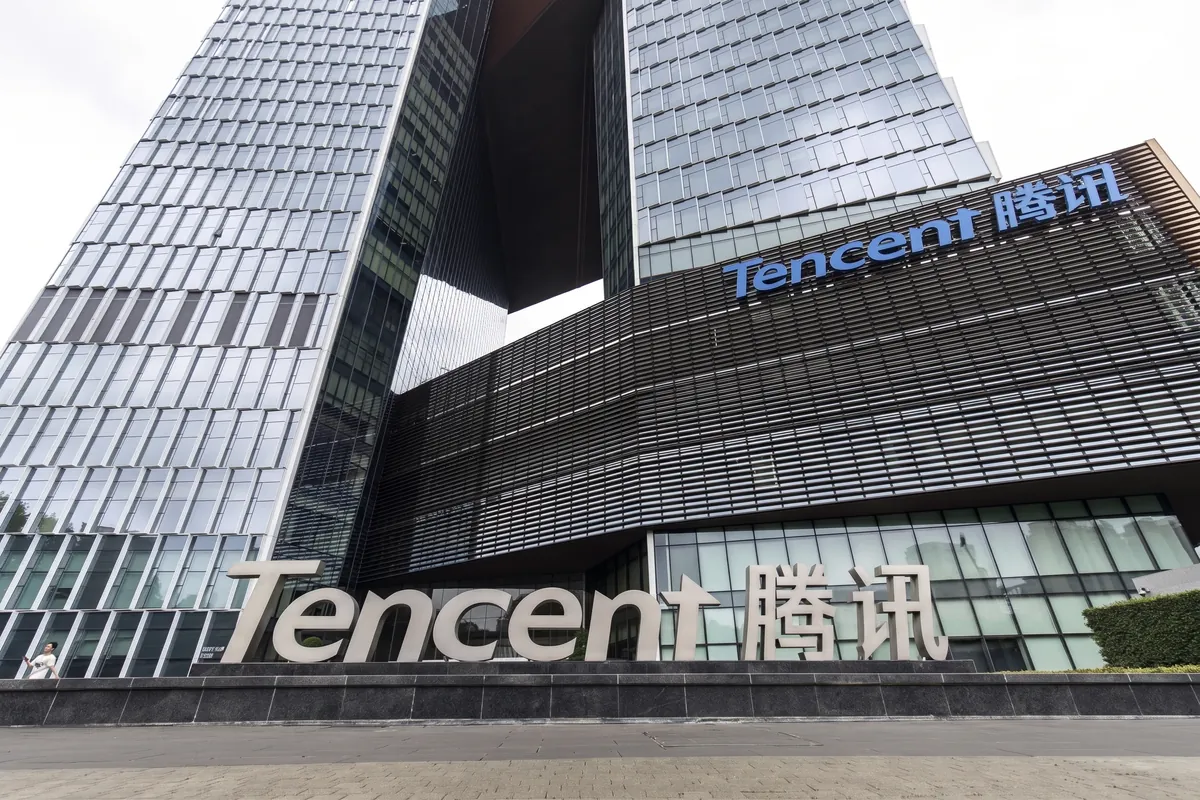
Tencent’s quarterly profit declined significantly as the tech giant channeled capital into a sixfold increase in artificial intelligence infrastructure spending, accepting immediate margin compression for future technological dominance.
The financial outcome underscores a critical inflection point in the global technology sector: the prioritization of massive, front-loaded capital expenditure (CAPEX) over short-term profitability. While the underlying operational performance of the conglomerate remains robust, the aggressive push into AI compute power necessitated an unprecedented investment cycle, directly impacting net earnings. The situation has been made significantly harder for the company, however, because of recently announced US chip restrictions.
Despite this, the strategic maneuver signals a clear corporate commitment to securing a leading position in the generative AI race, recognizing that the race for foundational models and advanced processing capabilities requires a corresponding, unsustainable outlay of resources in the current fiscal cycle.
The Mechanics of AI Capital Expenditure
The increase in infrastructure spending is intrinsically linked to the demand for high-performance computing clusters capable of training and serving large language models. These clusters rely heavily on advanced Graphics Processing Units (GPUs) and massive, proprietary data center deployments.
Tencent is not merely upgrading existing hardware; it is constructing new ecosystems designed to handle petabyte-scale datasets and complex, multi-modal AI workloads. This requires not only the procurement of cutting-edge silicon but also the associated build-out of specialized cooling, power redundancy, and networking fabric within its cloud architecture.
Commercially, this heavy investment creates a short-term drag on the bottom line, as these expenditures are depreciated against future, yet-to-be-realized revenue streams from AI-driven services. The current financial statement reflects the cost of building the engine, rather than the immediate output of the finished product.
Broader Market and Geopolitical Ramifications
This aggressive spending pattern by Tencent is symptomatic of a broader, capital-intensive transition occurring across the entire global technology landscape. Major players across China and the West are effectively entering an era of "compute arms race," where the ability to access and process data at scale dictates market leadership.
From a geopolitical standpoint, the concentration of AI development in massive, proprietary infrastructure creates strategic choke points. Control over superior compute power translates directly into influence over the next generation of digital services, intensifying the technology competition between established Western firms and aggressive Chinese conglomerates.
Market analysts are adjusting valuation models to account for this shift. Future assessments of firms like Tencent will increasingly weigh the scale and sophistication of their AI compute assets against traditional quarterly earnings figures, acknowledging that the competitive advantage is now predicated on technological moat rather than mere revenue streams.