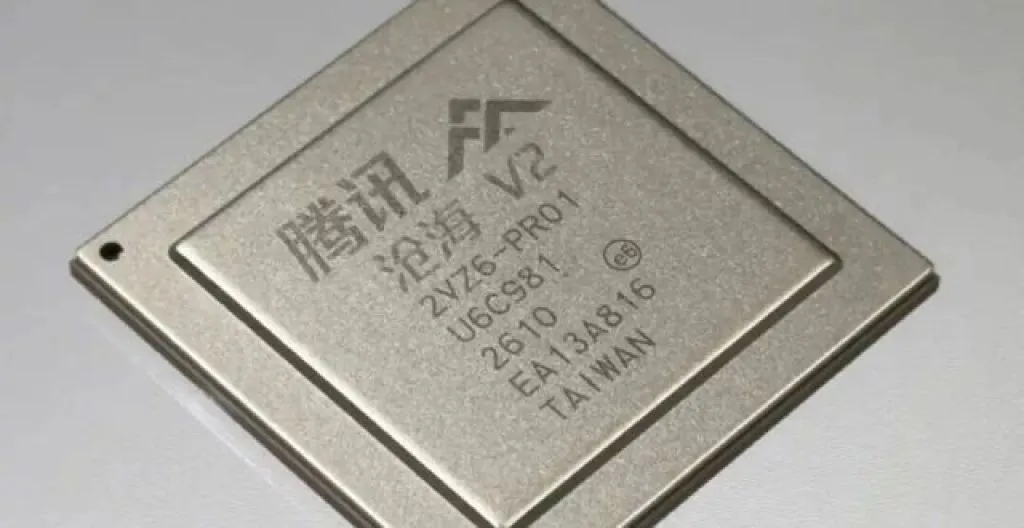
Tencent's internally developed Canghai V2 chip has entered mass production, achieving a significant technical milestone by surpassing the hardware encoding rankings of MSU.
Chip Production and Performance Benchmarks
The successful transition of the Canghai V2 chip from development to large-scale manufacturing signals a substantial advancement in Tencent's semiconductor self-sufficiency strategy. This new silicon platform reportedly outperformed existing benchmarks, specifically ranking higher than the hardware encoding capabilities previously established by MSU.
The integration of proprietary designs within the V2 architecture allows Tencent to maintain stringent control over performance optimization and operational efficiency across its vast ecosystem of applications and services. The development represents a critical step away from reliance on external semiconductor suppliers for core computational components, a strategic imperative in the current global technology landscape.
Industry analysts view this achievement as indicative of China’s accelerating capability in specialized AI hardware design. By mastering complex encoding processes at the hardware level, Tencent gains an intrinsic competitive advantage in data processing speed and power efficiency—factors crucial for maintaining high-throughput services like live streaming and large-scale social media operations.
Specific details regarding the V2 chip’s architecture remain closely guarded proprietary information, but its market entry validates years of dedicated investment by Tencent's hardware research teams. The ability to push past established benchmarks like MSU suggests significant breakthroughs in transistor density or processing pipeline optimization within the Canghai series.
Strategic Implications for Tech Sovereignty
The mass production rollout of the Canghai V2 is more than a product update; it embodies a broader national trend toward technological sovereignty. For major tech firms operating at scale, securing domestic supply chains for critical components mitigates geopolitical risks associated with international trade fluctuations or export controls.
Tencent's move directly challenges the dominance of established global semiconductor providers in certain application-specific integrated circuit (ASIC) markets. By perfecting its own encoding hardware, the company can tailor performance precisely to the demands of Tencent’s specific algorithmic requirements, something off-the-shelf components often cannot achieve with optimal efficiency.
This development places Tencent on par with other major domestic tech players aggressively pursuing chip self-sufficiency. The focus is not merely on replication but on achieving superior or highly specialized performance metrics tailored to the unique demands of large-scale internet services operating within the Chinese market infrastructure.
The continued maturation of chips like Canghai V2 will inevitably drive down operational costs for Tencent while simultaneously enhancing the robustness and speed of its consumer-facing products. Investors are watching this trajectory closely, as hardware autonomy is increasingly viewed as a fundamental guarantor of long-term corporate resilience in the highly competitive digital economy.