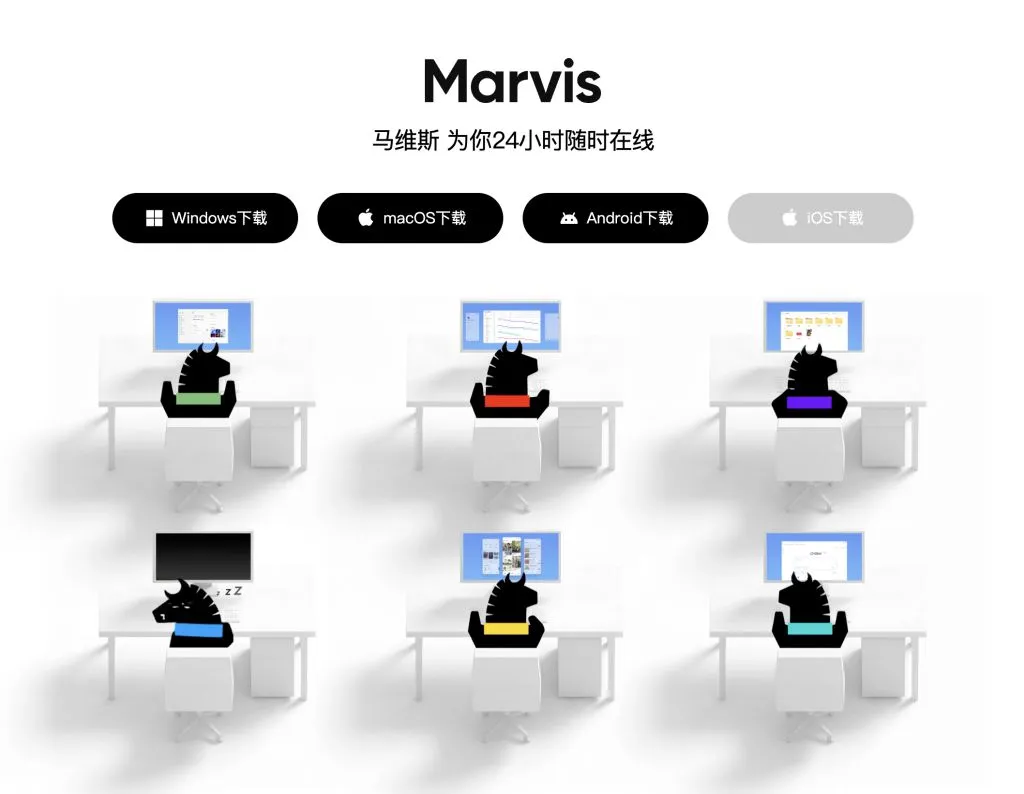
Tencent has launched Marvis, a sophisticated new AI assistant designed to integrate deeply into the user experience across its vast ecosystem of applications.
The introduction of Marvis signals Tencent's accelerated commitment to leveraging generative artificial intelligence not merely as a standalone feature but as a pervasive layer enhancing core functionality within its existing platforms. The system aims to function as a proactive digital companion, capable of understanding complex context and executing multi-step tasks across different services.
Marvis is engineered to move beyond simple query responses; the platform emphasizes contextual awareness. Users interact with Marvis through natural language prompts, which the AI processes against real-time data pulled from Tencent's suite of products. This capability positions it as a unified control center for digital life within the Tencent sphere.
Specific applications detailed in the rollout indicate Marvis’s potential to manage communications, schedule activities, and retrieve nuanced information across WeChat and other affiliated services. For example, users can prompt Marvis to synthesize information from multiple chats or draft responses tailored to specific conversational tones, demonstrating a level of semantic understanding previously requiring manual input.
Ecosystem Integration
The strategic value of Marvis lies less in its raw computational power—though that is substantial—and more in its deep integration into Tencent’s massive user base. By embedding advanced AI directly where users already spend their time, Tencent minimizes friction points associated with adopting new technology.
This approach aligns with broader industry trends favoring "ambient computing," where the interface disappears and the intelligence becomes seamlessly woven into daily operations. Marvis acts as an intelligent intermediary, translating complex user intent into actionable commands across disparate applications.
Analysts suggest that this move represents a direct competitive response to similar AI advancements being deployed by rivals in the Chinese technology sector. The ability of Marvis to maintain state and context across sessions is critical for achieving true utility, differentiating it from stateless chatbot experiences.
The architecture powering Marvis appears designed for high throughput and low latency, crucial factors when managing real-time user interactions within a highly active social and business environment like WeChat. Tencent has reportedly invested heavily in fine-tuning the model specifically on data derived from its own platform usage patterns.
Capabilities and Future Trajectory
Functionally, Marvis is designed to handle tasks ranging from summarizing lengthy document threads shared via messaging services to proactively suggesting next steps based on calendar entries linked within WeChat Work. It functions as a sophisticated workflow accelerator for the end-user.
While initial deployments focus on enhancing productivity and communication efficiency, the long-term trajectory suggests expansion into more complex decision support roles. As Tencent gathers further data on how users interact with Marvis, the AI can theoretically become predictive—anticipating needs before explicit commands are given.
The success of this launch will be measured by user adoption rates and the tangible reduction in cognitive load for the average WeChat user. If Marvis proves capable of handling increasingly complex, multi-layered requests accurately, it could solidify Tencent’s lead in establishing a cohesive, AI-driven digital operating layer over its massive application suite.