🎙 Listen to a summary of this story
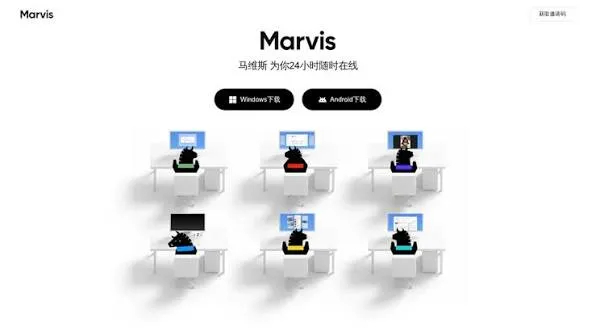
Tencent has deployed an update to Marvis, an advanced AI butler, across PCs, file systems, browsers, and software agents, signaling a significant push toward pervasive, integrated artificial intelligence.
The rollout establishes Marvis not merely as a chatbot but as a deeply embedded operational assistant capable of managing complex digital tasks across the user's entire computing environment. This comprehensive agent architecture moves AI functionality from isolated applications into the foundational layers of daily digital interaction.
Pervasive Integration and Agent Capabilities
Marvis functions as an intelligent layer situated atop standard operating systems and software suites, offering proactive support rather than reactive querying. Its integration across multiple domains—including local file management, web browsing sessions, and specific application workflows—allows it to synthesize information from disparate sources.
Functionally, the AI butler is designed to handle tasks that traditionally require context switching between several applications. For instance, a user could instruct Marvis to find a document related to a specific email thread while simultaneously summarizing relevant web pages encountered during their research process. This unified operational view represents a major evolutionary step beyond current discrete AI assistants.
The technology leverages Tencent's substantial expertise in large language models and distributed systems, enabling the agent to maintain state and context across these varied interfaces. Its deployment signifies a strategic effort by Tencent to own the ambient computing experience for its vast user base.
Specific capabilities include interacting directly with local file structures, meaning Marvis can locate, organize, and analyze documents stored on the user's hard drive based on natural language prompts. Furthermore, its browser agent capability allows it to perform complex web data extraction and synthesis without requiring manual copy-pasting.
This level of deep system access necessitates robust security protocols, which Tencent must maintain as Marvis becomes an increasingly privileged entity within the user's digital perimeter. The successful operation relies on seamless API integration with target software, allowing Marvis to issue commands and receive data streams reliably.
Strategic Implications for Enterprise and Consumer Use
The development of a multi-platform AI butler like Marvis carries significant implications for both consumer productivity and enterprise automation. For consumers, it promises a reduction in cognitive load by automating routine digital orchestration tasks.
In the corporate sector, this architecture translates directly into powerful knowledge management tools. An employee using Marvis could query across internal file repositories, recent meeting transcripts accessed via browser plugins, and CRM data simultaneously, receiving an immediate, synthesized answer rather than navigating multiple databases manually.
Tencent's move positions its AI offerings to compete directly with emerging platform-level intelligence from competitors. By embedding the assistant at the operating system or application layer, Tencent aims for higher user stickiness; users become reliant on a single, omnipresent interface for digital workflow management.
The ability of Marvis to act as an "agent" suggests it is not merely executing pre-programmed scripts but is capable of goal-oriented reasoning—breaking down high-level requests into necessary, sequential micro-tasks across different system components. This autonomous task execution capability is the hallmark of sophisticated AI integration.