🎙 Listen to a summary of this story
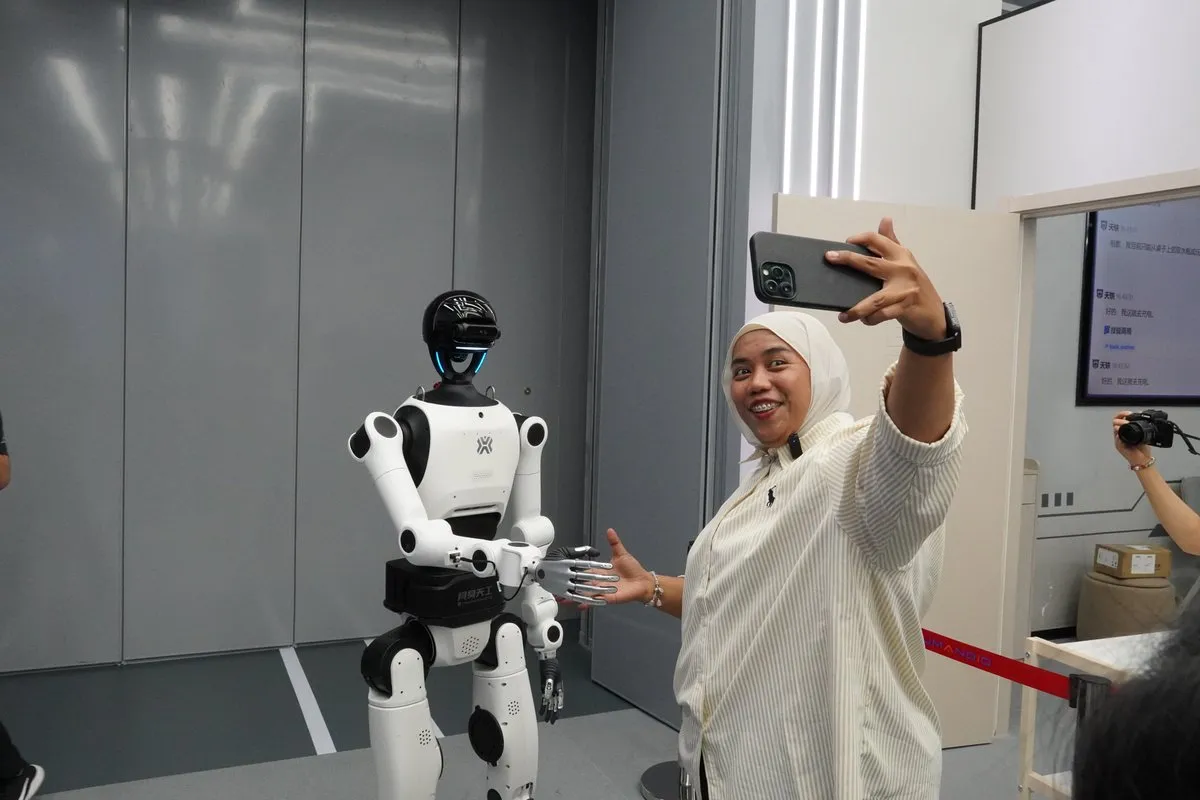
The rapid advancement of humanoid robotics in China is gaining significant momentum as seen at the World Robot Conference in Beijing, driven by specialized research hubs like the Beijing Humanoid Robot Innovation Center who produce the Tiangong line of robots. These facilities are focusing on developing next-generation robots capable of performing complex tasks that mimic human physical dexterity and cognitive ability, as with their latest release, the Tiangong Omni. According to reports detailing the center's work, the focus is on creating machines that are not only powerful but also lightweight and adaptable for diverse industrial and service applications.
The latest developments suggest a shift away from purely research prototypes toward commercially viable models. The robots being developed as part of the Tiangong range represent an effort to integrate advanced artificial intelligence with sophisticated mechanical engineering, addressing the growing need for automation across various sectors, including manufacturing, logistics, and elder care.
These humanoid platforms are designed with modularity in mind, allowing them to interact seamlessly with existing human infrastructure. This adaptability is crucial for widespread adoption, as it minimizes the time and expense required to retrofit older facilities with advanced robotic systems. The center's commitment highlights China's strategic investment in the global AI hardware supply chain.
Design Innovation and Operational Capabilities
A key element distinguishing the Tiangong robots is their focus on weight reduction without compromising strength or power. Engineers are reportedly achieving a balance between high payload capacity and an ergonomic, lightweight frame. This breakthrough addresses one of the historical limitations in industrial robotics, where heavy machinery often restricted maneuverability in confined or variable environments.
The Center's research emphasizes advanced sensor integration, allowing the robots to perceive their surroundings with human-like accuracy. This includes sophisticated vision systems and tactile sensors that enable fine motor skills—capabilities essential for tasks such as handling delicate objects or navigating cluttered spaces safely. The development process is highly collaborative, involving top talent from academia and private tech corporations.
Furthermore, the operational capabilities extend beyond simple pick-and-place actions. The robots are being trained on complex, multi-step routines that require problem-solving and decision-making in real time. This level of cognitive integration positions them as general-purpose automation tools rather than single-function machines.
Implications for the Global Automation Market
The progress demonstrated by Beijing Humanoid Robot Innovation Center signals a maturing domestic market for advanced robotics, potentially setting new benchmarks for global competitors. China's aggressive push into humanoid technology is viewed not just as an industrial upgrade but as a strategic pillar of its technological self-sufficiency.
Industry analysts suggest that the successful commercialization of these lightweight, capable units could accelerate the adoption curve for automation globally. By proving reliability and versatility in domestic settings, Chinese manufacturers are positioning themselves to export advanced robotic solutions worldwide.
The narrative surrounding Tiangong robots underscores a comprehensive national effort: combining massive investment capital with concentrated research expertise. The goal is clear—to establish a complete, end-to-end ecosystem for AI hardware development, from core components to final deployed application.
As the Center continues its work, it serves as a microcosm of China's broader technological ambitions. These humanoid platforms are expected to redefine labor roles in numerous industries, moving beyond simple repetitive tasks into areas requiring complex human judgment and physical interaction. The continuous stream of innovation from hubs like this solidifies Beijing’s role as a global epicenter for advanced robotics research.