🎙 Listen to a summary of this story
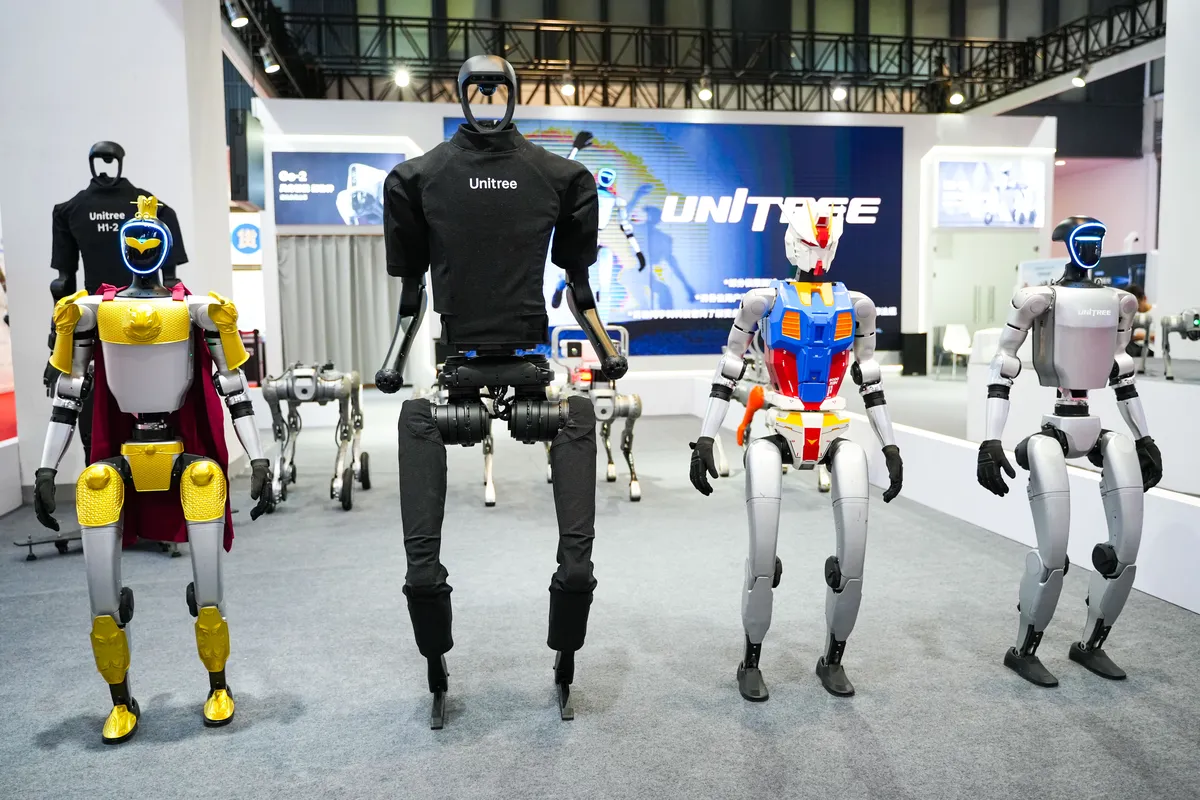
Unitree Robotics is preparing an IPO for its advanced humanoid and quadruped robots onto the Shanghai Stock Exchange STAR market, signaling a significant acceleration of the importance of domestic robotics application within China's high-tech sector.
The company’s entry into the specialized STAR market underscores a strategic pivot toward integrating sophisticated autonomous machines into critical industrial and commercial environments across mainland China. This deployment targets sectors demanding high levels of mobility, precision, and adaptability that traditional automation cannot meet.
Market Penetration and Technological Focus
Unitree Robotics has concentrated its debut offerings on two highly advanced robotic forms: humanoid robots and quadruped robots. These platforms represent the vanguard of current mobile robotics research, capable of navigating unstructured terrain and performing complex human-centric tasks.
The strategic significance lies in the deployment environment; the STAR market context implies appea;ing to investors looking for cutting-edge applications requiring robust, real-world performance rather than controlled laboratory settings. Unitree’s success here positions it as a key domestic player capable of competing with international robotics giants.
Quadrupedal robots, known for their dynamic stability and agility, are being positioned to handle challenging industrial logistics and inspection tasks where uneven ground or complex obstacles present frequent barriers to wheeled or tracked systems. Humanoid models, conversely, address the growing demand for physical labor substitution in manufacturing and service industries.
Sources indicate that the initial IPO offering focuses heavily on demonstrating operational efficiency and reliability within specific pilot programs before scaling production across broader industrial verticals. This phased approach mitigates early adoption risks while building verifiable performance metrics crucial for enterprise acceptance.
Implications for China's Robotics Ecosystem
The debut of Unitree’s IPO reinforces the momentum behind China’s national strategy to achieve technological self-sufficiency in advanced manufacturing and intelligent automation. The successful localization and market validation of these complex robotic systems are critical milestones toward this broader industrial goal.
This market entry is not merely a sales event; it represents a validation of Unitree's underlying technological prowess in areas such as advanced locomotion control, real-time perception processing, and power efficiency. These competencies are highly coveted assets within the global high-tech supply chain.
For investors and industry observers, the STAR market launch signals increasing confidence in domestic robotics firms to transition from prototype development to scalable commercial deployment. The trajectory suggests a tightening competitive landscape where performance metrics will dictate market leadership.
Unitree Robotics is expected to continue expanding its application portfolio as it establishes robust service contracts within the specialized sectors targeted by the STAR market, thereby deepening its footprint in China's rapidly evolving smart infrastructure.