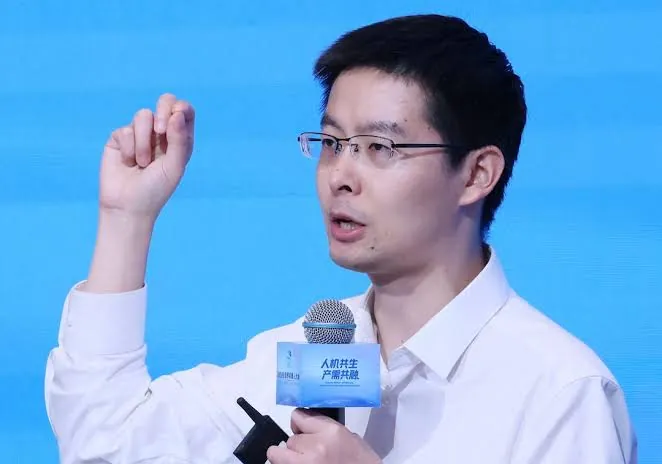
Unitree's Wang Xingxing projects security robots will constitute a significant growth vector for the company, driven substantially by escalating international demand for advanced autonomous surveillance systems.
This outlook positions robotic security solutions not merely as niche industrial applications but as a core driver of Unitree's future expansion strategy, signaling a pivot toward global enterprise and public safety markets. The emphasis on overseas demand suggests a maturing market where established Western and Asian industrial standards require sophisticated, mobile robotic platforms for deployment.
Wang Xingxing, the founder of Unitree and a key representative from Zhejiang's entrepreneurial ecosystem, views the integration of AI and mobility into security hardware as the definitive trend shaping the next phase of robotics commercialization. The increasing complexity of urban environments and the need for non-human surveillance capabilities are creating a robust, underserved market segment.
Market Dynamics and Technological Deployment
The commercial viability of these security robots hinges on their ability to seamlessly integrate advanced perception and navigation software with robust, all-terrain hardware. Unitree’s existing expertise in quadrupedal locomotion provides a distinct competitive advantage, allowing these units to navigate unstructured and hazardous environments—a capability crucial for modern security protocols.
The technical specifications underlying this growth area involve sophisticated sensor fusion, combining LiDAR, high-resolution cameras, and thermal imaging to provide comprehensive environmental awareness. This hardware stack must operate with minimal latency, ensuring real-time data processing for rapid threat identification, which is the primary commercial requirement for overseas clients.
Furthermore, the deployment strategy emphasizes scalability. The platforms must be adaptable to various operational profiles, ranging from static perimeter monitoring to dynamic search-and-rescue functions. This modularity allows Unitree to address diverse client needs across different geopolitical regions without necessitating entirely bespoke hardware solutions.
Broader Industry and Geopolitical Implications
The burgeoning market for autonomous security robots reflects a wider geopolitical trend toward technological sovereignty in critical infrastructure protection. Nations and corporations are increasingly reliant on automated systems to manage physical security risks in ways that human personnel cannot sustainably maintain.
Unitree’s successful penetration into these global security contracts signals a maturation of Chinese manufacturing capabilities in high-end, intelligent hardware. It moves the narrative beyond simple industrial automation and into the realm of complex, mission-critical autonomous systems, challenging established global robotics incumbents.
Ultimately, the demand for these mobile security platforms illustrates a fundamental shift in risk management philosophy. Security is evolving from a reactive, human-dependent function to a proactive, machine-augmented process. For Unitree, capturing this overseas demand represents not just revenue growth, but securing a foundational role in the future architecture of global physical security.