
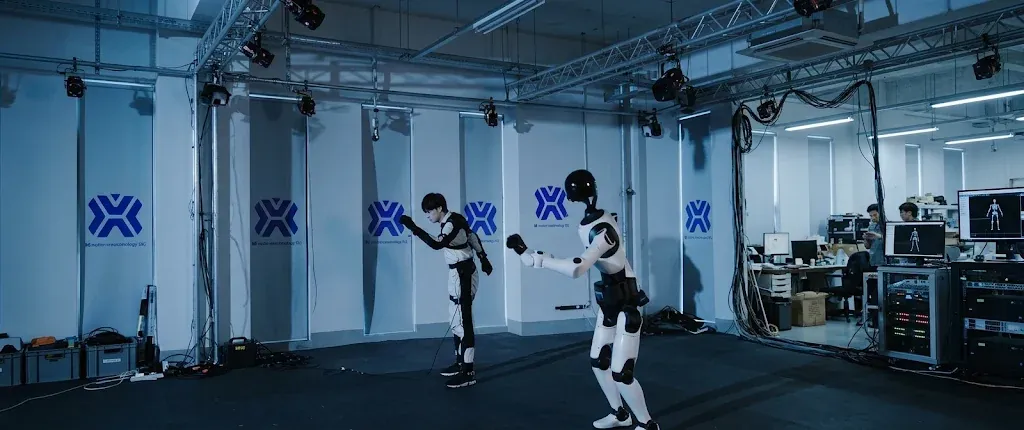
X-Humanoid has unveiled a sophisticated Hi-WBC (Hierarchical Whole-Body Control) model, significantly advancing the operational capabilities of its Tiangong humanoid robots.
This new control architecture represents a critical leap in autonomous robotics, enabling the Tiangong units to execute complex, dynamic tasks with unprecedented stability and precision. The development addresses long-standing challenges in humanoid locomotion and manipulation, moving these robots closer to true real-world deployment in demanding industrial and exploratory environments.
The implementation of Hi-WBC shifts the focus from simple trajectory following to holistic, reactive physical interaction. This capability is strategically vital for applications requiring continuous adaptation to unknown or changing physical landscapes, marking a substantial maturation point for Chinese robotics research.
Technical Architecture and System Integration
The Hi-WBC model integrates multiple layers of control feedback, allowing the Tiangong robot to manage kinetic energy distribution across its entire structure simultaneously. This hierarchical approach allows the system to treat the robot not as a collection of independent joints, but as a single, cohesive physical entity capable of nuanced balance correction.
Specifically, the control framework leverages advanced sensor fusion, combining data from internal proprioceptive sensors with external environmental perception systems. This allows the robot to maintain stability while performing high-torque movements, such as climbing uneven terrain or handling heavy, asymmetrical loads—functions previously restricted to highly specialized, less versatile robotic platforms.
Furthermore, the successful deployment of this control model onto the Tiangong hardware validates the synergy between cutting-edge computational algorithms and robust electromechanical design. The system is engineered for high-frequency updates, ensuring that control loops operate with the necessary speed to counteract rapid shifts in center of gravity, a prerequisite for industrial utility.
Broader Implications for Robotics and Industry
The advancement represented by X-Humanoid's Hi-WBC model carries significant weight within the global competition for autonomous systems. Success in whole-body control is a recognized benchmark for advanced general-purpose robotics, signaling a maturing capability within the domestic Chinese technology sector.
From an industrial perspective, this technology lowers the barrier for deploying human-scale automation into unstructured environments—warehouses, construction sites, and disaster zones—where traditional fixed-base or purely articulated robots struggle. This capability promises to redefine operational efficiency in several heavy industry verticals.
Geopolitically, the mastery of complex embodied AI, as demonstrated by this control system, positions Chinese robotics firms as serious contenders on the international stage. The ability to develop sophisticated, adaptable hardware and software internally reduces reliance on foreign technological stacks, reinforcing self-sufficiency goals within the national high-tech strategy.