🎙 Listen to a summary of this story
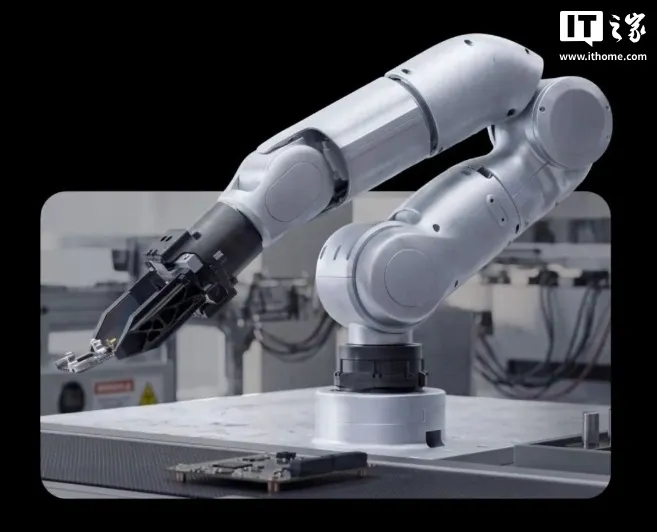
Unitree Robotics has expanded its industrial automation offerings with the unveiling of a new seven-axis robotic arm designed for enhanced dexterity and versatility across various manufacturing applications. The latest model aims to address complex manipulation tasks that require high degrees of freedom, positioning Unitree as a major player in China's rapidly evolving robotics sector.
The announcement detailed the technical specifications of the unit, emphasizing its advanced kinematic design. According to industry sources, the arm provides substantial reach and precision, making it suitable for applications ranging from electronics assembly to quality inspection processes within smart factories. The initial pricing structure was set at a starting point of RMB 9,900, signaling an effort to make sophisticated automation accessible to a broader range of commercial enterprises.
The development marks a significant step in Unitree's product line, which has previously gained recognition for its mobile robot platforms. By entering the advanced robotic arm market, the company is solidifying its commitment to providing integrated, end-to-end automated solutions for industrial clients both domestically and internationally.
Technical Capabilities and Market Positioning
The seven-axis configuration of the new arm is critical to its claimed dexterity. Unlike simpler robotic arms with fewer degrees of freedom, a seven-axis setup allows the manipulator to mimic the complex movements of an articulated human arm. This enhanced articulation capability enables precise grasping and manipulation in confined or irregularly shaped workspaces, tasks that often bottleneck traditional automation systems.
Industry analysts note that demand for highly dexterous robotics is increasing globally as manufacturing processes become more intricate and require greater adaptability. The ability to handle diverse end-effectors—such as specialized grippers, sensors, or tools—is a key selling point Unitree highlighted during the launch event. This modular approach allows businesses to customize the arm's function without requiring a complete system overhaul.
The company stated that rigorous testing was conducted to ensure reliability and payload capacity across various operating environments. The integration of sophisticated control software, coupled with robust mechanical components, is central to the unit's performance profile, allowing it to operate efficiently under continuous industrial loads while maintaining high levels of repeatability.
Implications for Smart Manufacturing
The introduction of this advanced arm directly addresses several pain points within modern smart manufacturing facilities. Many industries struggle with automating tasks that require fine motor skills or complex spatial reasoning, areas where the new seven-axis design excels. This capability opens up lucrative markets in specialized assembly lines and high-precision quality control departments.
Furthermore, Unitree emphasized ease of integration into existing factory infrastructure. The system is designed to interface seamlessly with other automation components, including conveyor belts, vision systems, and PLC controllers, thereby reducing the complexity and cost associated with deploying new robotic cells. This focus on interoperability is crucial for attracting adoption among established industrial players.
The launch reinforces Unitree’s strategic pivot towards comprehensive industrial automation solutions. By offering a complete ecosystem—from mobile platforms to highly articulated arms—the company aims to become a single-source provider capable of addressing the full spectrum of factory floor automation needs.
As the global push toward Industry 4.0 continues, robotic dexterity represents one of the most critical technological frontiers. Unitree’s new offering positions Chinese robotics firms to compete aggressively in international markets that value sophisticated and adaptable automation hardware.