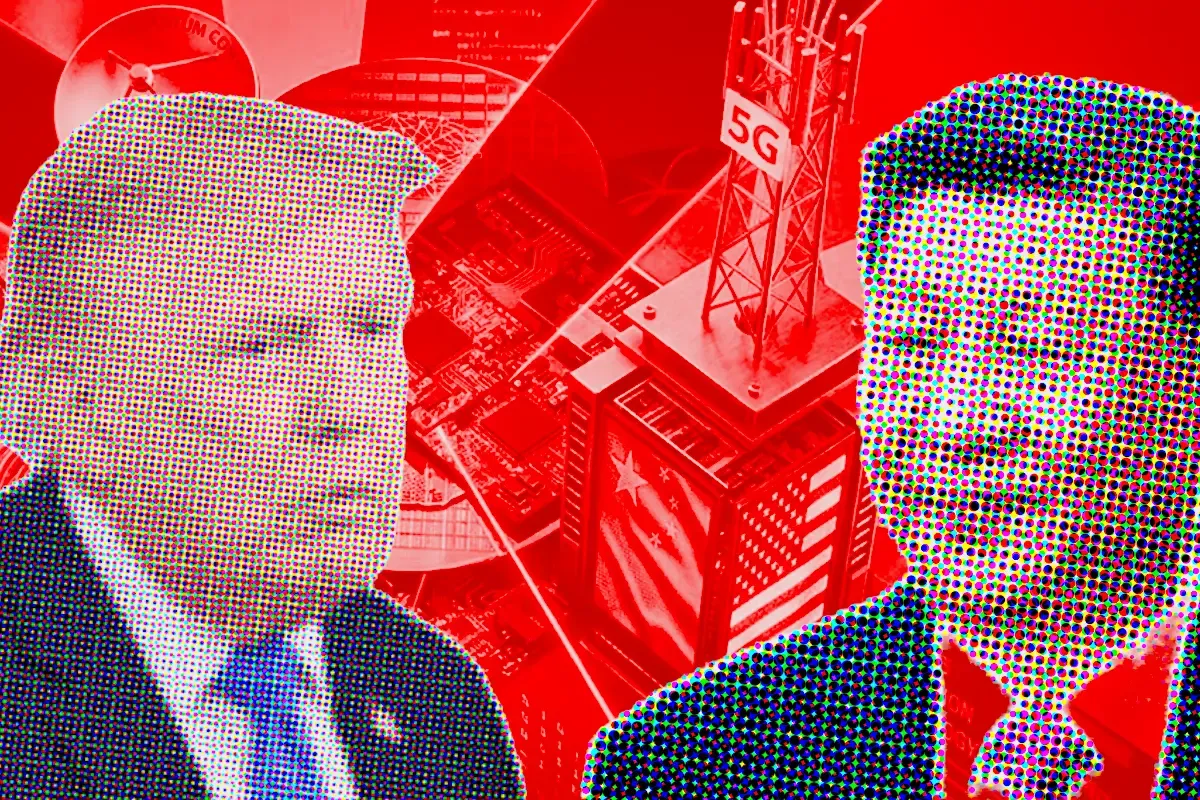
Donald Trump and Xi Jinping arrived at power from almost opposite directions. Trump, a property developer and television personality, built his political identity around disruption, personal bargaining and hostility to bureaucratic restraint. Xi, the son of a Communist revolutionary, advanced through provincial and central party institutions that prize discipline, hierarchy and long-term organisation. Both are nationalists who treat technological strength as an expression of state power, distrust constraints imposed from abroad and favour clear demonstrations of control. Yet their instincts differ sharply. Trump commonly presents regulation as an obstacle to entrepreneurial energy; Xi regards regulation as an essential instrument for directing markets and preserving political order. Those contrasts colour artificial-intelligence policy, but the more consequential divide lies in the institutions beneath them: America’s company-led system and China’s party-state machinery.
Two Governments, Two Definitions of AI Safety
Washington and Beijing agree on more than their increasingly adversarial language suggests. Both regard artificial intelligence as a transformative general-purpose technology, a source of economic growth and a potential national-security threat. Both are building systems to test advanced models, protect critical infrastructure, label synthetic content and prevent AI from assisting cyberattacks, biological weapons or military adversaries.
The apparent consensus dissolves when officials define what exactly must be kept safe.
In Washington, safety policy increasingly concentrates on the resilience of infrastructure, the protection of intellectual property and the risk that powerful systems could be exploited by foreign states or terrorists. The Trump administration’s June 2026 executive order on advanced AI innovation and security instructed agencies to strengthen cyberdefences, facilitate secure deployment of frontier models and work voluntarily with technology companies through an AI cybersecurity clearinghouse. The order described private-sector collaboration and rapid adoption—not prior government permission—as the principal route to security.
China employs a broader definition. Safety includes many of the technical dangers recognised in the U.S., but also the reliability of information, social stability, ideological conformity, data sovereignty and the ability of authorities to intervene throughout a system’s life cycle.
China’s amended Cybersecurity Law, which took effect on January 1, 2026, formally brought AI into the country’s basic cybersecurity legislation. It called for support for research, computing and training-data infrastructure while also requiring improved ethical standards, risk monitoring, assessment and security supervision. Chinese commentary on the amendment described a full-life-cycle system covering model design, training, deployment and operation.
This distinction is fundamental. U.S. policy generally treats an AI developer as an independent economic actor whose freedom should be restricted when demonstrable harms or national-security risks arise. Chinese policy treats developers as participants in a state-supervised information system. They may compete, raise capital and release models, but the political authority that sets the acceptable boundaries of those models is not open to negotiation.
That does not mean America lacks control or China lacks innovation. Washington controls strategic inputs with formidable reach, while Beijing frequently adjusts rules to avoid suffocating useful commercial development. The divergence concerns where control is exercised. China governs more directly inside the domestic model and platform ecosystem. The U.S. governs more aggressively at the technological frontier, across semiconductor supply chains and at the boundary between American capabilities and strategic competitors.
America’s Shift From Precaution to Acceleration
The change in Washington has been substantial. The Biden administration’s 2023 executive order placed safety testing, discrimination, labour effects and consumer protection near the centre of federal AI policy. It directed developers of some powerful models to share safety information with the government and assigned the National Institute of Standards and Technology a prominent role in developing evaluation practices.
| Manufacturing automation, 2024 | China | United States | |
|---|---|---|---|
| New industrial robots installed |
|
| |
| Share of global installations |
|
| |
| Operational robot stock, China |
|
|
Some of that technical infrastructure remains useful even after the political framework surrounding it changed. NIST’s generative-AI profile, for example, offers voluntary methods for governing, mapping, measuring and managing risks such as false information, data privacy, cybersecurity, dangerous capabilities and human overreliance. It represents the characteristically American preference for standards, testing and industry adoption rather than a single licensing authority.
Trump’s return to office shifted the organising principle from “safe, secure and trustworthy AI” to American dominance. His January 2025 order revoked the Biden framework and instructed officials to remove policies considered obstacles to innovation. The administration’s subsequent AI Action Plan described the competition in explicitly geopolitical terms: the country with the largest AI ecosystem would set global standards and obtain economic and military advantages. Its three broad priorities were accelerating innovation, building American AI infrastructure and leading internationally.
The result is not deregulation in every field. It is a reallocation of regulatory pressure.
Rules imposed directly on model developers are viewed sceptically when they could slow investment or create different obligations in different states. The administration has sought a uniform federal approach that limits the ability of states to impose conflicting requirements. Its March 2026 legislative framework called for national rules on children’s safety, scams, intellectual property, free speech, infrastructure and workforce development, while warning that a patchwork of state laws would weaken American competitiveness.
At the same time, controls become much tougher when AI intersects with China, national defence or the physical technology stack. The Commerce Department has expanded rules covering advanced processors, semiconductor production, foreign foundries, cloud infrastructure and support provided by American persons. A 2025 Bureau of Industry and Security policy statement warned that supplying controlled computing equipment—or certain services used to train models—for Chinese entities could require authorisation when military-intelligence or weapons-related uses were involved.
Washington’s emerging formula is therefore permissive at home and restrictive at strategic chokepoints. The government wants American laboratories to move rapidly, data centres to be built faster and federal agencies to adopt commercial systems. It also wants to preserve U.S. leverage over the processors, design software, manufacturing equipment, cloud services and technical expertise that make frontier development possible.
That policy contains an unresolved tension. American officials argue that fewer domestic constraints are needed to defeat China, yet concern about advanced capabilities is one reason the government restricts their international distribution. A model that is presented as an engine of freedom and productivity inside the U.S. can be treated as a security-sensitive capability once its weights, chips or training infrastructure approach a geopolitical boundary.
China Regulates the Application, the Content and the Institution
China’s regulatory system has developed through a sequence of targeted measures rather than a single omnibus AI law. Rules on recommendation algorithms, deep synthesis and generative-AI services were introduced as particular technologies gained commercial significance. This incremental strategy allows regulators to modify obligations without waiting for a comprehensive statute and to divide responsibility among the Cyberspace Administration of China, the Ministry of Industry and Information Technology, public-security authorities and other agencies.
The 2023 interim measures for generative-AI services illustrate Beijing’s balancing act. Earlier drafts alarmed companies by appearing to impose extensive liability for training data and generated outputs. The final rules softened some provisions and applied mainly to services offered to the Chinese public. They nevertheless retained security assessments, personal-information protections and content obligations grounded in the country’s wider censorship and cybersecurity systems.
A further layer took effect in September 2025. China’s measures on AI-generated and synthetic-content labelling require visible notices in many user-facing settings and embedded metadata identifying synthetic material, the provider and the content. Platforms must inspect uploaded material and label content that appears to have been generated by AI even when users fail to declare it. Removing or falsifying the required markers is prohibited.
These rules address a problem recognised in both countries: realistic synthetic media can facilitate fraud, impersonation and political manipulation. China’s answer, however, is more prescriptive and more closely integrated with platform surveillance. It establishes a chain of responsibility extending from the generator to the distributor and user.
Beijing added another institutional layer in March 2026, when 10 government bodies issued trial measures for AI science-and-technology ethics reviews. The system establishes procedures for examining high-risk research and applications, including expert review for activities falling within designated categories. Official explanations describe a combination of prevention, service and supervision operating across the development life cycle.
In the U.S., an ethics panel commonly advises an institution whose executives retain significant autonomy and whose decisions may later be challenged through courts, regulators or markets. In China, ethical review can be embedded in a coordinated administrative structure linking research organisations, companies and government departments. The purpose is not simply to identify abstract ethical concerns but to ensure that development remains “safe, reliable and controllable”—a phrase that carries political as well as technical meaning.
China’s system also distinguishes between domestic services and research or business uses that do not reach the public. This permits considerable experimentation behind institutional boundaries. Beijing has little interest in regulating every internal model identically. It is most demanding where systems influence mass communication, collect sensitive data, provide public services or acquire the ability to act autonomously.
China can coordinate computing centres, energy supply, data programmes, university research, local subsidies, government procurement and industrial adoption under central policy goals. Yet implementation is not uniformly top-down. Provinces and municipalities compete for projects, companies lobby for workable rules and ministries defend overlapping jurisdictions. The result is coordinated direction combined with bureaucratic and commercial competition, rather than a single all-knowing command structure.
Industrial Policy Is Where the Two Systems Converge
The sharpest convergence is the declining faith in laissez-faire technology markets.
China makes no pretence that AI leadership will emerge from private enterprise alone. The State Council’s August 2025 “AI Plus” initiative calls for AI to be integrated into science, manufacturing, consumption, public welfare, governance and international cooperation. It links model development with data, computing power, open-source ecosystems, talent, regulation and security.
The policy is less concerned with producing a single celebrated chatbot than with spreading machine intelligence across factories, logistics networks, hospitals, farms, vehicles and public agencies. Chinese officials believe the country’s manufacturing base and large internal market can turn deployment into an advantage, even where domestic processors remain behind the most advanced American hardware.
The U.S. speaks more often of private investment, but its policy is also becoming industrial. Federal authorities are accelerating permits for data centres and electricity generation, organising access to government data, supporting semiconductor manufacturing, shaping export markets and using procurement to encourage preferred forms of AI. America’s AI Action Plan even calls for exporting complete technology packages—chips, models, applications and standards—to allies.
Both governments therefore seek control over a national AI “stack.” Both view computing power, electricity, data, talent, models and industrial applications as strategically connected. Both worry that dependence on a rival’s infrastructure could become a political vulnerability.
Their methods remain different. Washington tries to mobilise private capital and preserve the global position of American firms, intervening most heavily where markets affect national security. Beijing more readily coordinates domestic demand, directs state enterprises and treats government planning as a normal mechanism of technological development.
The contrast over open models further complicates the picture. Chinese companies have gained international attention by releasing increasingly capable open-weight systems that can be downloaded and adapted. The strategy lowers adoption costs, encourages developers to build around Chinese technology and gives users an alternative to closed American platforms.
Yet Chinese openness is primarily technical, not political. A model’s weights may be available while its training data remains opaque, and versions deployed inside China must still comply with state content requirements. Conversely, the U.S. hosts both highly proprietary laboratories and major open-model developers. Neither country can be reduced neatly to “open” or “closed.” Their policies reflect competing coalitions of companies, security agencies, researchers and political authorities.
Competing International Orders—and a Narrow Area for Cooperation
China increasingly portrays AI as an international public good whose benefits should not be monopolised by wealthy countries. Its 2025 Global AI Governance Action Plan calls for open cooperation, assistance for the Global South, cross-border open-source communities and investment in computing, networks, energy and data centres. It also insists on national sovereignty and the right of states to regulate AI according to their own conditions.
| Country | 2024 use | Increase to 2030 | Growth 2024–30 | |
|---|---|---|---|---|
| United States | ~187 TWh | ~427 TWh | ~130% | |
| China | ~104 TWh | ~279 TWh | ~170% |
That combination is strategically useful. Beijing can promote access and inclusion abroad while defending extensive state control at home. Its message to developing countries is that they should receive technology without being required to accept Washington’s political conditions or dependence on American cloud platforms.
The American offer is built around a different proposition: countries should join an ecosystem that has the best chips, models, cloud providers and security protections. Washington portrays its technology as more innovative and its institutions as more trustworthy, but export restrictions can weaken that argument when partners fear that access may later be withdrawn.
The struggle is consequently moving from model performance to standards, procurement, infrastructure finance and regulatory compatibility. A country that installs Chinese telecommunications systems, cloud services and models may find Chinese technical standards convenient. A country embedded in American chip, software and security relationships will face strong incentives to follow U.S. rules.
There remains a limited zone of convergence. Neither government benefits from AI systems gaining accidental control over nuclear decisions, automating destabilising cyberattacks or enabling mass-casualty biological threats. Both have reasons to discuss military command, testing standards, incident notification and the principle that humans should retain authority over nuclear weapons.
Cooperation will be difficult because verification could expose sensitive capabilities and each side fears that safety restrictions may become tools for preserving the other’s advantage. Even so, technical dialogue may be more productive than attempts to negotiate a shared political philosophy. Washington will not accept Chinese information control, and Beijing will not accept an American system in which powerful private laboratories set many of their own boundaries.
The emerging divide is therefore not between one country that regulates AI and another that does not. Both regulate aggressively, but at different points and for different purposes. Beijing concentrates on control over information, institutions, deployment and political consequences. Washington concentrates on market leadership, infrastructure security and control over the capabilities available to foreign adversaries.
China’s vulnerability is that political supervision can constrain research, reduce trust and discourage experimentation. America’s is that fragmented authority, commercial secrecy and rapid deployment can allow social risks to accumulate before national rules catch up.
Each system is trying to solve the weakness it sees in the other. China wants the innovative dynamism of American companies without surrendering party control. The U.S. wants some of China’s speed in building infrastructure without adopting central planning. Their policies may continue to diverge in political principle even as they converge on subsidies, strategic technology controls and the conviction that AI is too important to be left entirely to the market.
Sources and Further Reading
The White House, “Promoting Advanced Artificial Intelligence Innovation and Security”, June 2026.
The White House, “America’s AI Action Plan”, July 2025.
The White House, “President Donald J. Trump Unveils National AI Legislative Framework”, March 2026.
National Institute of Standards and Technology, “Artificial Intelligence Risk Management Framework: Generative Artificial Intelligence Profile”, July 2024, updated April 2026.
U.S. Bureau of Industry and Security, “Policy Statement on Controls That May Apply to Advanced Computing Integrated Circuits and Other Commodities Used to Train AI Models”, May 2025.
U.S. Bureau of Industry and Security, “Commerce Strengthens Restrictions on Advanced Computing Semiconductors”, January 2025.
State Council of the People’s Republic of China, Policy guidance on the implementation of China’s “AI Plus” initiative, August 2025.
Cyberspace Administration of China, “Measures for Labelling Artificial-Intelligence-Generated and Synthetic Content”, March 2025.
Cyberspace Administration of China, Explanation of China’s AI-generated-content labelling measures, March 2025.
Government of the People’s Republic of China, “Artificial Intelligence Science and Technology Ethics Review and Service Measures (Trial)”, March 2026.
Cyberspace Administration of China, Analysis of the amended Cybersecurity Law and AI security governance, January 2026.
Ministry of Foreign Affairs of the People’s Republic of China, “Global AI Governance Action Plan”, July 2025.
Carnegie Endowment for International Peace, “China’s AI Policy at the Crossroads: Balancing Development and Control in the DeepSeek Era”, July 2025.
Carnegie Endowment for International Peace, “China’s Pivot on Global AI”, May 2026.
Council on Foreign Relations, “How Trump Should Approach AI Talks With China: Targeted Dialogue, Maximum Pressure”, 2026.
War on the Rocks, “China’s AI Governance Offensive Threatens U.S. Technology Leadership”, 2026.
American Affairs Journal, “National Orchestration and Provincial Competition: China’s Industrial Policy for AI Dominance”, May 2026.
International Association of Privacy Professionals, “Global AI Governance: China”.
BBC News, “China Is Winning One AI Race, the U.S. Another—but Either Might Pull Ahead”, 2026.
The China Technology Review, “China’s AI Strategy Against U.S. Tech Restrictions”, August 2026.