
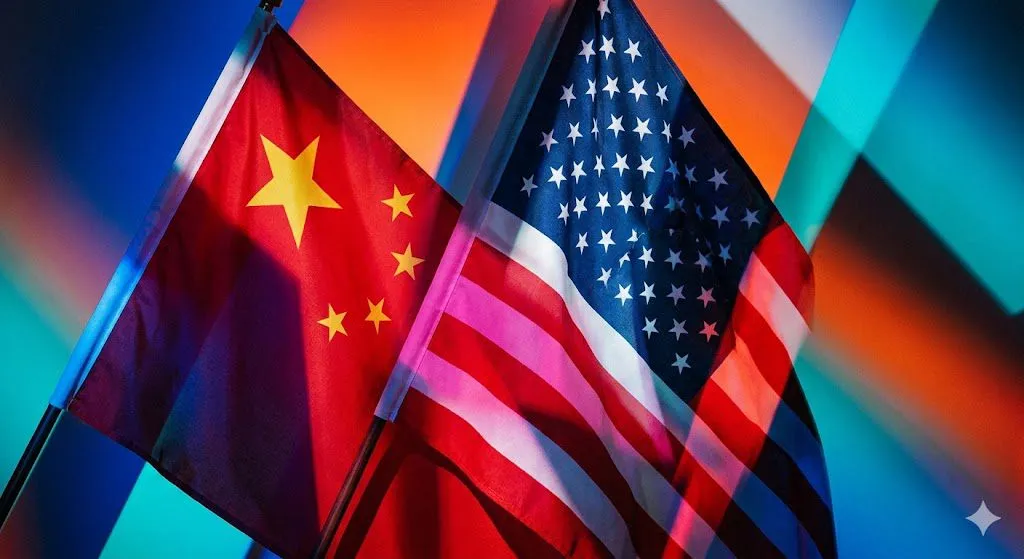
The White House has formally accused China of engaging in industrial-scale theft of advanced U.S. artificial intelligence models prior to a high-stakes summit between President Trump and President Xi Jinping.
This accusation elevates the technology competition with Beijing from mere trade disputes to one involving intellectual property theft at a fundamental, strategic level concerning next-generation AI capabilities.
Sources indicate that the allegations center on the systematic extraction of proprietary U.S. frontier AI models, representing significant investment and research breakthroughs by American corporations and institutions.
The severity of the claim suggests that this alleged theft is not incidental espionage but a coordinated effort designed to accelerate China’s domestic technological parity in cutting-edge artificial intelligence.
Strategic Implications of AI Theft Allegations
The focus on "frontier models" signals that the dispute transcends standard software piracy; it targets the most complex, high-value generative and foundational AI architectures driving global innovation.
According to reports, this alleged theft directly impacts the competitive edge held by U.S. tech leaders in areas critical for future economic dominance, such as large language models and advanced machine learning algorithms.
The accusation arrives at a politically charged juncture, preceding bilateral talks meant to stabilize geopolitical tensions while simultaneously addressing escalating technological friction between Washington and Beijing.
Industry analysts view this accusation as a clear escalation in the "AI war," framing the relationship not just as economic rivalry but as an existential contest for technological supremacy. The MSN report details the context of this pre-summit confrontation.
This move places immediate pressure on diplomatic channels, forcing both administrations to address the integrity of intellectual property within the framework of broader international relations. The U.S. government appears determined to define AI security as a core national security issue.
Scope and Nature of the Alleged Theft
The allegations are characterized by multiple news outlets as involving "industrial-scale" appropriation, suggesting a sophisticated and sustained effort rather than isolated incidents of academic collaboration gone awry.
Specific details emerging from various tech analysis sources suggest that the stolen assets include not just the final trained models but potentially underlying datasets, training methodologies, and proprietary architectural designs crucial to their performance. Data science outlets have highlighted the warning issued by U.S. parties.
The financial implications are substantial, as these frontier models represent billions of dollars in R&D investment for American firms. The alleged theft effectively allows Chinese entities to bypass years of expensive development cycles through illicit acquisition.
Furthermore, the focus on AI underscores a broader U.S. policy objective: establishing technological guardrails around critical infrastructure and foundational research areas before they become globally ubiquitous and difficult to regulate. The financial reporting confirms the scope of this industrial scale theft.
Navigating this accusation requires a delicate balance for future summits: acknowledging the gravity of the IP breach while simultaneously preventing the technological rivalry from completely derailing necessary cooperative efforts on global challenges like climate change or pandemic response.