
🎙 Listen to a summary of this story
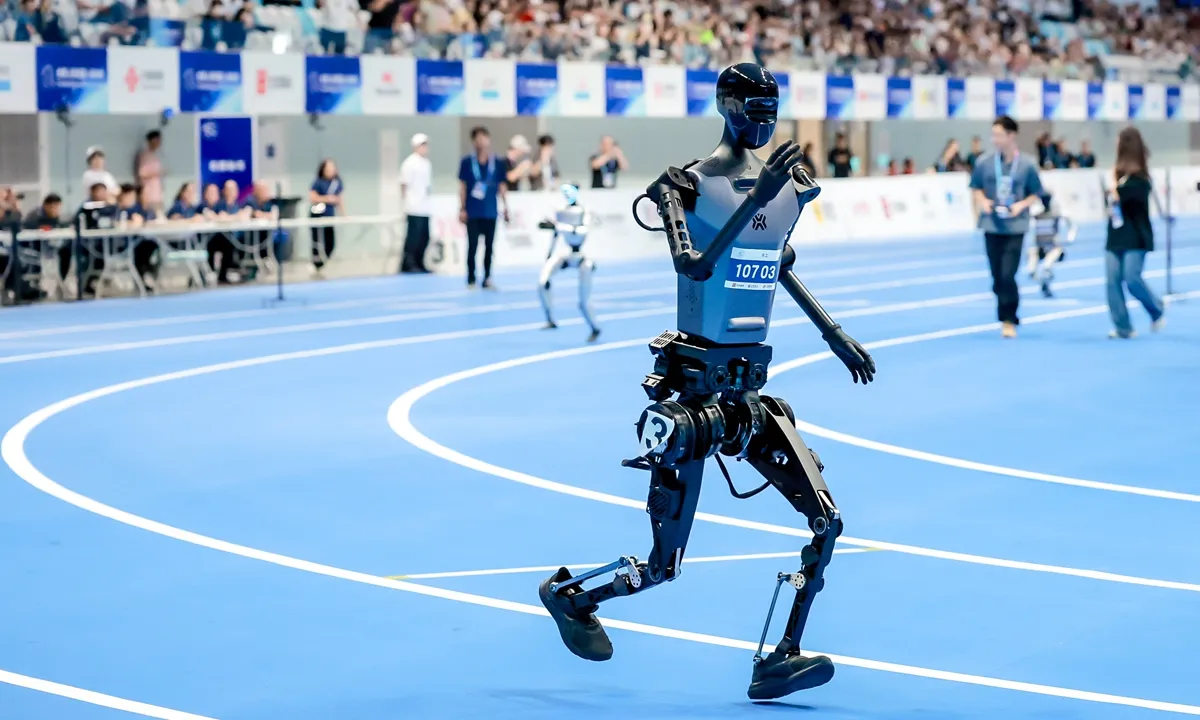
As the global race toward advanced robotics accelerates, international attention is rapidly shifting toward comprehensive real-world testing environments for humanoid machines. Central to this growing interest is the World Humanoid Robot Games 2026, an event poised to move beyond mere athletic demonstrations and into rigorous commercial viability assessments. Industry analysts suggest that these upcoming games will serve as a critical barometer for determining which nations and private firms are leading the charge in deploying sophisticated, general-purpose humanoid robots into complex industrial and service settings.
The 2026 iteration is expected to feature an unprecedented level of complexity, challenging robots not just with physical feats but with tasks mirroring daily human labor. Sources indicate that participants will face scenarios ranging from detailed assembly line work to navigating cluttered domestic environments. This evolution reflects the maturation of AI integration within robotics, demanding systems that can process unstructured data and adapt in real-time—capabilities essential for mass commercial adoption.
For China’s technology sector, participation in these global forums represents a strategic high point. Chinese research institutions and tech giants are heavily invested in developing humanoid platforms capable of handling diverse tasks, positioning themselves as key global players. The narrative surrounding the games emphasizes that the focus has fundamentally shifted from "can it move?" to "can it work reliably at scale?"
Beyond Demonstrations: Commercial Viability in Focus
Previous iterations of humanoid robotics competitions often highlighted impressive, yet limited, capabilities—such as complex athletic movements or specific scripted actions. While these feats garner public excitement, the industry consensus is that true progress requires testing under conditions of unpredictable variability. The 2026 event aims to address this gap by incorporating modules simulating real-world friction points.
According to reports tracking global robotics development, participants are expected to demonstrate proficiency in tasks requiring fine motor skills combined with cognitive reasoning. These challenges may include operating specialized tools unfamiliar to the robot, managing dynamic load changes, or interacting safely with human workers who operate outside predictable patterns. This move toward industrial simulation is critical because it directly addresses the most significant hurdle facing robotics adoption: reliable performance outside controlled laboratory settings.
The involvement of major global tech players suggests a consolidation of standards for what constitutes "market-ready" humanoid technology. Companies are not merely competing for medals; they are establishing benchmarks that will influence industrial procurement decisions worldwide. The successful completion of multi-faceted tasks at the World Humanoid Robot Games 2026 is viewed as a powerful indicator of a company's readiness to enter lucrative sectors such as logistics, elder care, and manufacturing.
China’s Strategic Push in Advanced Robotics
Chinese manufacturers are dedicating substantial resources to ensure their robotic platforms excel at these demanding commercial benchmarks. The national push for technological self-sufficiency has fueled rapid advancements across the entire robotics value chain, from advanced actuators and sensor fusion systems to sophisticated large language model (LLM) integration for task planning.
The preparation for 2026 involves integrating deep learning models directly into the robot's operational framework. This allows machines to move beyond pre-programmed sequences, enabling them to interpret novel situations—a capability vital for applications in complex urban environments or disaster response scenarios. Analysts note that Chinese platforms are increasingly emphasizing modularity and adaptability, allowing single chassis designs to be retooled for multiple industrial roles.
The global nature of the World Humanoid Robot Games 2026 ensures intense international scrutiny on China's robotic achievements. The outcomes will not only showcase technological prowess but also signal the maturity level of the country’s entire AI and advanced manufacturing ecosystem. Success in these highly publicized, commercially focused competitions solidifies a nation's standing as a global leader capable of supplying foundational technology for the next generation of automated industries.
As anticipation builds toward 2026, observers anticipate that the games will solidify the shift from academic curiosity to industrial necessity. The ultimate measure of success will be demonstrated reliability and efficiency in tasks that mimic the unpredictable demands of human life and labor, cementing robotics' role as a transformative force across global economies.