🎙 Listen to a summary of this story
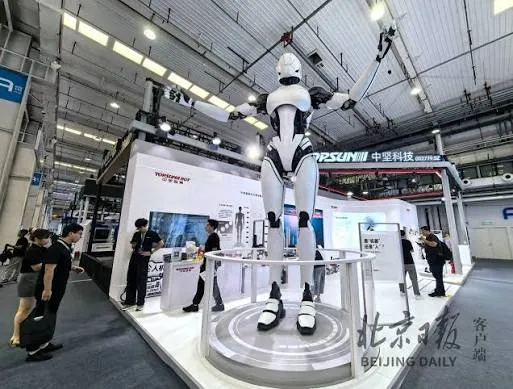
The World Robot Conference (WRC) 2026 opened today in Beijing, signaling a major acceleration in China's industrial robotics ecosystem and solidifying the region's status as a global hub for advanced automation technologies. The event was anticipated to showcase comprehensive solutions across the entire manufacturing value chain, drawing participation from dozens of companies specializing in everything from core component design to integrated smart factory systems.
Industry observers note that WRC 2026 represents more than just an exhibition; it functions as a critical platform for supply chain integration. By gathering diverse players—including hardware manufacturers, software developers, and system integrators—the conference aims to accelerate the transition of robotics from specialized industrial tools into widespread commercial applications across consumer goods, healthcare, and logistics sectors.
The large-scale international event underscores robotics' strategic importance within China's "Made in China 2025" initiative. The focus is increasingly shifting toward high-end, intelligent manufacturing processes that require sophisticated automation capabilities, moving beyond simple mechanization.
Attendance at WRC 2026 is expected to reflect the current national push for technological self-sufficiency and domestic innovation. Companies are leveraging the forum to demonstrate how their localized supply chains can meet stringent international quality standards while maintaining cost efficiencies unique to the Chinese market.
Showcasing Full-Chain Robotics Integration
The sheer breadth of participation at WRC 2026 is a key highlight, with reports indicating that over 34 companies are expected to display their full-chain capabilities. This comprehensive model means attendees can observe how raw components—such as advanced actuators or specialized sensors—are seamlessly integrated into complex operational systems.
For instance, the exhibition floor will likely feature modules demonstrating collaborative robots (cobots) working alongside human operators in real-time assembly lines. These demonstrations are crucial for illustrating the next generation of industrial labor solutions, which prioritize flexibility and safety alongside high throughput.
Furthermore, the conference is anticipated to place significant emphasis on Artificial Intelligence (AI) integration within robotic systems. Modern automation requires more than just physical movement; it demands sophisticated decision-making capabilities, predictive maintenance algorithms, and machine vision systems capable of interpreting complex environments. These AI layers are what transform mere machines into true intelligent assets.
Experts suggest that the dialogue at WRC 2026 will heavily focus on addressing bottlenecks in data exchange and interoperability between different robotic brands and industrial platforms. The goal is to create an open, standardized ecosystem rather than a collection of proprietary systems.
Economic Impact and Global Positioning
The economic implications of the event are substantial, positioning China as a critical node in the global smart manufacturing network. By attracting international investment and showcasing domestic technological prowess, WRC 2026 aims to solidify China's leadership in industrial automation.
According to industry analysts tracking the sector, the demand for sophisticated robotics solutions is outpacing traditional hardware growth rates, driven by labor shortages and increasing consumer expectations for efficiency. This trend mandates continuous innovation in both mechanical design and software architecture.
The conference serves as a direct conduit between academic research institutions and commercial enterprise. University-developed prototypes and cutting-edge scientific breakthroughs are expected to transition rapidly into market-ready products, shortening the typical development cycle dramatically.
Overall, WRC 2026 is viewed not merely as a trade show but as a strategic national effort to build resilient, high-tech industrial capacity. The success of the event will serve as a barometer for China's continued ability to dominate key segments of the global automation market.
The full scope of exhibits and detailed participation lists are expected to be released in the coming months, providing deeper insight into which specific technologies—be they in additive manufacturing, advanced material handling, or human-robot collaboration—will define the future of industrial production.