
🎙 Listen to a summary of this story
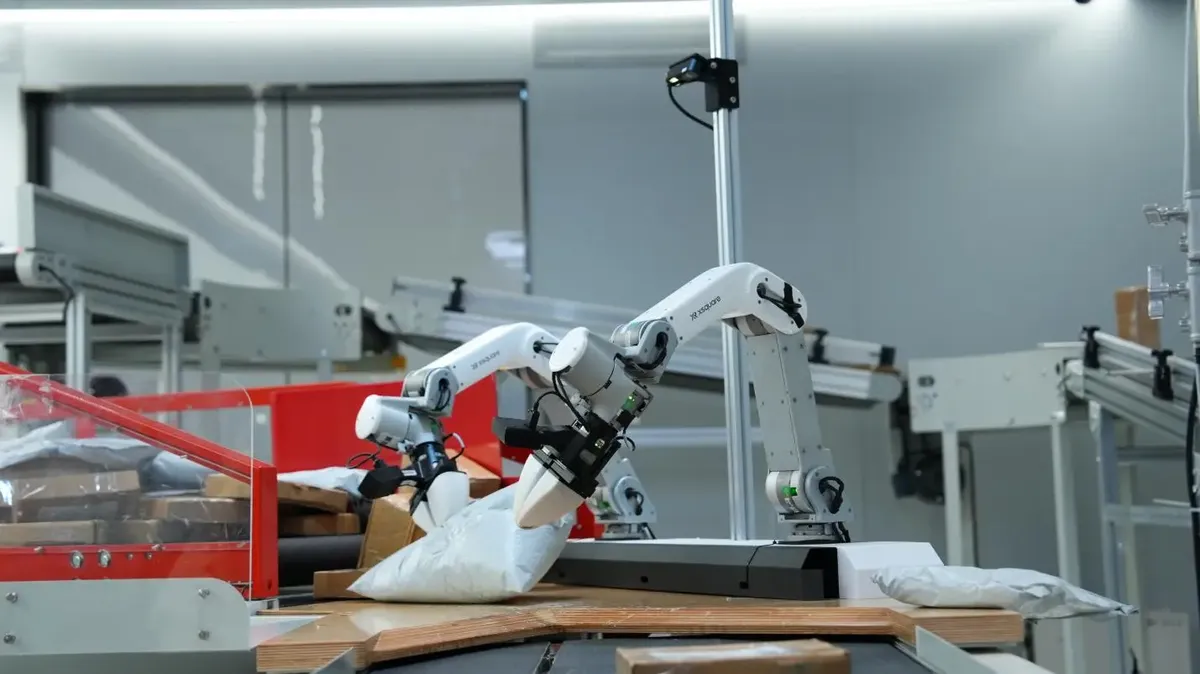
X Square Robot surpassed Figure AI’s established benchmark, achieving a performance level that exceeded the leader's metric by an impressive 45% in recent autonomous navigation tests.
The development marks a significant escalation in the competitive landscape of humanoid robotics, signaling accelerated progress toward generalized artificial intelligence capable of complex physical interaction. X Square demonstrated superior efficiency and capability during trials documented by Pandaily.
Performance Metrics and Competitive Edge
The benchmark being referenced pertains to specific metrics related to dynamic task completion and environmental adaptation, areas critical for real-world robotic deployment in logistics and industrial settings. Figure AI had previously set a high bar with its proprietary testing protocols, which X Square successfully matched before subsequently surpassing it.
This performance delta of 45% is not merely incremental; it suggests fundamental architectural or algorithmic advantages within the X Square platform. Such gains typically require breakthroughs in areas such as motor control precision, real-time perception processing, or energy efficiency during complex maneuvers.
Industry observers suggest that achieving this level of performance places X Square directly in contention with other leading players in the burgeoning humanoid robotics sector. The focus remains heavily on transitioning these laboratory successes into robust, commercially viable units capable of operating reliably outside controlled environments.
The implications for automation across sectors like warehousing and manufacturing are substantial. Robots demonstrating such high levels of proficiency reduce the necessary human oversight required for deployment, thereby lowering operational costs while simultaneously increasing throughput capacity within automated facilities.
Technological Underpinnings and Future Trajectory
Beating a leading competitor's established metric suggests substantial investment in advanced sensor fusion and control loop optimization. Humanoid robots require sophisticated integration between visual data processing, tactile feedback systems, and predictive motion planning to execute tasks fluidly.
Figure AI represents a major benchmark due to its rapid advancements and high-profile backing, making X Square’s ability to exceed that standard a notable engineering feat. The competition is shifting from merely achieving locomotion to mastering complex, varied physical labor under unpredictable conditions.
The trajectory for both companies appears focused on scaling these demonstrated capabilities. Future development will likely pivot toward endurance—how long the robots can maintain peak performance without recharge or maintenance—and generalization—the ability to perform tasks not explicitly programmed into their initial training sets.
For investors and enterprise adopters, this competitive advancement lowers the perceived risk associated with adopting advanced robotics. A robot that demonstrably outperforms established industry leaders provides a clearer pathway toward measurable return on investment in automation infrastructure.