🎙 Listen to a summary of this story
XAG is pivoting aggressively from its established drone technology into the complex domain of autonomous farming, signaling a major strategic shift toward end-to-end agricultural automation. This move positions XAG not merely as an aerial imaging provider but as a comprehensive solution architect for precision agriculture systems globally.
The company’s expansion addresses critical needs in modern agribusiness: optimizing resource deployment, mitigating labor shortages, and ensuring predictable yields amidst volatile climate patterns. By integrating sophisticated sensing hardware with proprietary AI algorithms, XAG aims to control the entire farm lifecycle from soil analysis to targeted intervention.
This transition marks a significant escalation of technological ambition for XAG, moving beyond simple data capture to active environmental management within agrarian ecosystems. The investment signals confidence in the scalability of autonomous, localized operational units replacing traditional large-scale machinery.
Technical Architecture and Operational Deployment
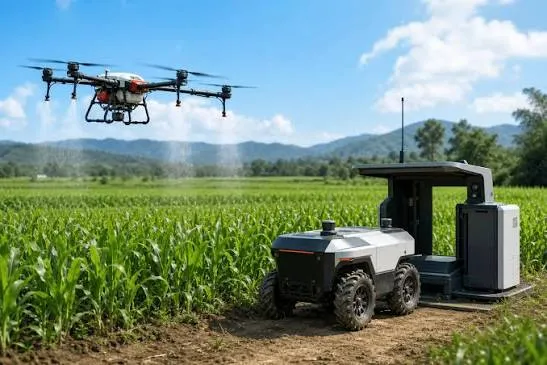
The core of XAG’s new offering relies on a network of specialized ground and aerial robotics designed for granular field operations. Unlike previous drone applications focused solely on NDVI mapping, these new systems incorporate multi-spectral sensors alongside advanced subsurface probes capable of real-time nutrient level assessment.
Technically, the autonomy stack utilizes edge computing to process sensor data locally on the robotic units. This minimizes latency crucial for immediate corrective actions—such as variable rate fertilization or micro-spraying—and reduces reliance on constant high-bandwidth cloud connectivity across vast farmland areas.
The software platform manages fleet orchestration, allowing a single operator interface to command dozens of specialized autonomous agents simultaneously. These systems are programmed with predictive models derived from historical yield data, enabling them to execute prescriptive actions rather than merely descriptive reporting.
Market Dynamics and Geopolitical Ramifications
This strategic foray places XAG directly in competition with established players in AgTech, but its integrated hardware-software approach offers a distinct advantage in operational simplicity. The market is rapidly demanding solutions that move beyond monitoring; farmers require automated execution of complex agricultural tasks.
Geopolitically, this pivot aligns with broader national strategies emphasizing food security through technological sovereignty. Nations heavily reliant on domestic food production are increasingly seeking localized, resilient automation tools to insulate supply chains from global shocks.
For XAG, success in autonomous farming unlocks significant enterprise value by embedding the company deeper into the operational workflow of large agricultural conglomerates. As regulatory frameworks evolve regarding robotic deployment and data ownership, XAG’s integrated system offers a cohesive compliance pathway for its clients.