
🎙 Listen to a summary of this story
Xiaomi has launched Robotics-U0, an open-source embodied world model and training stack designed to accelerate general-purpose robot development globally.
The release introduces a significant shift toward democratizing advanced robotics research, providing a comprehensive framework for training robots to interact robustly with complex, unstructured environments.
Robotics-U0 is not merely a model; it represents an entire operational stack, integrating the core world model with the necessary pipelines for data ingestion, training, and deployment on physical hardware.
This initiative directly addresses a major bottleneck in contemporary robotics: the gap between simulated, controlled environments and the variability inherent in the real world. By providing an open starting point, Xiaomi invites researchers worldwide to build upon a foundational architecture.
The core of the system is the embodied world model, which allows the robot to build and maintain a predictive understanding of its surroundings. This understanding encompasses not only static geometry but also dynamic physical interactions, object affordances, and the consequences of its own actions.
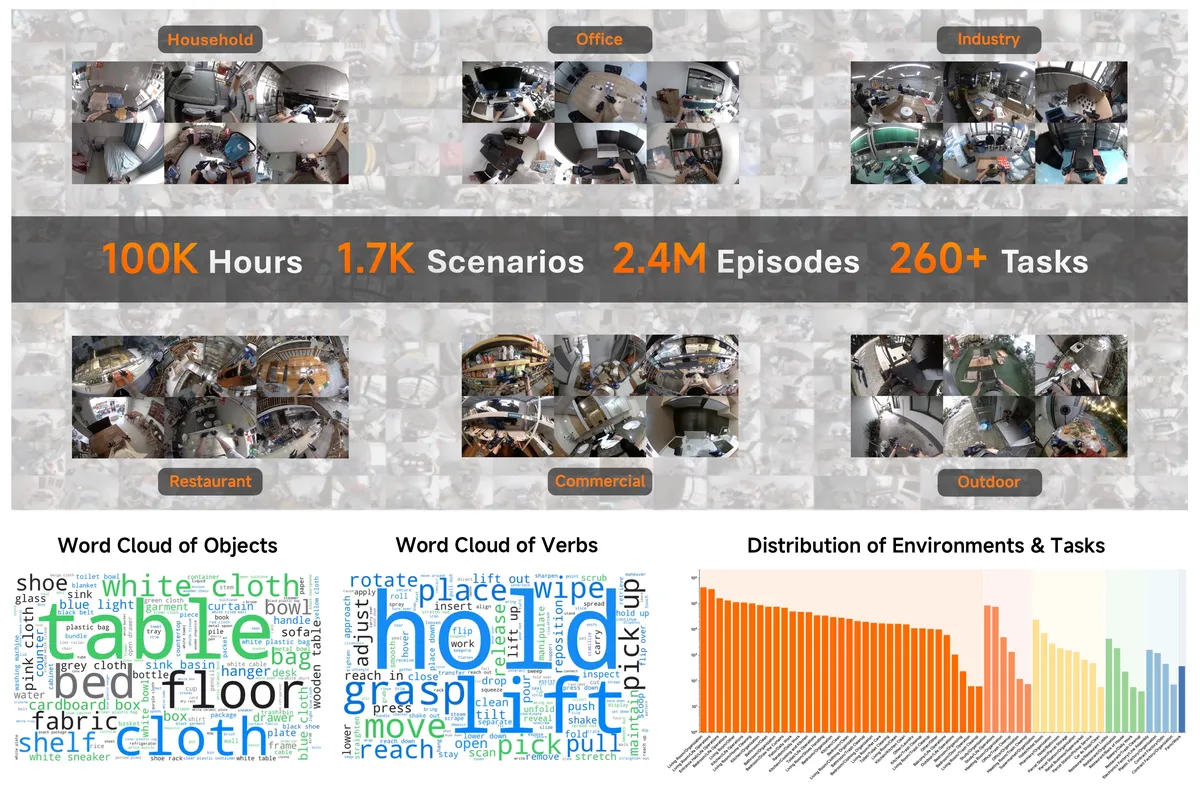
The training stack facilitates multi-modal learning, meaning the system processes and synthesizes data from various inputs, including high-definition vision, tactile sensors, and natural language commands. This multi-modal capability is critical for transitioning robots from specialized, narrow tasks to generalized, human-like competencies.
Architectural Components and Technical Scope
The technical architecture of Robotics-U0 is structured to support iterative, end-to-end learning. It employs advanced reinforcement learning techniques, allowing the robot to learn optimal policies through trial and error within its modeled environment, which closely mirrors real-world physics.
Specific details regarding the implementation suggest a focus on efficiency, a necessary trait for deploying complex AI on resource-constrained robotic platforms. The stack is engineered to manage the massive data throughput required by continuous, real-time environmental modeling.
By making the entire stack available, Xiaomi mitigates the high barrier to entry historically associated with state-of-the-art embodied AI. Researchers no longer need to build the entire infrastructure from scratch to test novel learning algorithms or specialized application layers.
The project's scope extends beyond simple navigation. It is designed to handle complex tasks such as object manipulation, spatial reasoning, and following nuanced, conversational instructions, pushing the boundaries of what is considered practical embodied AI.
Strategic Implications for Robotics Research
The decision to open-source Robotics-U0 positions Xiaomi as a major contributor to the global robotics ecosystem, moving beyond its traditional role as a consumer electronics manufacturer into a foundational technology provider.
The accessibility of the model is strategically significant because it enables academic institutions and smaller startups, which often lack the massive computational resources of large tech conglomerates, to participate meaningfully in cutting-edge robotics research.
This open environment fosters a collaborative development cycle. Community contributions can lead to rapid iteration, identifying weaknesses in the original architecture and suggesting novel optimizations that benefit all users.
Ultimately, Robotics-U0 serves as a powerful catalyst, accelerating the timeline toward achieving truly general-purpose robots—machines capable of adapting to novel situations without explicit, pre-programmed instruction.