Tencent Cloud has launched a dedicated Data and Training Stack designed specifically to accelerate the development of Physical AI, embodied robots, and autonomous driving systems.
This strategic deployment addresses the critical bottleneck in advanced robotics: the need for massive, multimodal datasets capable of training robust, real-world intelligence. The new stack integrates data ingestion, training pipelines, and inference capabilities, positioning Tencent to capture significant market share in the rapidly evolving sector of physical computation.
Central to this initiative is the planned introduction of TCLake XPhysis, a platform engineered to handle the complexity of real-world sensory data—a necessity for machines operating outside controlled lab environments. This move signals a definitive pivot by major cloud providers toward solving the challenges of real-world machine perception.
Technical Architecture for Embodied Intelligence
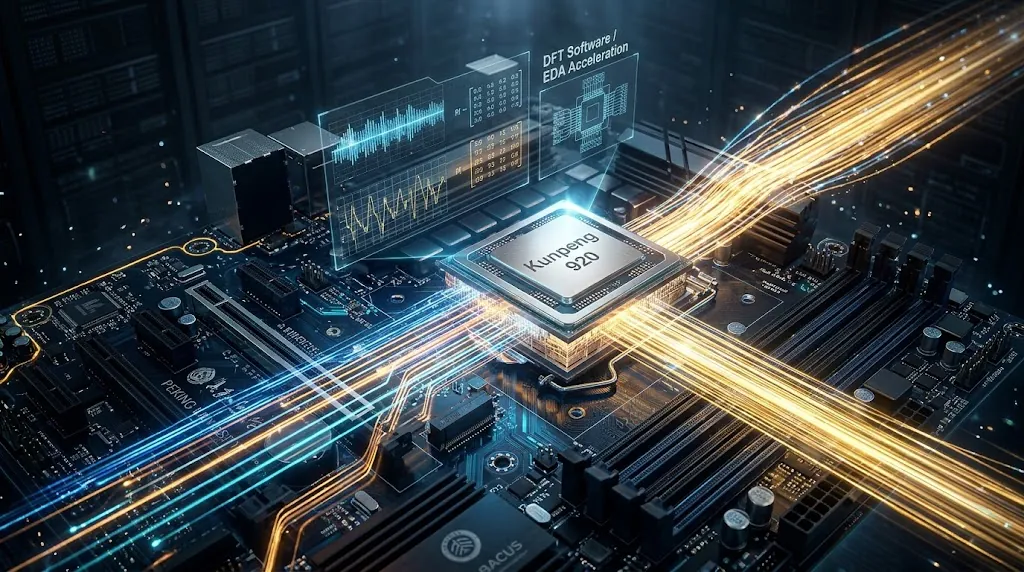
The core functionality of the new stack centers on unifying the disparate data types required for embodied AI. Unlike traditional cloud workloads focused on digital data, this system is engineered to manage high-dimensional inputs derived from cameras, LiDAR, radar, and tactile sensors. This multimodal processing capability is foundational for training models that can accurately interpret complex physical environments.
Tencent Cloud emphasizes that the stack supports the entire lifecycle, from raw data collection and cleaning through large-scale model training and edge inference. The architecture is designed for scalability, allowing developers to train complex neural networks on petabyte-scale datasets while ensuring low-latency deployment onto autonomous vehicle hardware or robotic actuators.
Furthermore, the platform provides specialized tools for simulation-to-reality (Sim2Real) transfer. This feature allows engineers to train models in highly controlled virtual environments and then efficiently validate and deploy them in the messy, unpredictable conditions of the physical world, drastically reducing real-world testing time and cost.
Market Dynamics and Geopolitical Significance
The introduction of specialized Physical AI infrastructure places Tencent in direct competition with other hyperscalers aggressively pursuing the autonomous technology vertical. This competition is not merely commercial; it reflects a broader geopolitical race toward technological self-sufficiency in advanced automation.
The success of platforms like TCLake XPhysis is crucial for the next generation of industrial automation and transportation. As regulatory environments become stricter regarding autonomous operation, the ability to provide verifiable, high-quality, and scalable AI training infrastructure becomes a primary differentiator for enterprise clients.
This development underscores a global trend: the migration of AI development from purely digital computation to physical interaction. Companies are no longer just seeking powerful GPUs; they require holistic cloud ecosystems that manage the entire data-to-action loop, from a sensor reading to a physical maneuver.
For developers in robotics and self-driving, Tencent Cloud offers a vertically integrated solution that bypasses the need to stitch together numerous disparate tools, offering a singular, authoritative environment for creating intelligent, autonomous agents.