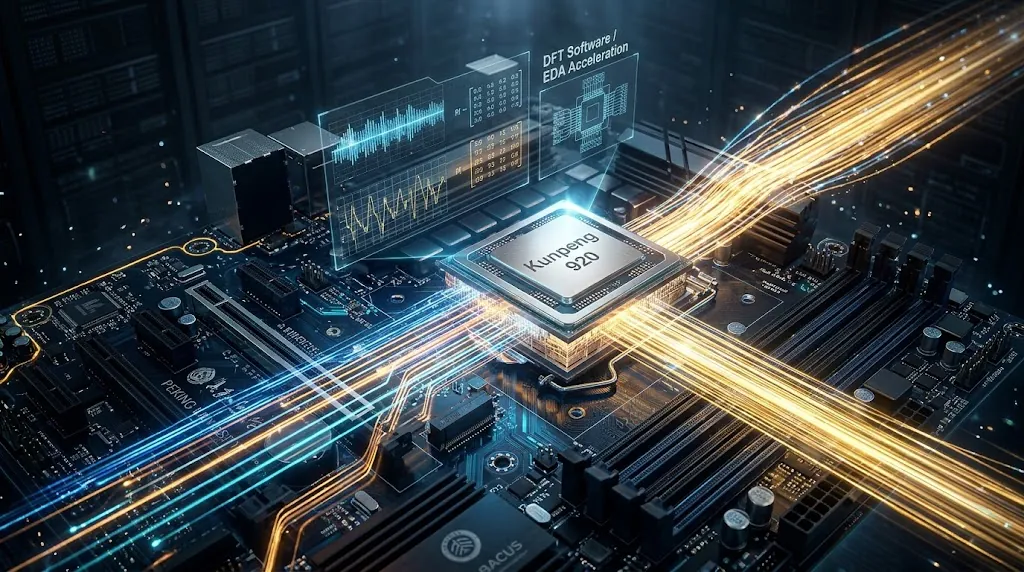
A Peking University research team achieved up to a 10.7x speedup by successfully porting the DFT Software ABACUS platform to Huawei's Kunpeng 920 processor.
This significant optimization demonstrates the high performance potential of Kunpeng architecture when running complex, domain-specific software, particularly in the realm of electronic design automation (EDA). The work validates the capability of high-performance computing environments to accelerate computationally intensive tasks critical to modern semiconductor manufacturing and design cycles.
The successful integration of ABACUS, a sophisticated toolset, onto the Kunpeng 920 directly addresses a growing industry need for high-efficiency, domestically viable computational infrastructure. This capability moves beyond theoretical benchmarks, providing a tangible performance metric for hardware adoption within critical national technology sectors.
Technical Implementation and Performance Gains
The core of the achievement lies in the specialized optimization applied to the software stack. The researchers focused heavily on leveraging the specific architectural features of the Kunpeng 920, notably its Scalable Vector Extension (SVE) matrix unit. By tailoring the ABACUS code to exploit the parallel processing capabilities of this hardware, substantial performance gains were realized.
DFT Software ABACUS is a recognized platform utilized for design for testability (DFT) operations—a crucial step in ensuring the reliability and functionality of integrated circuits. The porting process involved meticulous code restructuring to map the existing algorithms efficiently onto the SVE vector instructions, allowing for massive data parallelism that traditional CPU architectures might not fully utilize in this specific workload.
This engineering feat confirms that high-level, commercially vital software can be effectively accelerated on non-x86 architectures. The reported speedups are not incidental; they reflect a deep, successful alignment between the software's computational demands and the hardware's specialized vector processing strengths.
Broader Industry and Geopolitical Resonance
The successful porting of ABACUS is more than a technical victory; it carries significant implications for the global technology supply chain. As geopolitical pressures encourage greater self-sufficiency in advanced computing, the demonstrated viability of Kunpeng 920 for complex EDA tasks is strategically valuable.
The ability to run industry-standard, high-demand software on domestic hardware reduces reliance on foreign ecosystems, a critical factor for Chinese technology firms aiming for vertical integration within the semiconductor value chain. This lowers the barrier to entry for domestic EDA tool adoption.
This research signals a maturation point in the domestic high-performance computing sector. It suggests that the performance gap between specialized domestic processors and established international silicon is narrowing, provided the software ecosystem—the crucial link between hardware potential and real-world utility—is aggressively adapted and optimized.