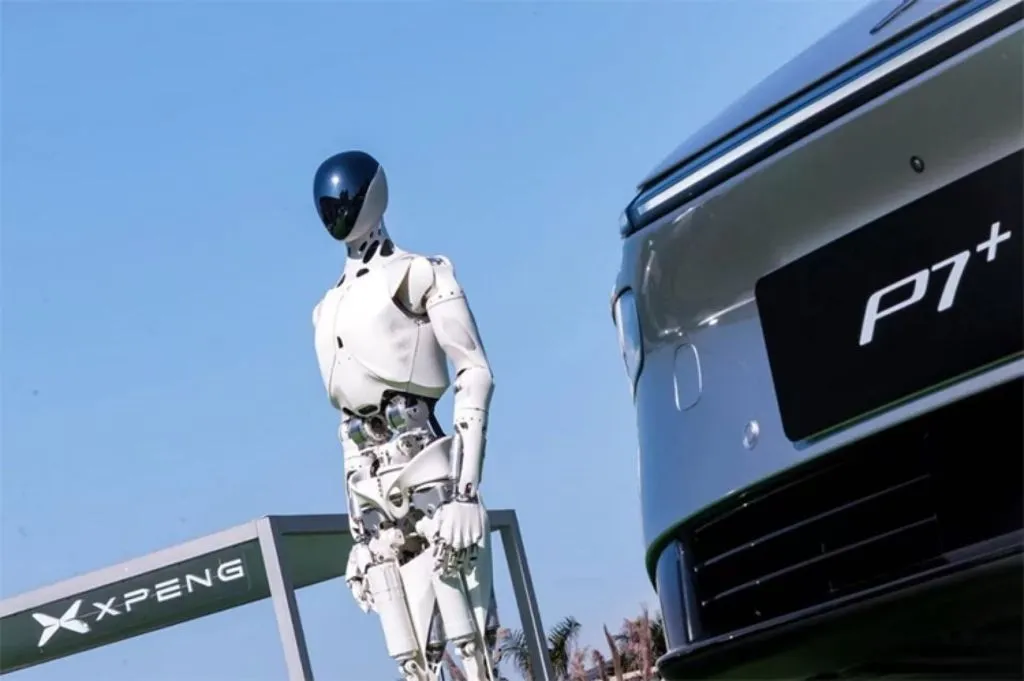
XPeng is accelerating the production timeline for its IRON humanoid robot, aiming to bring the advanced machine to consumer showrooms by 2027.
The Chinese electric vehicle manufacturer has moved from conceptual development into a rigorous mass production sprint for its general-purpose humanoid platform. This strategic push signals XPeng's aggressive pivot toward robotics as a core component of its future ecosystem, moving beyond its established dominance in autonomous driving technology within the automotive sector.
The IRON robot represents an attempt by XPeng to deploy sophisticated artificial intelligence and advanced motor control systems outside the controlled environment of a vehicle cabin. The development focuses on creating a versatile machine capable of performing complex physical tasks, which aligns with broader industrial trends favoring humanoid labor in automation-heavy environments.
According to reports detailing the production schedule, the initial rollout is slated for 2027. This timeline suggests several crucial milestones must be achieved in the intervening years, including resolving scaling issues inherent in transitioning complex prototypes to high-volume manufacturing lines. The complexity of integrating advanced sensors, actuators, and AI processing power into a durable, mass-producible form factor presents substantial engineering hurdles.
Robotics as XPeng's Next Frontier
The development of IRON is not merely an ancillary project; it reflects a strategic intent to diversify XPeng’s revenue streams and technological footprint. While the company has garnered significant attention for its L2+/L3 autonomous driving capabilities in passenger vehicles, the humanoid robot places them squarely in the highly competitive global robotics arena.
XPeng's approach leverages proprietary expertise cultivated during years of developing self-driving systems. The underlying algorithms designed to navigate and interact with a dynamic automotive environment are being adapted for human-scale mobility and object manipulation. This cross-pollination of technology is central to the company’s stated vision.
The market interest in humanoid robots has intensified globally, driven by labor shortages and technological maturation. XPeng positions IRON not as a niche industrial tool but as a consumer-facing platform capable of broader utility. The success of this transition will depend heavily on achieving cost parity with human labor over time while maintaining high levels of operational reliability.
Analysts suggest that if XPeng successfully navigates the production challenges and establishes a viable market presence, IRON could significantly enhance the company’s profile from an automotive tech leader to a comprehensive AI and robotics powerhouse. The ability to move from prototype validation to showroom availability in 2027 underscores management's commitment to rapid commercialization.
Technical Specifications and Deployment
While detailed specifications remain proprietary, the IRON platform is designed for general-purpose operation, implying adaptability across diverse tasks ranging from domestic assistance to light industrial support. The manufacturing sprint indicates that engineering teams are focusing heavily on supply chain resilience and optimizing assembly processes for economies of scale.
The commitment to a 2027 launch suggests the company anticipates regulatory clearances and necessary software maturity within that timeframe. Scaling humanoid robotics requires not only mechanical robustness but also sophisticated safety protocols, especially when interacting with unpredictable human environments.
This move positions XPeng to compete against established players in the robotics sector while utilizing its existing infrastructure and talent pool from the automotive domain. The transition serves as a high-stakes test of their ability to execute complex, long-term technological bets beyond vehicle software.