🎙 Listen to a summary of this story
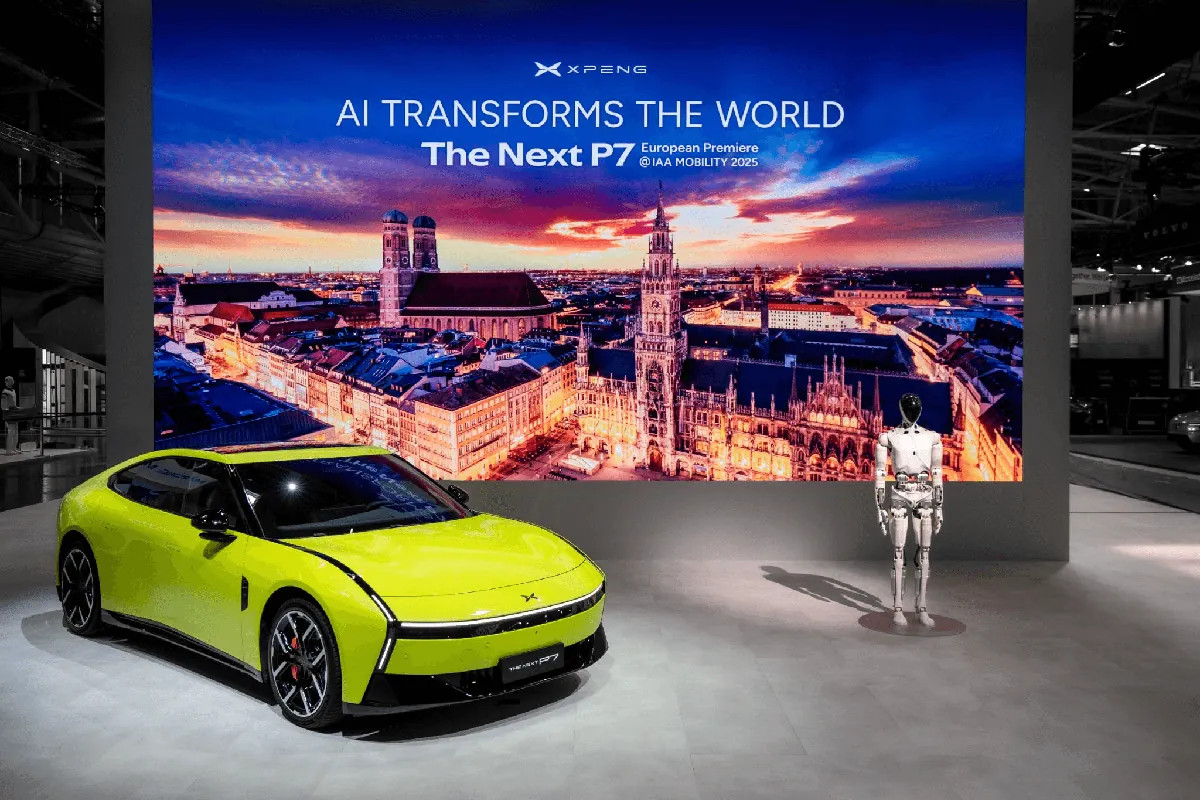
XPeng Motors has announced a significant strategic pivot, detailing plans to integrate its advanced vehicle platforms with sophisticated robotics and autonomous systems under a unified artificial intelligence framework. The move signals an ambitious effort by the Chinese automaker to transition beyond merely manufacturing electric vehicles (EVs) into becoming a comprehensive provider of intelligent mobile ecosystems. Sources indicate that XPeng is developing a centralized AI brain capable of managing not only traditional driving tasks but also complex, multi-modal interactions involving household robots and drone delivery systems.
This convergence represents a major industrial undertaking, suggesting that the company views its vehicles not as standalone transport units, but rather as mobile hubs for advanced computing power and sensor arrays. By connecting car autonomy with humanoid robotics—a capability previously confined largely to research labs—XPeng aims to establish a new standard for 'smart mobility' in urban environments, vastly expanding the operational scope of its technology stack.
Industry analysts view this integration as a direct challenge to established global automotive and AI leaders. The focus on a single, unified operating system suggests XPeng is prioritizing interoperability across disparate hardware types, from four-wheeled vehicles to multi-limbed robots, all communicating through the same core intelligence platform.
Technical Integration and Hardware Architecture
The technical foundation for this integrated approach centers on developing a highly scalable, generalized AI architecture. Rather than deploying separate operating systems for cars versus robots, XPeng is reportedly building a common software layer that interprets real-world data—visual, tactile, and spatial—regardless of the physical output unit. This unified brain must process complex behavioral models to ensure seamless handoffs between vehicle operation and robotic tasks.
Hardware-wise, the integration demands substantial computational resources. The vehicles and robots will likely be equipped with advanced sensor fusion suites, including high-definition LiDAR, multiple cameras, and sophisticated radar units. These sensors feed data into powerful onboard computing modules designed to run massive machine learning models in real time, enabling decision-making that accounts for both vehicular dynamics and pedestrian/robotic interaction safety protocols.
Furthermore, the system is expected to utilize over-the-air updates (OTA) to maintain and enhance the shared AI model. This continuous software refinement loop allows XPeng to rapidly iterate on complex behaviors—such as navigating an unexpected obstacle or coordinating a vehicle pickup with a localized delivery drone—without requiring physical hardware recalls or modifications.
Market Implications and Industry Competition
This ambitious move places XPeng directly in the center of one of the most significant technological battles: the race to define the next generation of autonomous infrastructure. By solving the problem of inter-device communication, XPeng is attempting to create a walled garden of intelligence that limits reliance on competing platforms.
Geopolitically, this focus on domestic integration solidifies China's position as a global leader in AI application development across multiple sectors. The ability to seamlessly weave together transport, logistics, and service robotics within a national market presents both immense commercial opportunity and geopolitical technological dominance for Chinese firms.
For the broader industry, the implications are clear: future automotive success will be measured not solely by horsepower or battery range, but by the breadth and depth of the associated AI services. XPeng's strategy forces competitors to accelerate their own timelines regarding multi-modal autonomy, signaling a rapid maturation curve for what was once considered speculative technology.