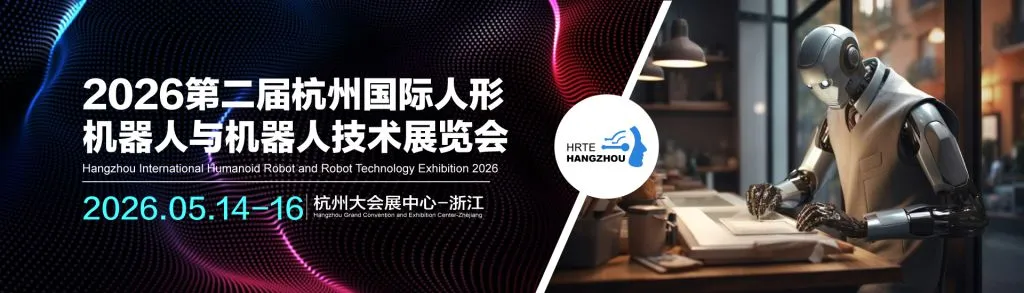
Hangzhou is set to host the 2nd International Humanoid Robot and Robot Technology Exhibition in 2026, a premier event aimed at showcasing the latest advancements in artificial intelligence, mechanical engineering, and autonomous systems. The exhibition serves as a critical platform for manufacturers, researchers, and technology integrators to demonstrate the rapid evolution of humanoid robotics within the Chinese industrial landscape. As global competition intensifies in the field of automation, this summit is expected to highlight significant breakthroughs in motor control, tactile sensing, and large-scale language model integration for physical embodiments.
Industry analysts expect the 2026 exhibition to feature a diverse array of exhibitors ranging from established tech giants to emerging specialized startups. The event will focus heavily on the transition of humanoid robots from laboratory prototypes to commercially viable tools for manufacturing, logistics, and eldercare. Key technological themes include the development of high-torque density actuators, which allow for more fluid and human-like movement, and the implementation of advanced computer vision systems that enable robots to navigate complex, unstructured environments with unprecedented precision.
The expansion of the robotics sector in China has seen unprecedented investment in recent years, driven by both government policy and private capital. The Hangzhou exhibition is positioned to capitalize on this momentum, providing a centralized venue for international trade and technical exchange. Experts anticipate that the 2026 iteration will place a particular emphasis on the "embodied AI" trend, where sophisticated neural networks are directly integrated into hardware to allow for real-time decision-making and adaptive learning in physical spaces.
Technological Advancements and Global Market Implications
The upcoming exhibition is expected to serve as a benchmark for measuring the progress of domestic humanoid technologies against international standards. Attendees will have the opportunity to witness live demonstrations of bipedal locomotion, complex manipulation tasks, and human-robot interaction protocols. These demonstrations are critical for proving the reliability and safety of autonomous systems, which remains a primary hurdle for widespread adoption in public-facing roles.
Beyond hardware specifications, the exhibition will also address the software ecosystems that drive modern robotics. This includes the development of standardized operating systems for robots and the integration of edge computing to reduce latency in sensory feedback loops. The convergence of high-performance computing and mechanical dexterity is expected to be a central topic of discussion among the keynote speakers and technical exhibitors.
As the global robotics market expands, the outcomes of the Hangzhou exhibition will likely influence supply chain trends and investment strategies across Asia and beyond. The ability of manufacturers to produce cost-effective, high-performance humanoid units will determine the speed at which these machines enter the mainstream workforce. For stakeholders looking to understand the trajectory of the industry, the 2nd International Humanoid Robot and Robot Technology Exhibition will provide essential insights into the next generation of automated intelligence. Further details regarding registration and specific exhibitors can be found at Android Show.