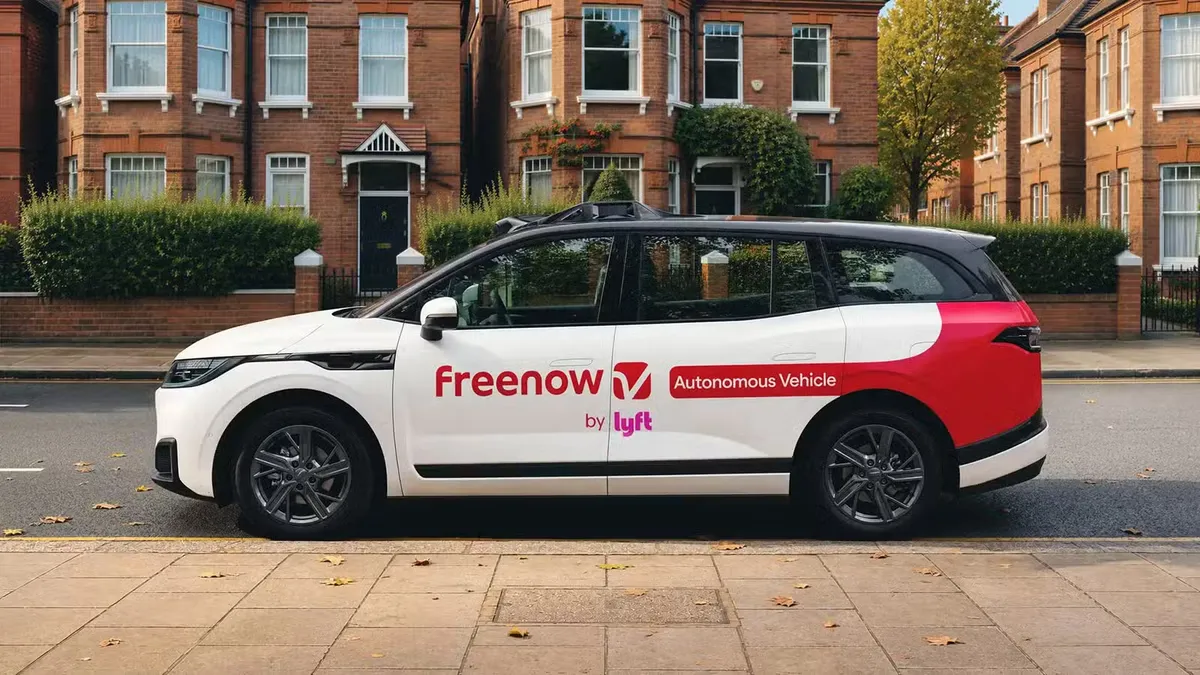
China's leading autonomous vehicle technology, Apollo Go, has begun road testing in London, marking a significant international expansion for Chinese robotics in the competitive global ride-hailing market.
The deployment signals an aggressive push by Chinese tech giants to establish operational footholds in mature Western markets, leveraging partnerships with established mobility players like Uber and Lyft.
Baidu's Apollo Go system is now conducting trials across specific routes within the UK capital, moving beyond simulation and controlled environments into real-world urban complexity. This initial phase of testing provides critical data on navigating diverse European traffic patterns and regulatory landscapes.
The partnership structure involves integrating the Apollo platform with existing fleet operations run by Lyft Freenow drivers initially, gradually transitioning toward fully driverless operation as safety parameters are met and refined.
Global Expansion and Technological Benchmarking
This London entry places Apollo Go in direct competition with established autonomous driving solutions operating in North America and other European hubs. The UK serves as a key proving ground due to its dense urban environment, complex road signage, and intricate pedestrian interaction zones.
Apollo Go represents Baidu's culmination of extensive domestic development, which has positioned the company as a dominant force in China’s burgeoning smart mobility sector. International deployment validates the scalability and robustness of their underlying AI stack.
Analysts suggest that success in London will provide a crucial blueprint for subsequent market entries into other major European cities, such as Paris or Berlin. The ability to secure partnerships with global incumbents like Uber is indicative of the technology's perceived maturity by industry gatekeepers.
The testing phase is not merely about mileage accumulation; it involves rigorous stress-testing of perception systems against unpredictable variables—a hallmark of Level 4 autonomy deployment. These tests evaluate everything from sudden weather changes to highly nuanced human driver behaviors.
Implications for Robotaxi Infrastructure
The introduction of Chinese robotaxi technology into the UK has broader implications for global automotive and tech investment flows. It highlights a strategic shift where non-traditional hardware manufacturers, like software-centric mobility providers, are challenging legacy automakers' dominance in autonomous transit.
From a regulatory standpoint, the trials force local authorities to engage directly with advanced AI systems, accelerating the development of frameworks necessary to certify and permit driverless operation. This governmental interaction is as strategically important as the technical performance itself.
The collaboration between Baidu, Uber, and Lyft effectively creates a tripartite ecosystem: technology provider (Baidu), operational infrastructure (Uber/Lyft), and regulatory testing ground (London). This distributed risk model accelerates adoption timelines for all parties involved.
Ultimately, the London deployment signifies that China’s technological prowess in autonomous driving is transitioning from a domestic success story to an internationally competitive standard. The performance metrics achieved during these UK road tests will dictate the pace of global commercialization for Apollo Go.