🎙 Listen to a summary of this story
BeingBeyond has unveiled its Being-M0.7, a sophisticated latent world action model capable of teaching humanoid robots complex locomotion and grasping solely through 10,000 hours of human video data.
This achievement signals a major inflection point in embodied AI, drastically lowering the dependency on expensive, time-consuming physical real-world training for advanced robotic manipulation. By distilling vast amounts of observational human behavior into a cohesive latent space, Being-M0.7 demonstrates a scalable pathway toward generalist robots that can learn intricate tasks without exhaustive trial-and-error.
The model's ability to effectively generalize from diverse video inputs suggests a leap forward in imitation learning, moving beyond simple action cloning towards understanding the underlying dynamics of human movement and interaction with objects. This capability directly addresses one of the most persistent bottlenecks hindering widespread industrial and domestic deployment of humanoid platforms.
Technical Architecture and Learning Paradigm
The core innovation lies within Being-M0.7’s latent world representation, which allows the model to encode high-dimensional visual information into a compact, actionable state space. Instead of training on millions of explicit reward signals or step-by-step demonstrations, the system learns predictive models directly from observing human actions in various environments.
This observational learning framework is particularly potent for tasks like walking and grasping, where successful execution requires not just knowing what to do next, but anticipating the physical consequences of preceding motions. The model processes video sequences to infer causal relationships between visual states and resulting motor commands, effectively building a simulation within its latent architecture.
The scale of data utilized—10,000 hours of human footage—highlights the power of modern deep learning architectures to extract meaningful patterns from massive datasets. This efficiency contrasts sharply with traditional reinforcement learning pipelines that often require millions of interaction steps on physical hardware, making deployment economically feasible for broader robotic applications.
Implications for Robotics and Market Trajectory
The successful demonstration of Being-M0.7 positions the company at the forefront of next-generation robotics development, suggesting a shift away from task-specific programming toward generalized competence in humanoid agents.
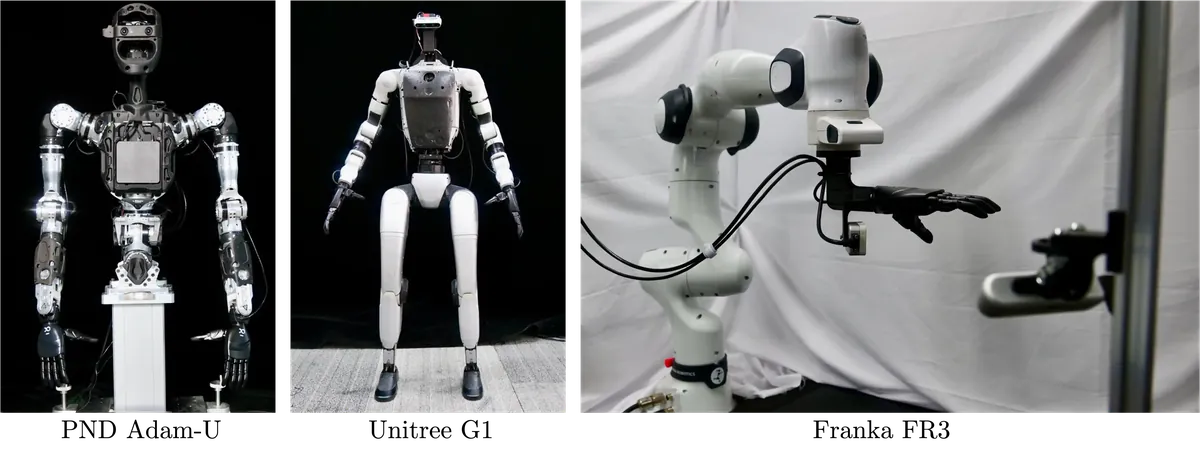
From an industry perspective, this technology accelerates the timeline for robots to transition from laboratory curiosities to functional collaborators in logistics, manufacturing, and elder care. If these latent world models can be reliably transferred across different hardware platforms and environments—a key unstated challenge—the barrier to entry for complex automation plummets.
Geopolitically, the mastery of data-driven embodied intelligence represents a significant strategic asset. Nations that can effectively harness massive observational datasets to create robust generalist AI agents are poised to lead the next wave of industrial and technological sovereignty, as detailed in reports concerning advanced manufacturing adoption here.