🎙 Listen to a summary of this story
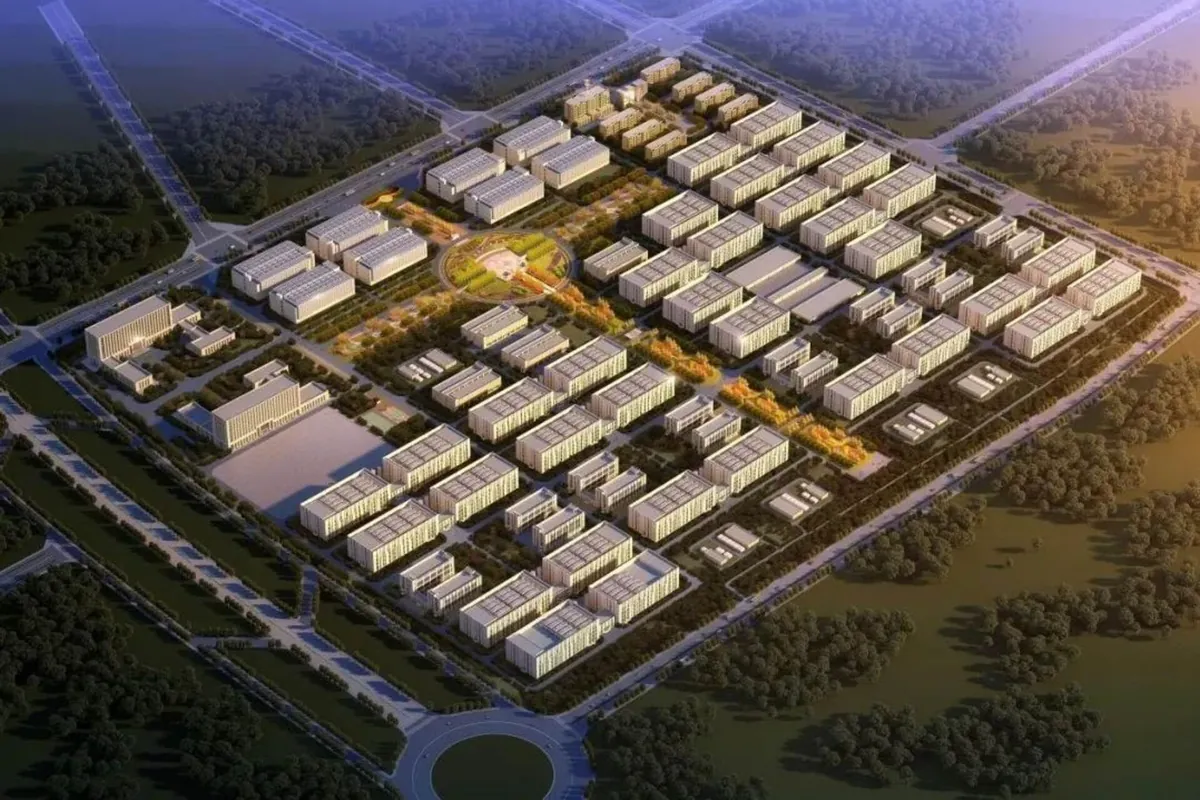
China Mobile has substantially boosted its high-performance computing capabilities, finalizing the expansion of its Hohhot Intelligent Computing Center to a total capacity of 20,100 PetaFLOPS (PFLOPS).
This significant infrastructure upgrade solidifies China Mobile's position as a major player in the domestic AI and supercomputing ecosystem, aligning with national mandates for advanced digital infrastructure. The expansion represents a critical step in leveraging next-generation hardware to drive large-scale data processing required by modern artificial intelligence models.
The integration of these new computational resources directly addresses the escalating demand for high-throughput computing across various sectors, from telecommunications research to government-level scientific modeling within China. The scale of this deployment signals a continued commitment by Chinese tech giants to build foundational AI capabilities internally.
Technical Specifications and Deployment Dynamics
The upgraded Hohhot center incorporates cutting-edge computational architecture designed for intensive parallel processing tasks inherent in deep learning workflows. While specific hardware vendor breakdowns are complex, the achievement of 20,100 PFLOPS places the facility among China's premier computing hubs.
Operationally, the expansion is underpinned by substantial energy provisioning; the center requires a massive power draw, documented at 120 megawatts (MW). Managing this level of power consumption while maintaining peak operational efficiency showcases advanced data center engineering practices applied to large-scale AI workloads.
The deployment strategy focuses on creating an integrated platform where telecommunications infrastructure meets high-performance computing. This synergy allows China Mobile not only to host general computational tasks but also to refine and deploy proprietary AI services directly utilizing their extensive network data streams, creating a closed-loop innovation cycle.
Broader Industry and Geopolitical Implications
This massive increase in domestic compute power carries significant geopolitical weight. As global competition intensifies around AI supremacy, national champions like China Mobile are aggressively building out sovereign computational capacity to reduce reliance on foreign cloud infrastructure and specialized processing units.
The ability to sustain 20,100 PFLOPS domestically offers a strategic advantage in maintaining technological autonomy. It allows Chinese enterprises and researchers to tackle massive datasets—such as those derived from mobile network usage or large-scale video streams—without the latency or data governance concerns associated with overseas processing centers.
Market implications suggest an acceleration of domestic AI adoption rates. Companies can now prototype, train, and deploy more complex generative models locally. This robust computational backbone is not merely an IT upgrade; it is a strategic investment positioning China Mobile to influence the direction of localized technological development in the coming years.